The Panama Canal was originally started in the late 19th century by the French. When they gave up, the United States began construction in 1904.
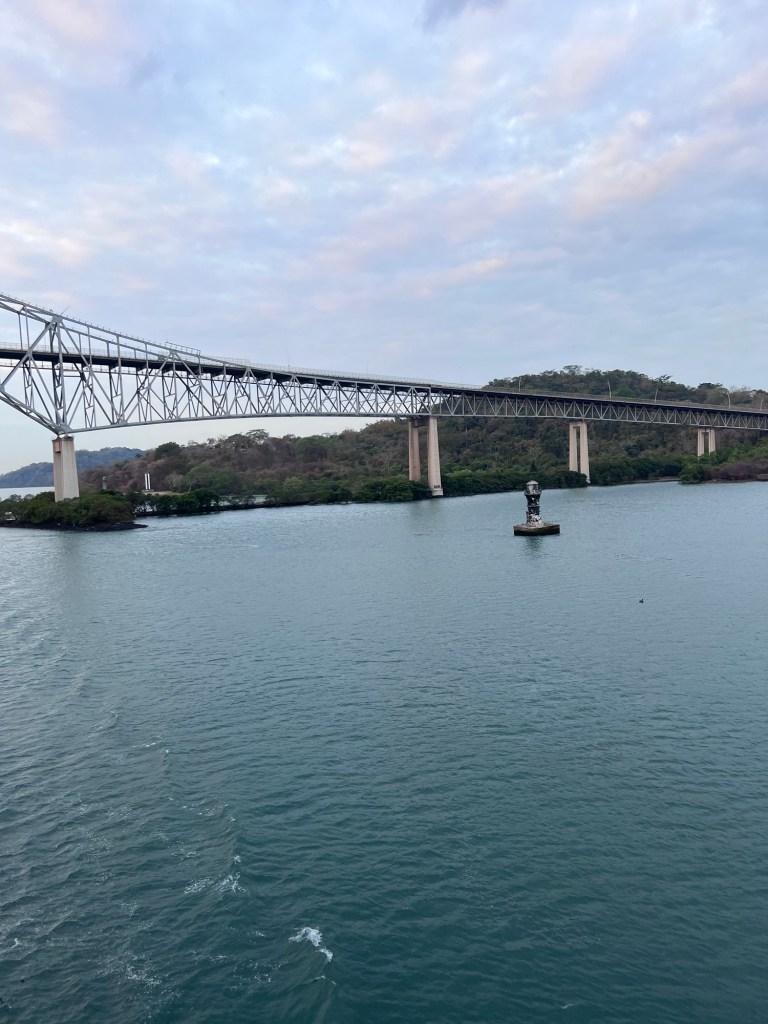
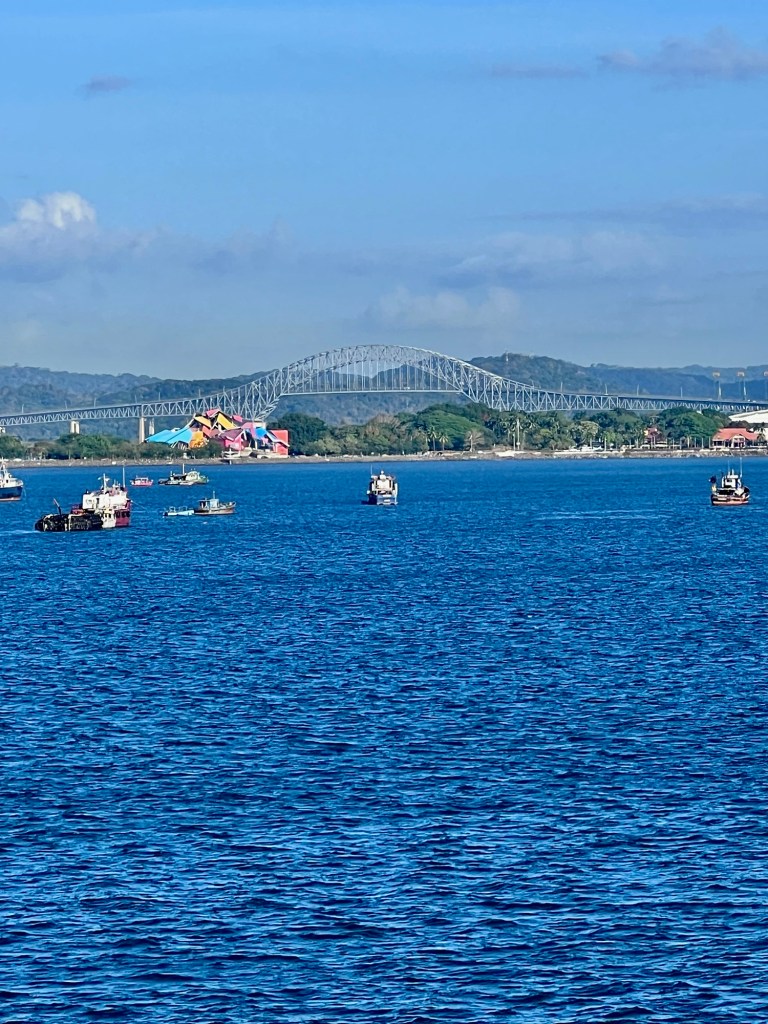
The Bridge of the Americas was completed in 1962 and spans over a mile.
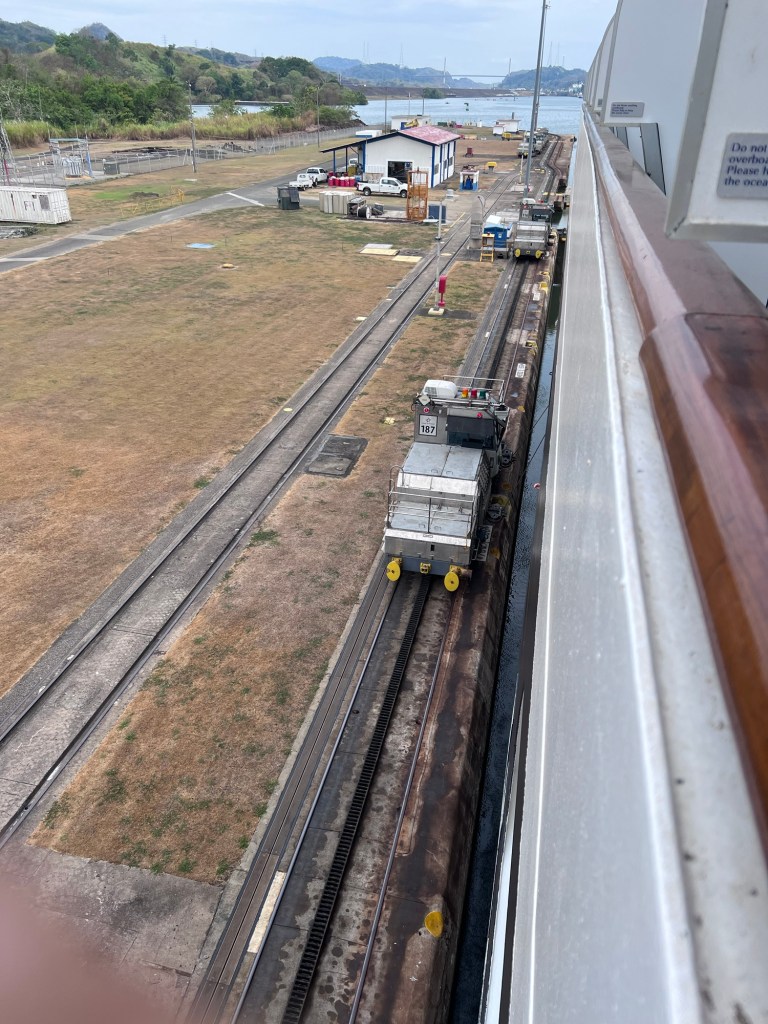
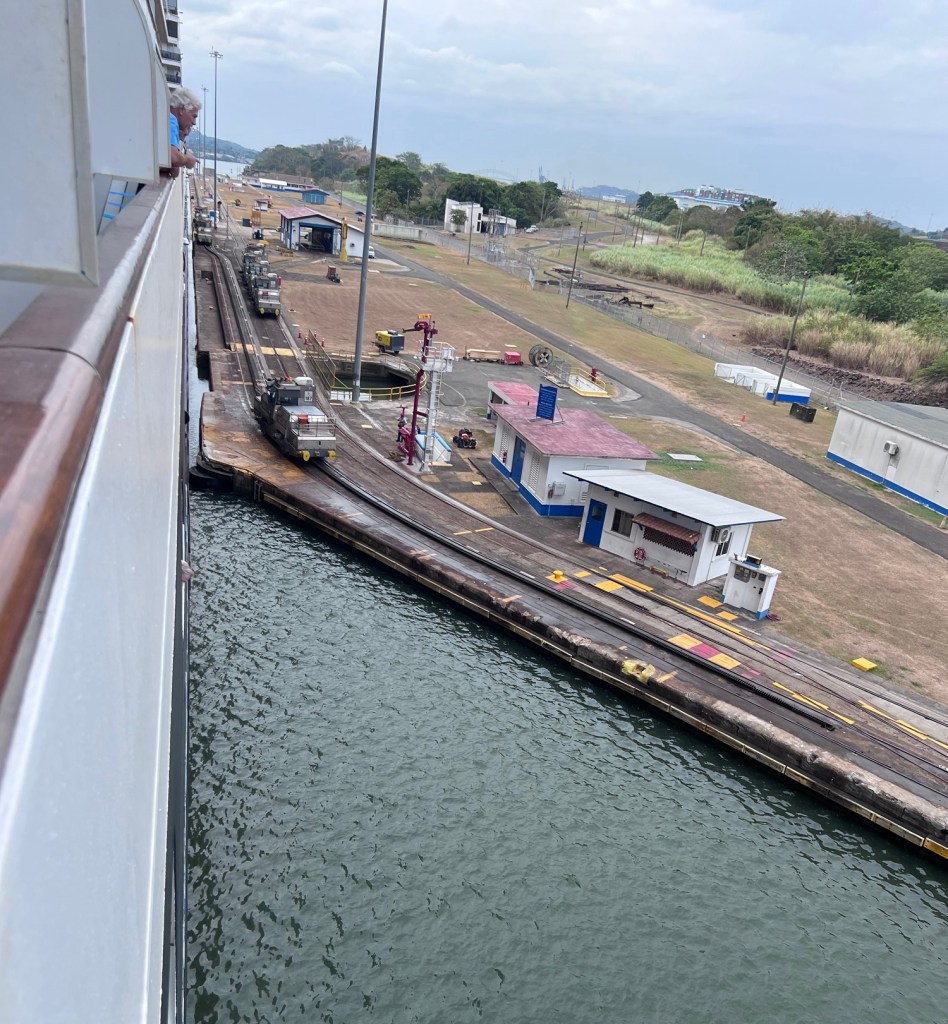
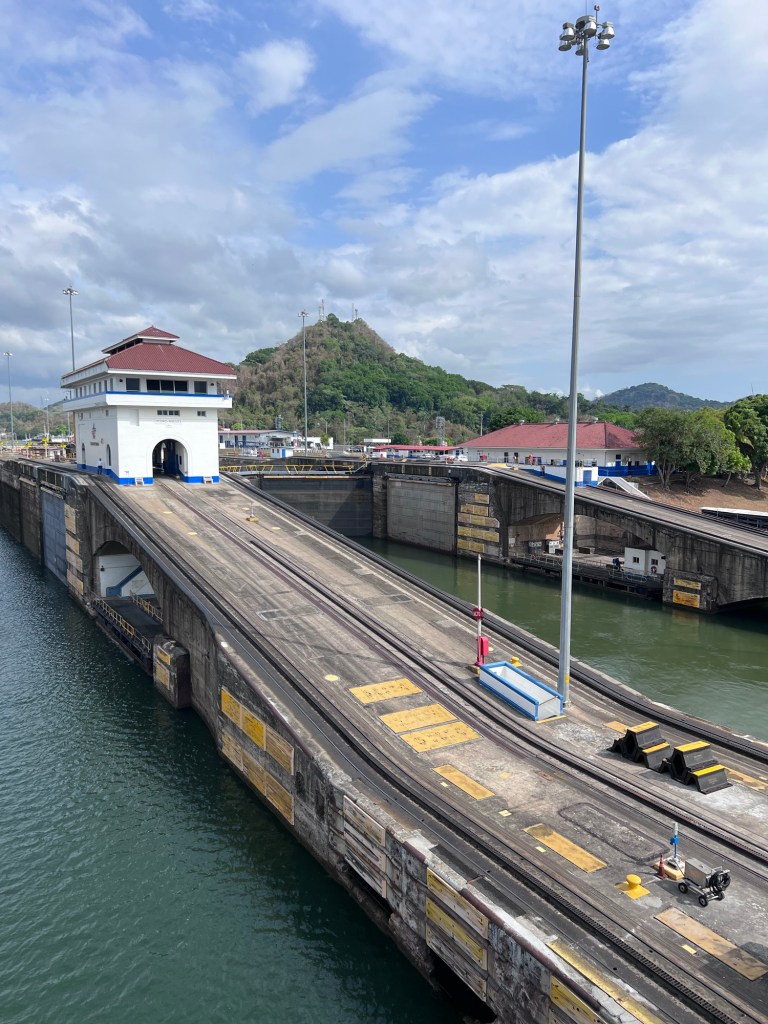
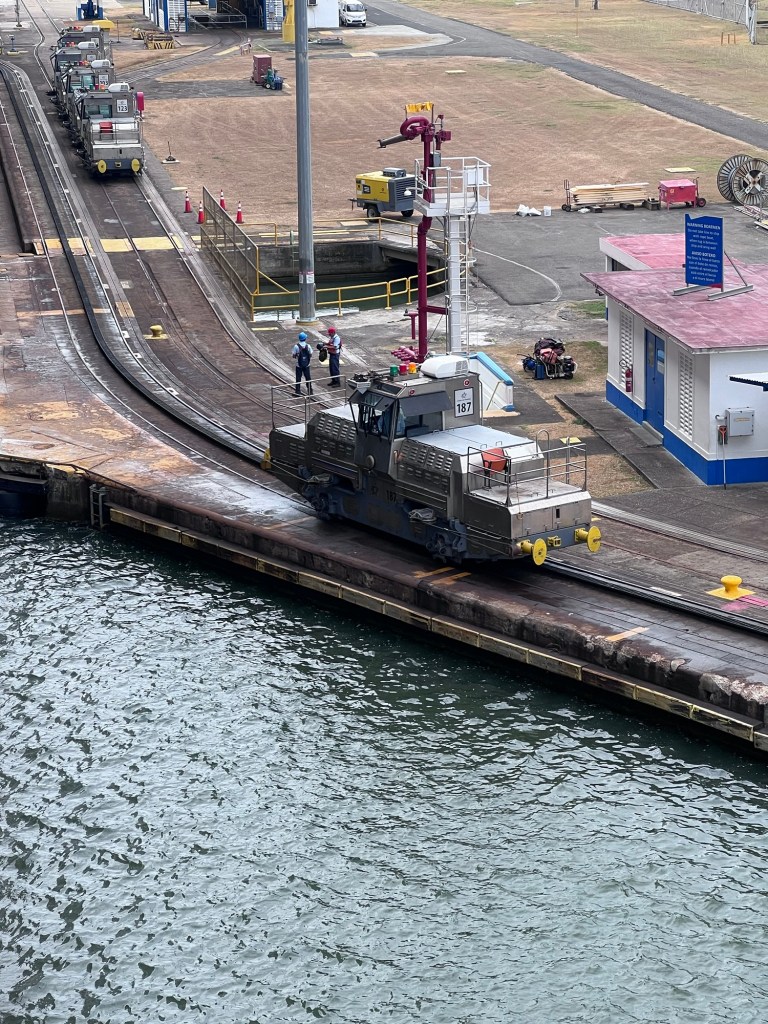
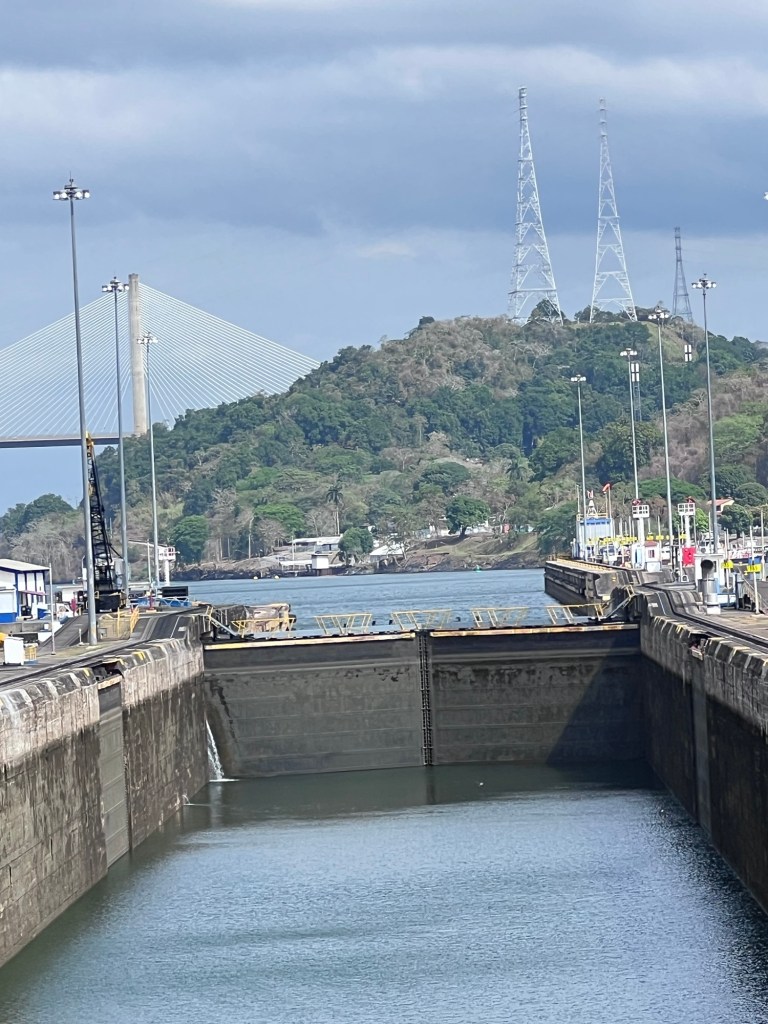
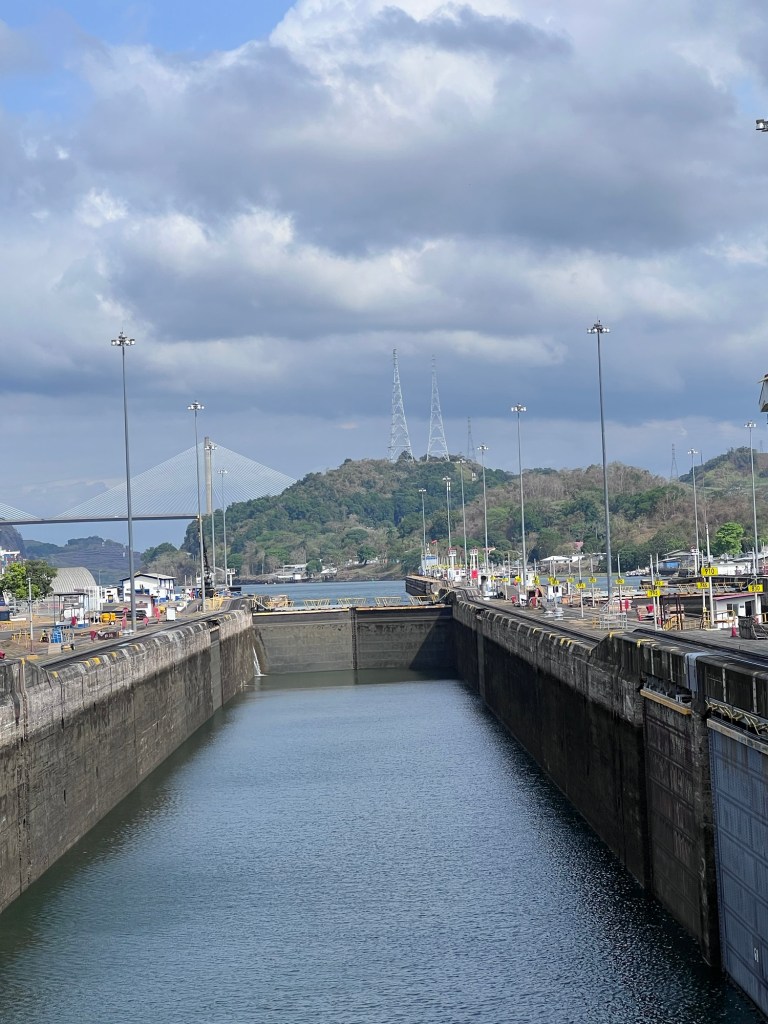
We traveled through the Miraflores Locks and Miraflores Lake.
Next we went into the Pedro Miguel Locks.
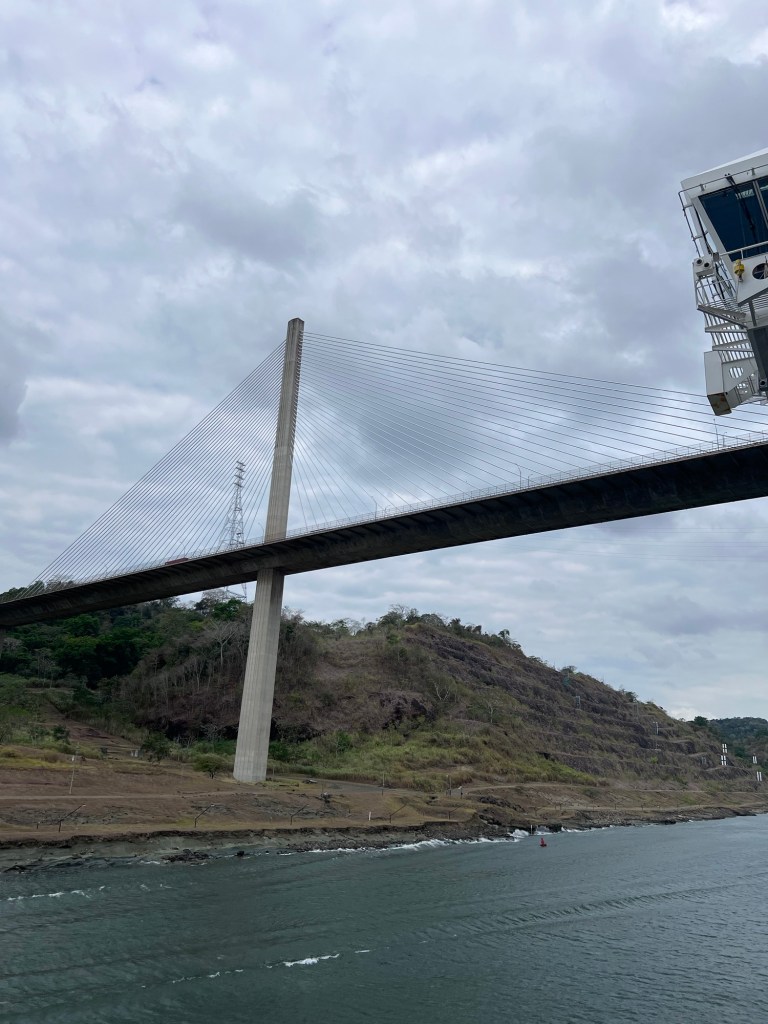
Centennial Bridge opened in 2004 is located 9 miles south of the Bridge of the Americas.
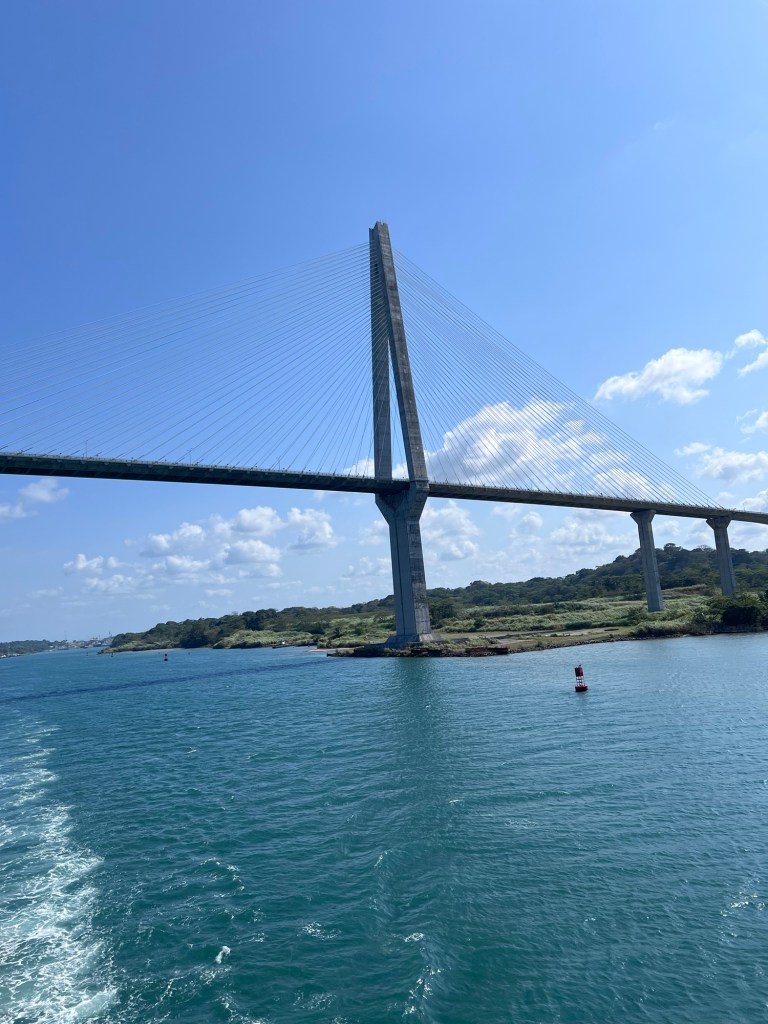
And the last Bridge, the Atlantic Bridge, was completed in 2019. This bridge was designed for the passage of huge containers.
A cruise ship the size of Holland America Oosterdam, pays roughly $250,000 to go through the canal.
After construction, the canal and the Canal Zone surrounding it were administered by the United States.
In 1977 President Jimmy Carter signed the Torrijos-Carter Treaty which turned control of the canal over to Panama for a fee of $1. In 1999, Panama gained full control over the canal.
If you are really interested in the Panama Canal, The Path Between The Seas by David Mccullough is a great and very informative read.
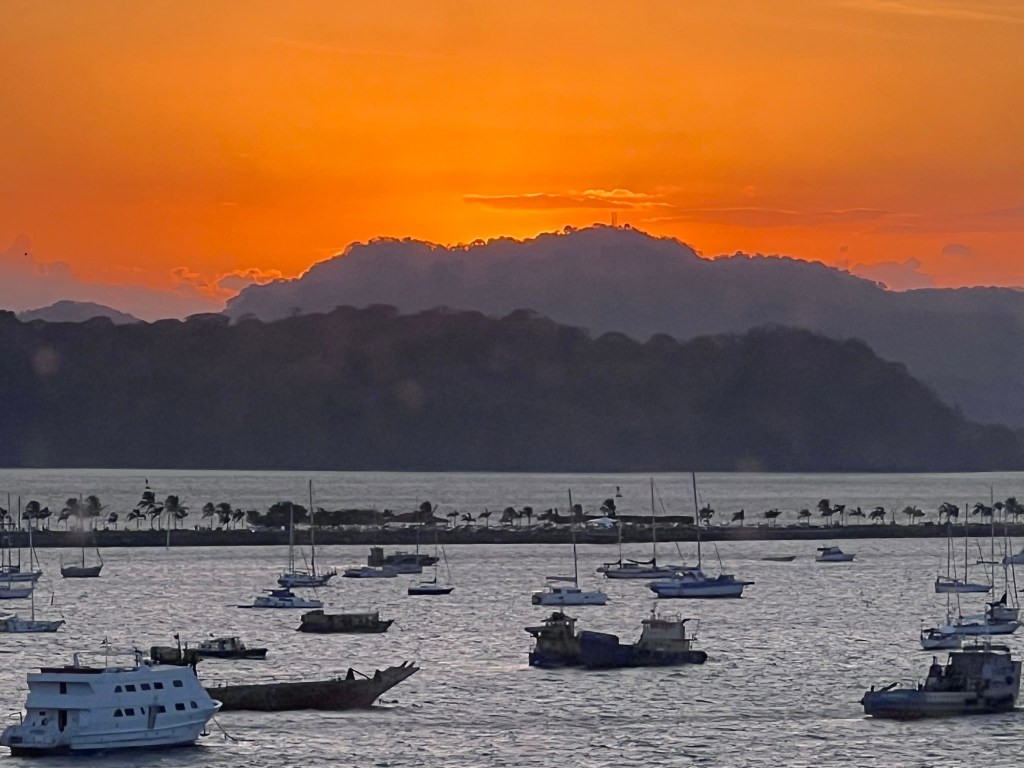
We arrived in Panama this morning which brought about some bitter sweet memories. I could see the bridge in the distance near where we stayed almost nine years ago.
It was when I started the Four Amigos blog and when we traveled with my sister, Linda, and Stan. We were the four amigos. My sister died last October and being here just brought some tears. We had plans to travel far and wide and we had many memories. My heart feels full with cherished memories but sometimes the sadness over powers that.
The Four Amigos in Australia
It looks like a beautiful morning to head to the monkey and sloth sanctuary.
We met our tour guide from Monkey Adventures at the terminal. It was a 6-hour tour to Monkey Island on Gatun Lake. We stopped at the Gamboa Raingorest Reserve briefly to use the facilities. What a spectacular view.
We arrived at Gatun Lake and boarded our boat.
The white-faced Capuchins came down to our boat. A little fellow took a grape from my hand.
We saw howler monkeys in a tree but couldn’t get a picture. I was kicking myself for not bringing my Nikon. Then we saw this cute little monkey called Geoffroy’s Tamarin.
He really liked to eat banana.
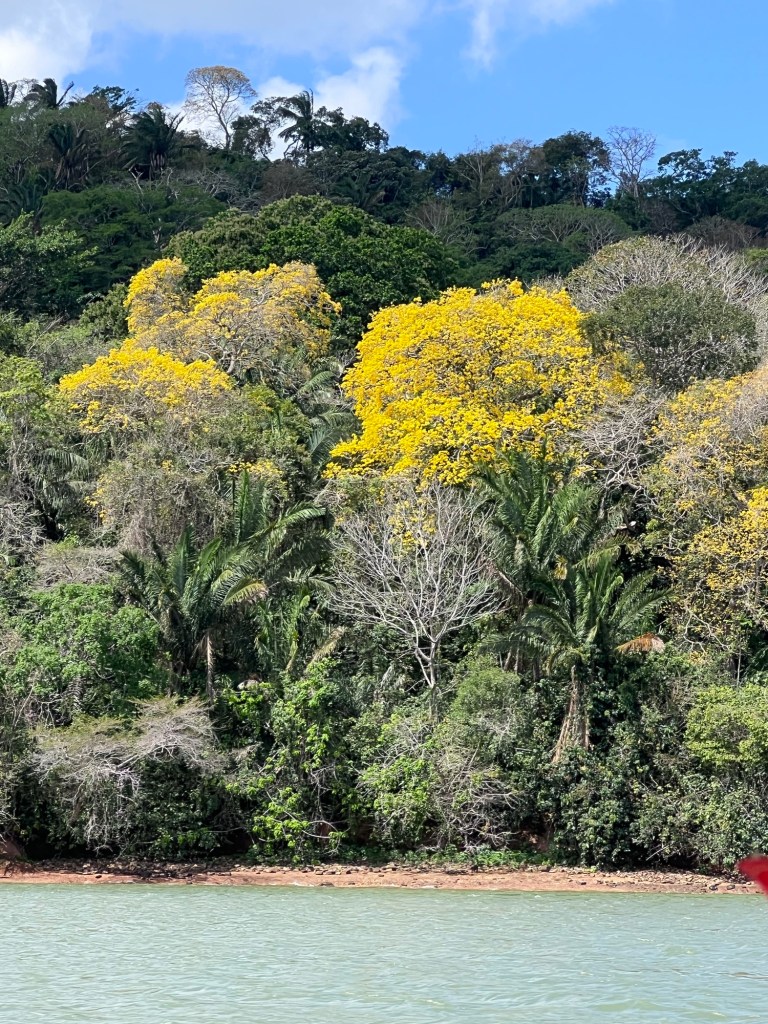
The yellow-flowered trees are Araguaney, which is the Venezuelan National tree. It only blooms for a short period of time.
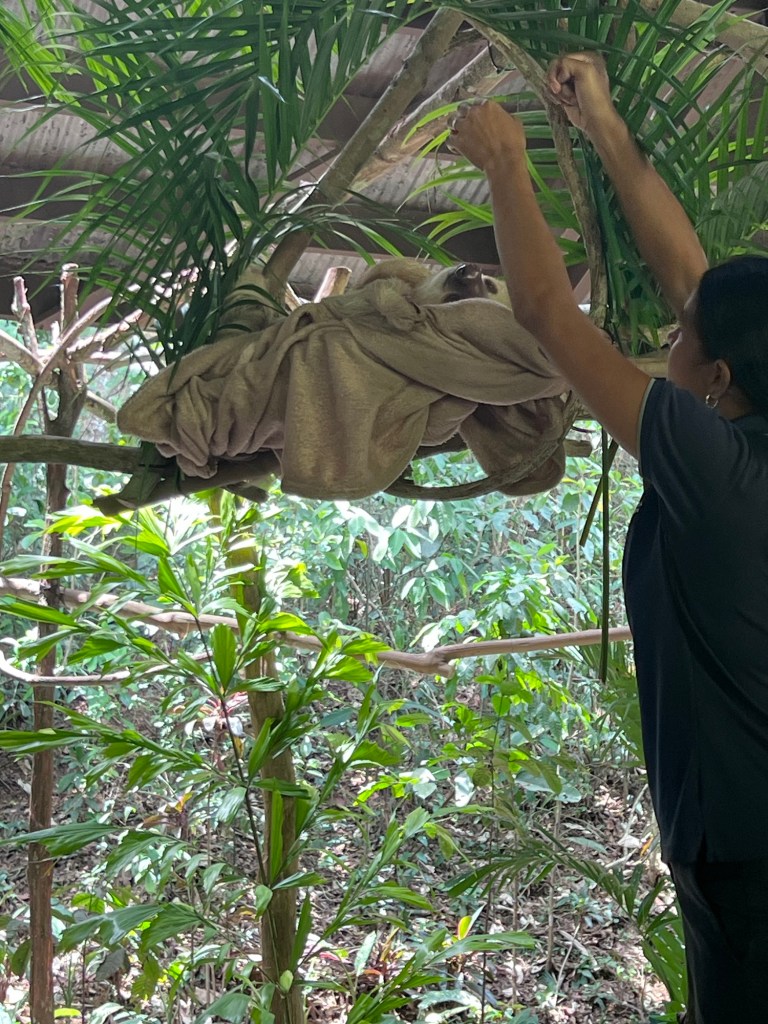
Our tour guide took us to a sloth sanctuary.
These gals were rescued and will never live in the wild. One of the sloths kept pulling the blanket over her head so we couldn’t see her.
There was a butterfly garden with hummingbirds.
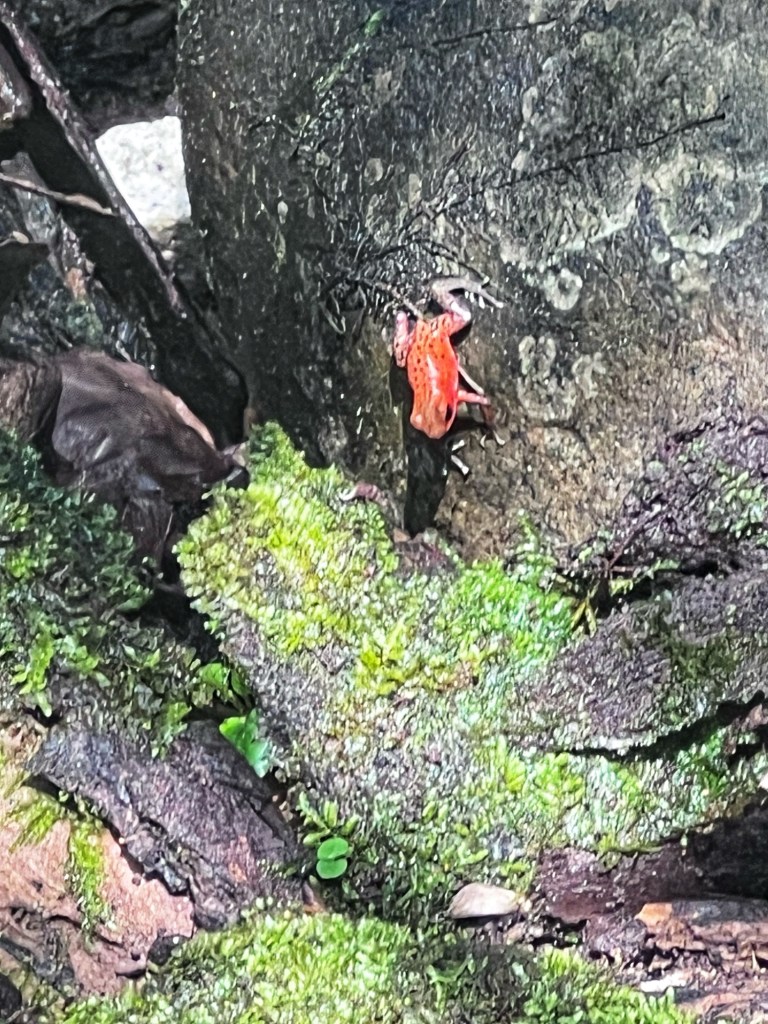
And a poison dart frog area.
It was a fun trip with Monkey Adventures and 10 other passengers.
Today our port of call is Manta, Ecuador. I wasn’t sure if we would stop here due to civil unrest but it appears that Holland America thinks it’s ok. The Brits received emails that they should not go off the ship. The US has Ecuador as a threat level 2. However, Manta seems a distance from where the demonstrations and violence are taking place.
Before we retired, Ecuador was the country Bruce wanted to retire to. With all our traveling and 9 years later we are finally getting here.
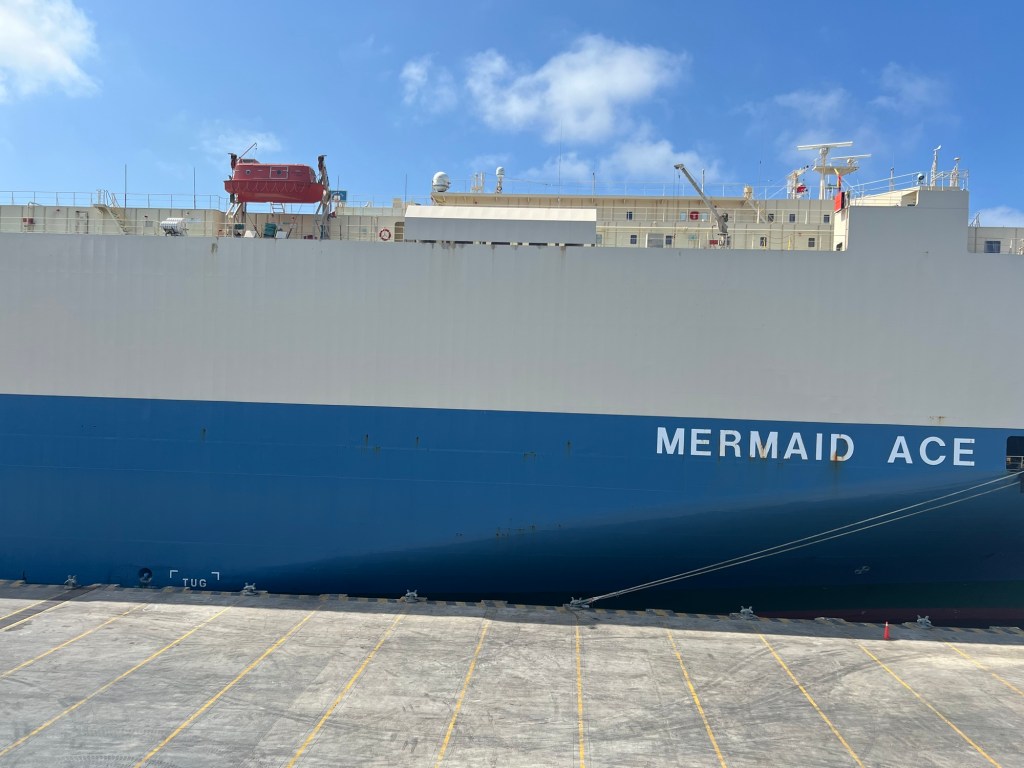
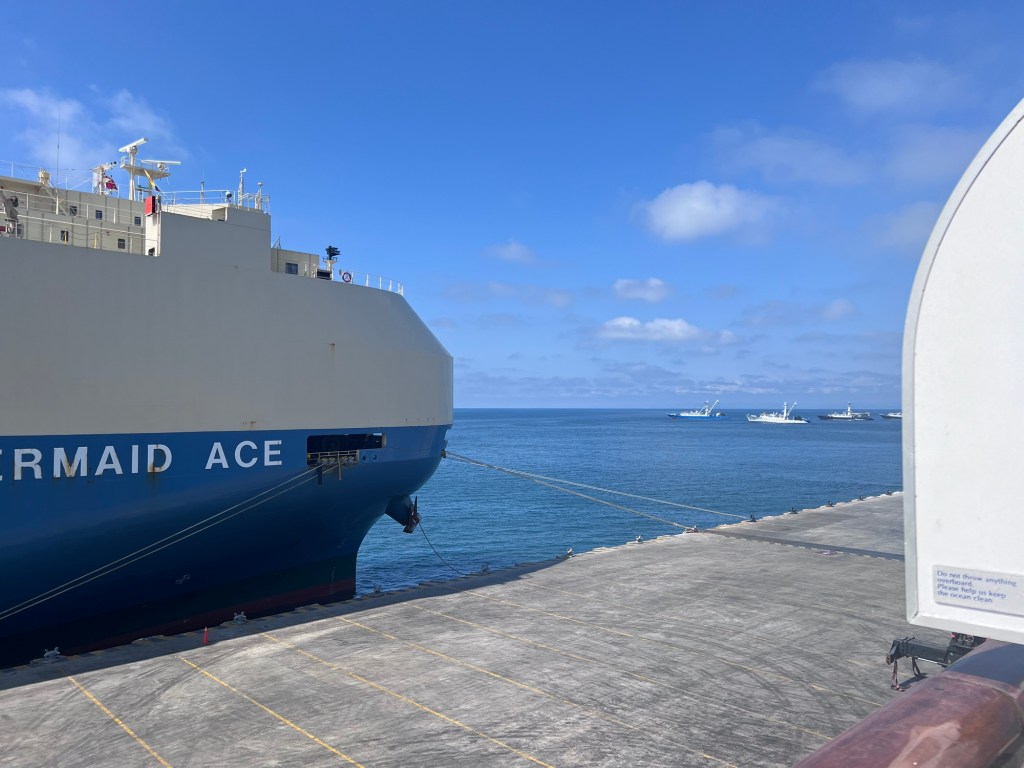
Our view today is not very pretty. All we see is this huge cargo ship. This morning, hundreds of cars were driven off this ship.
If I look around my balcony, I can see the water. This was the first time we were on the wrong side of the ship.
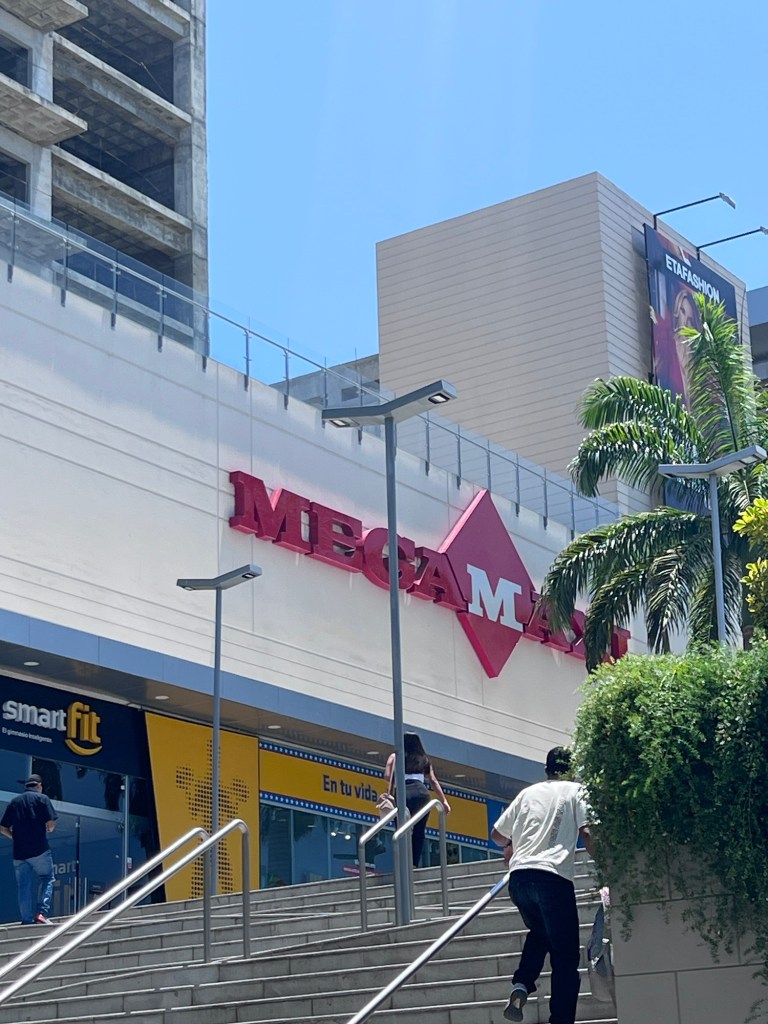
It was brutally hot. Maybe only in the high 80’s but the humidity made it a scorcher. Bruce and I decided to go to the mall.
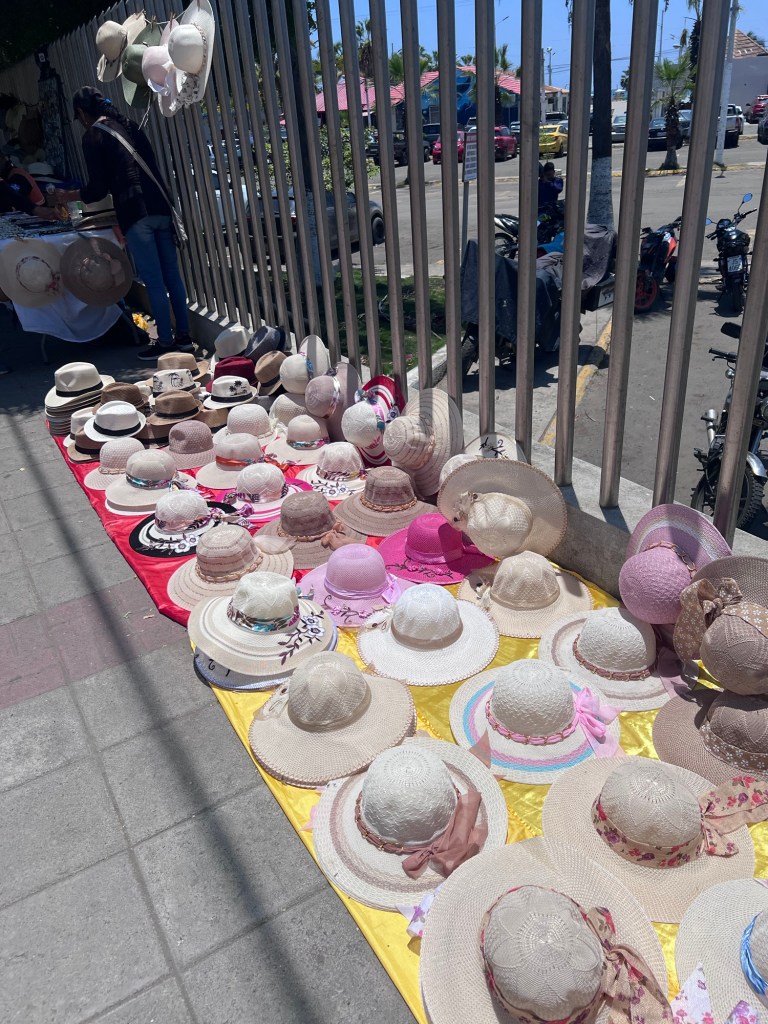
On our way, vendors were selling Panama hats. Did you know that Panama hats are really made in Ecuador? Teddy Roosevelt made the Panama hat popular and at that time, everything exported from South America went through Panama. A town in Ecuador, Montecristo, is where they are made. An authentic Panama hat takes approximately one year to make. They are waterproof and can be folded tightly to fit inside a ring. An authentic hat costs about $500. The vendors sell knockoffs for under $50.
There used to be several hundred people who were skilled in the art of making the Panama hat. Now there are only about 20 artisans remaining.
These are knock offs but kind of cute!
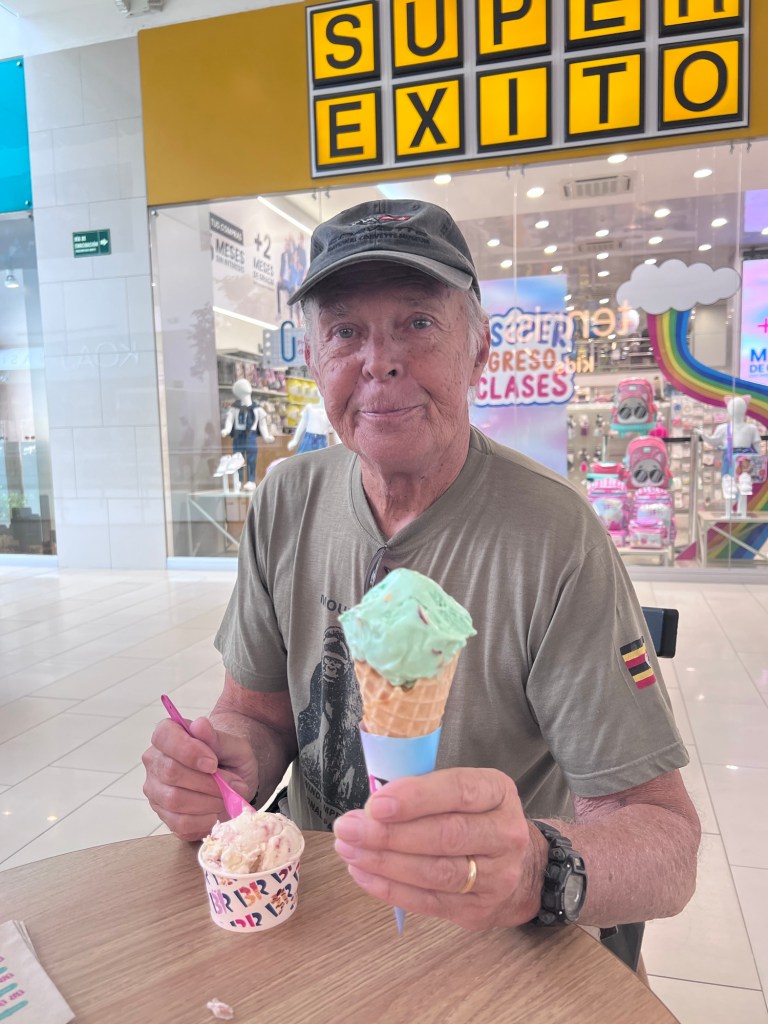
Bruce and I stopped at a Baskin Robbins for ice cream.
It was a huge mall with its teenage girls walking in pairs. A sort of cloned Best Buy, nail salon, and food court all made this look like a US mall.
The beach was right across the street.
It was too hot for bakery today so the ice cream had to suffice.
I think that’s about all I have on Manta for now.
The barge just left and now we have a view.
Now we are off to meet up with friends for coffee!
I’ve been under the weather the past few days – everyone on the ship has been hacking away. I went to a pharmacy in Paracas and ran into a fellow traveler who was getting antibiotics. You can buy them over the counter in South America. I brought some which I started taking. It’s probably just viral and the antibiotics won’t help but I am feeling a tad better. Just lying down gets difficult because of the cough. I can’t imagine I have Covid. I just had it a month ago so I should still have antibodies.
I don’t usually do ship tours but it was easy not having to figure out what to do and this tour sounded good and reasonably priced at $109 per person. I have to say the ship tours in South America have been very expensive. Another reason not to do them besides feeling like cattle being herded onto a bus.
After a 15 minute wait in the theater, we made it on the tour bus!
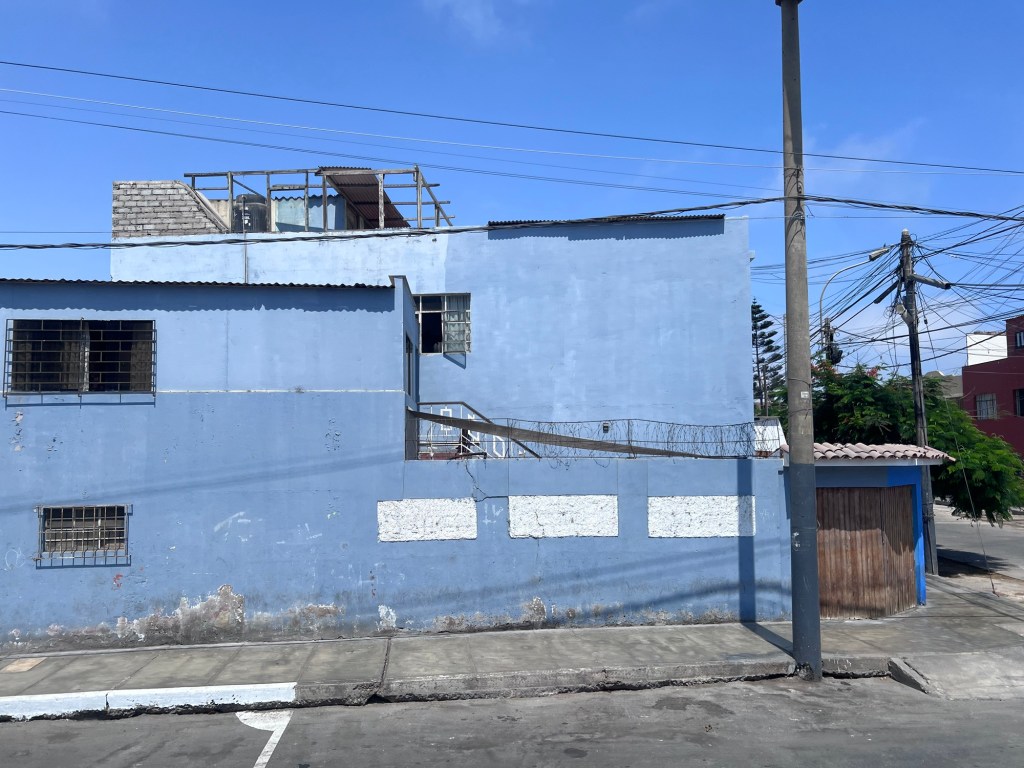
Our cruise director, Ed, said that right outside the gate the neighborhood was extremely dangerous and we should not walk there. As we drove by the area, we could see the impoverished neighborhood was expansive. Many of the buildings did not have roofs because without roofs they could not be taxed. How sad for these poor people that they could not even use tourism to help them out of poverty.
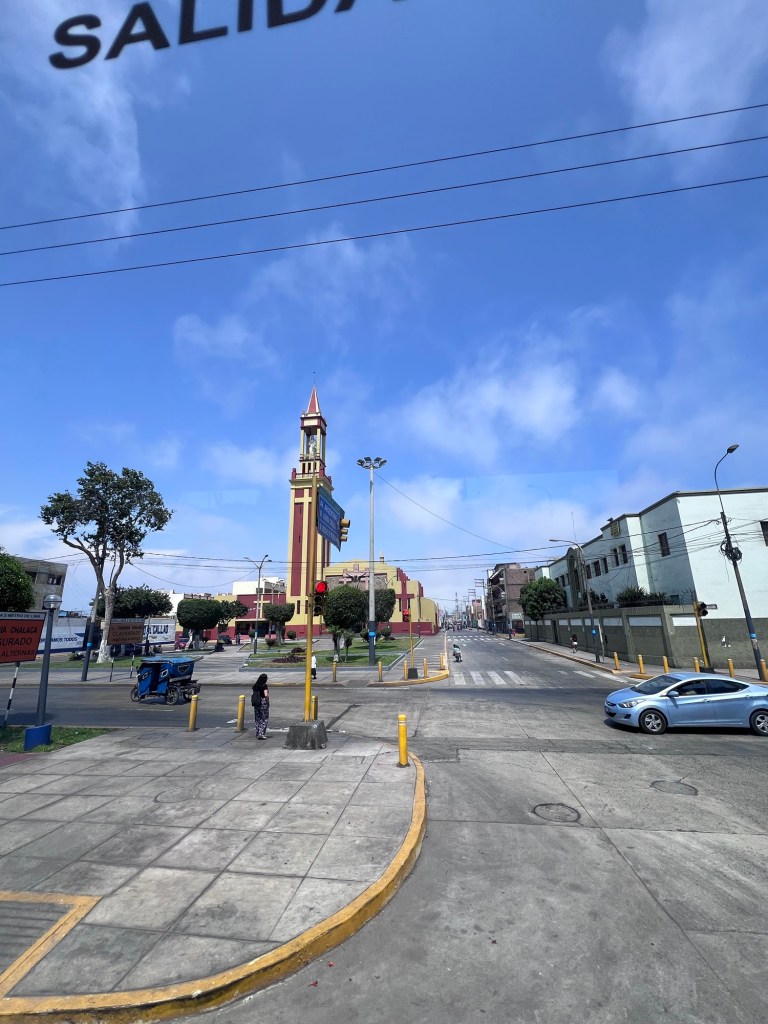
In the distance, we could see a church.
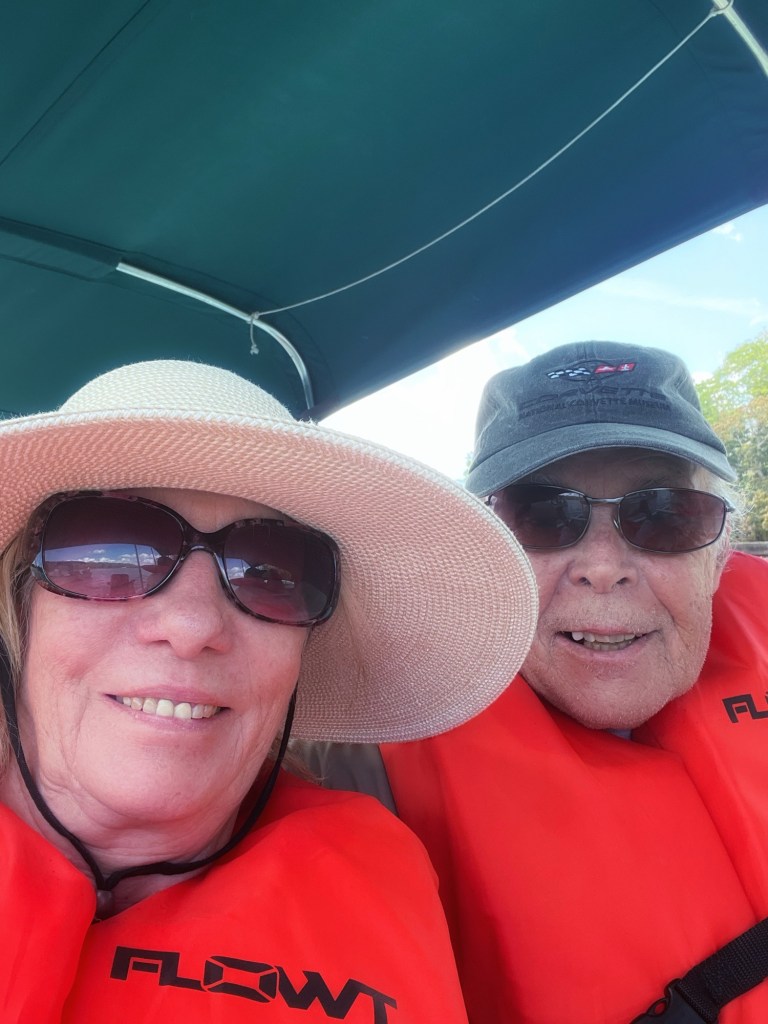
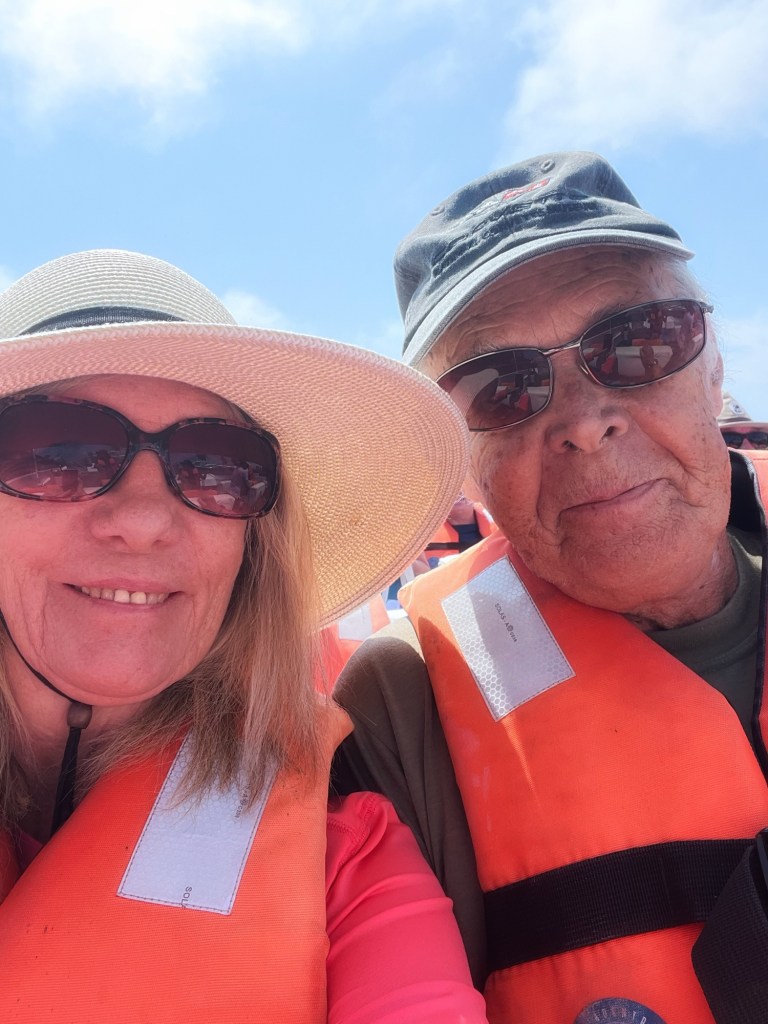
As we neared the yacht club the neighborhood seemed to improve. The yacht club was small but there were several boats to accommodate our adventure. The tour company was Mar Adentro Excursiones. We donned our life jackets and were off!
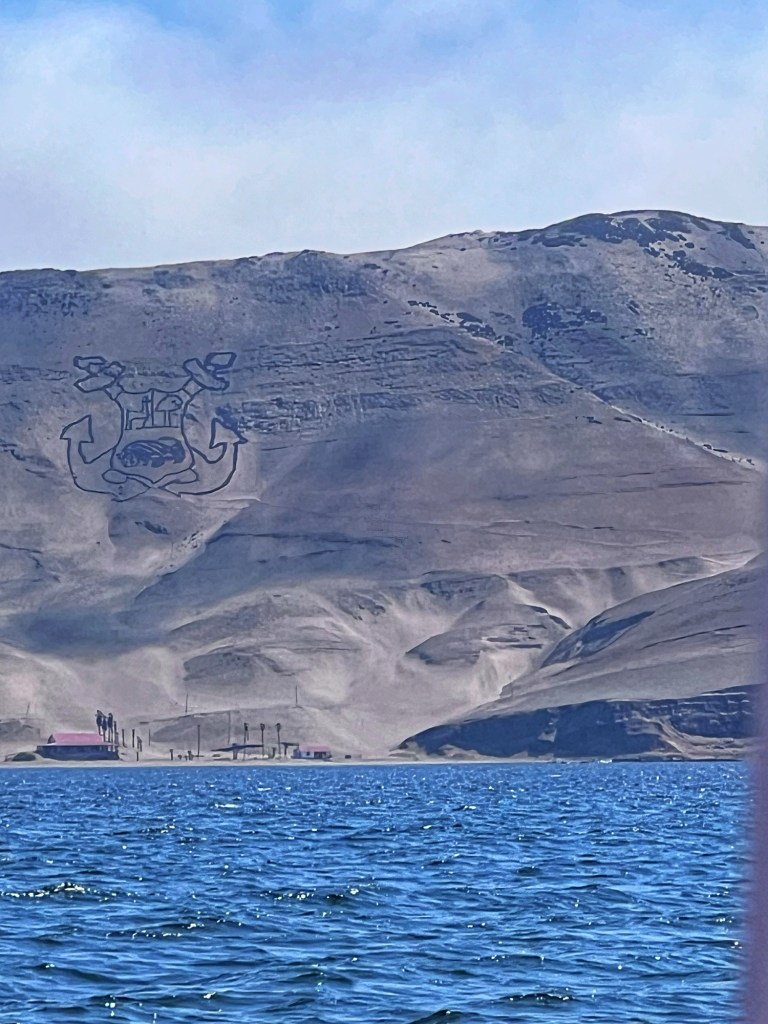
The writing on the mountain was Peruvian Coat of Arms. It was put there by their military and they used plants for the lettering.
The guide called this Moai, after the same face like sculptures on Easter Island. If you look closely at it you could see 3 faces. He said this was used by fishermen as a guide.
It was a beautiful ride to Palomina Island.
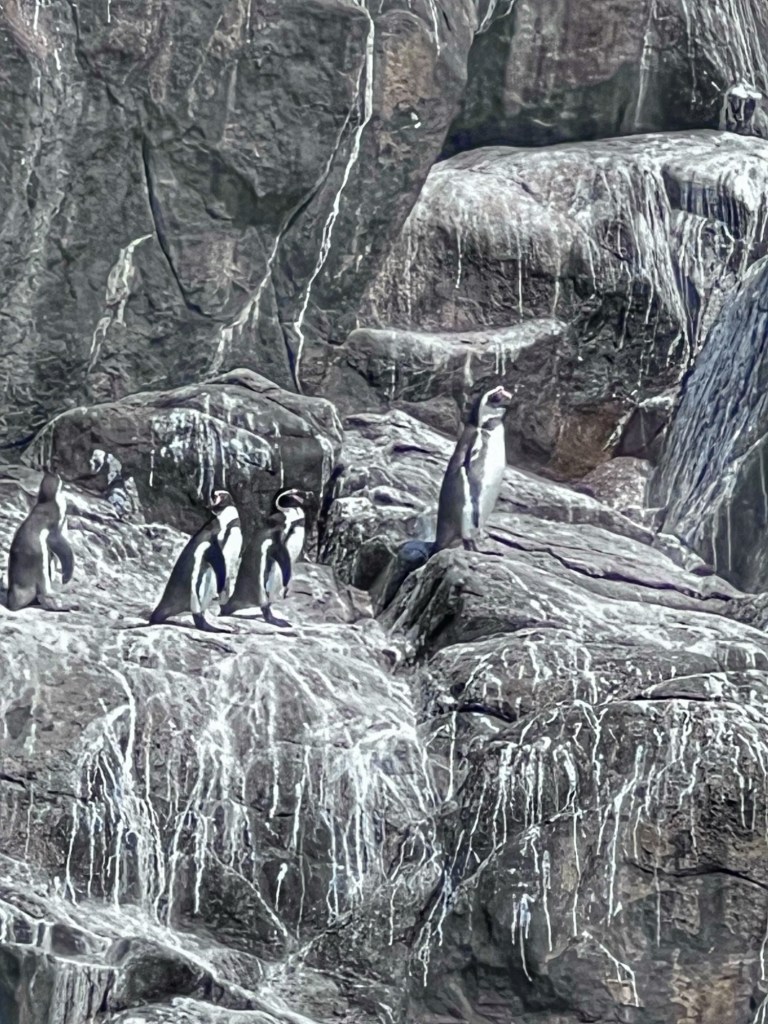
We finally saw a group of penguins.
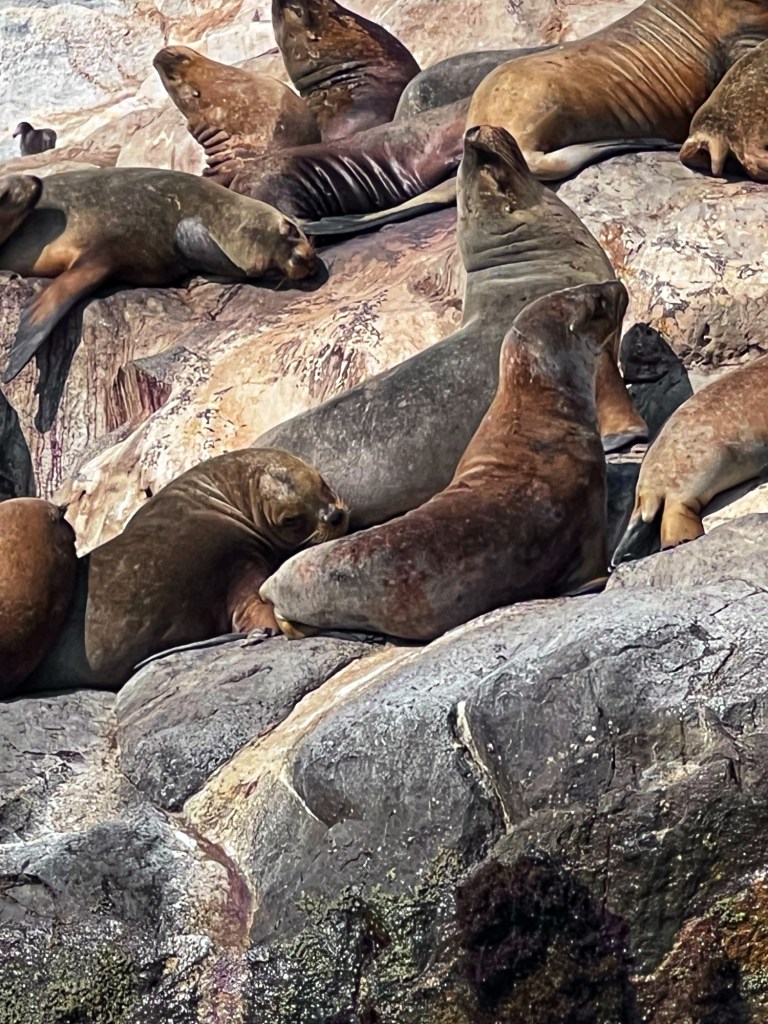
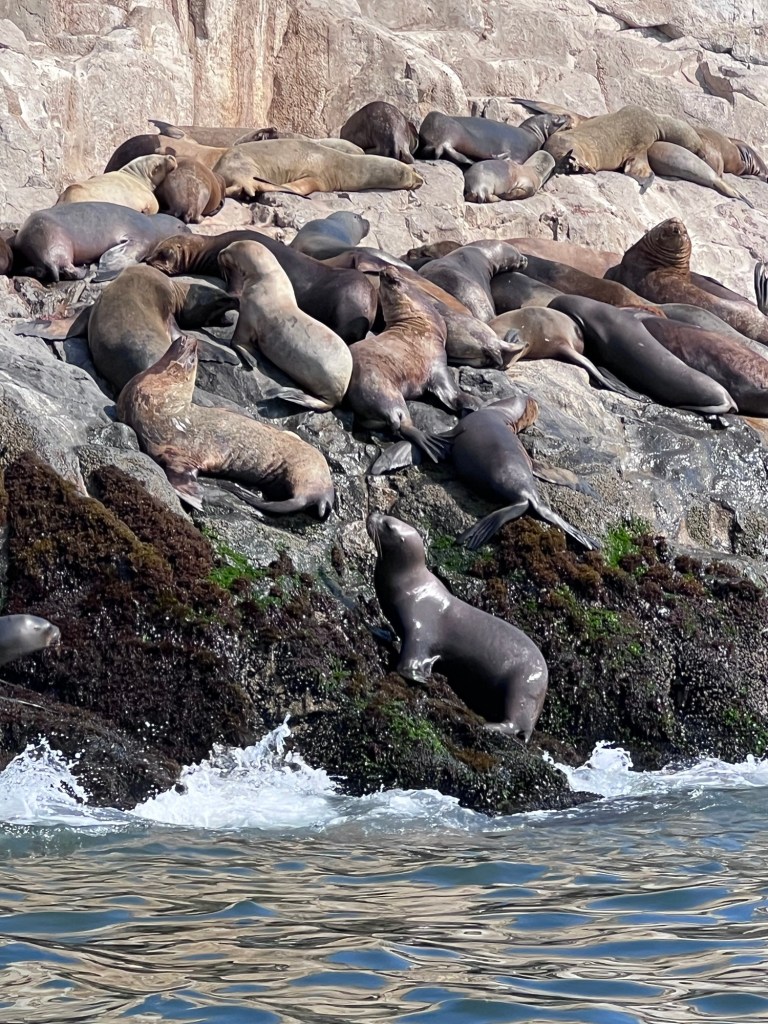
Then we reached Palomino Island, the home to thousands of sea lions.
The smell was horrendous. We were warned but I had to keep breathing into my hand until I adjusted to the smell. The water temp was 64 degrees. Since I’ve had a cold, I decided not to swim. None of the sea lions approached the swimmers so I was glad I decided not to get wet!
After spending time with the sea lions we headed back to the yacht club.
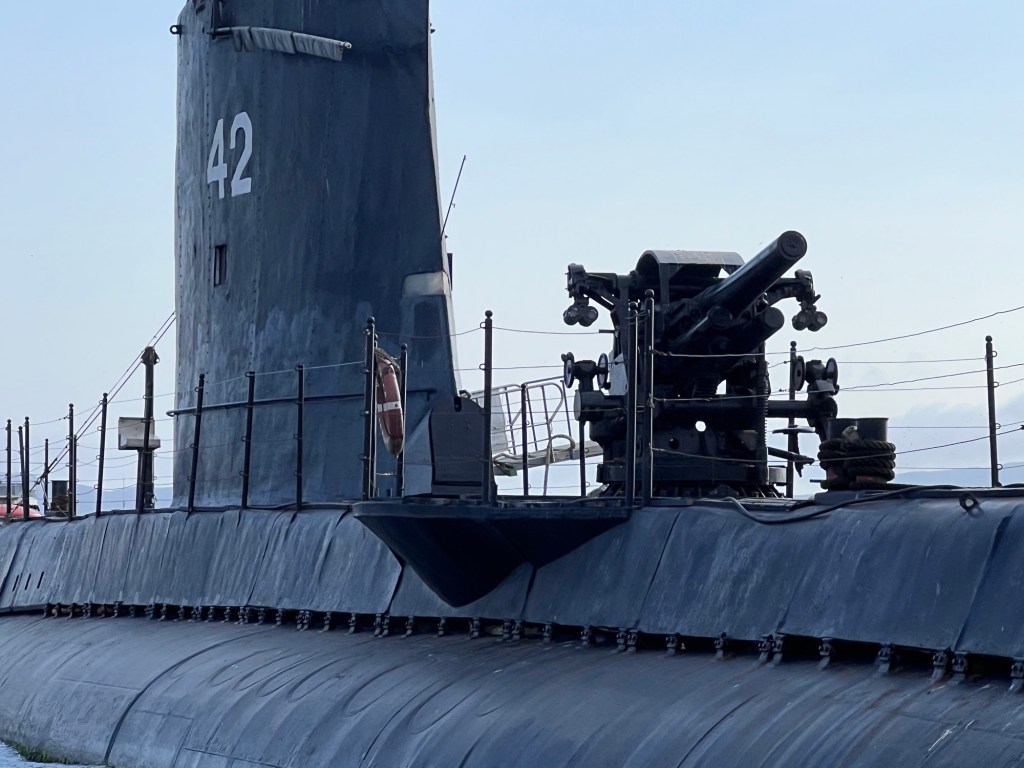
A submarine given to Peru by the US is in the harbor. It is used as a museum.
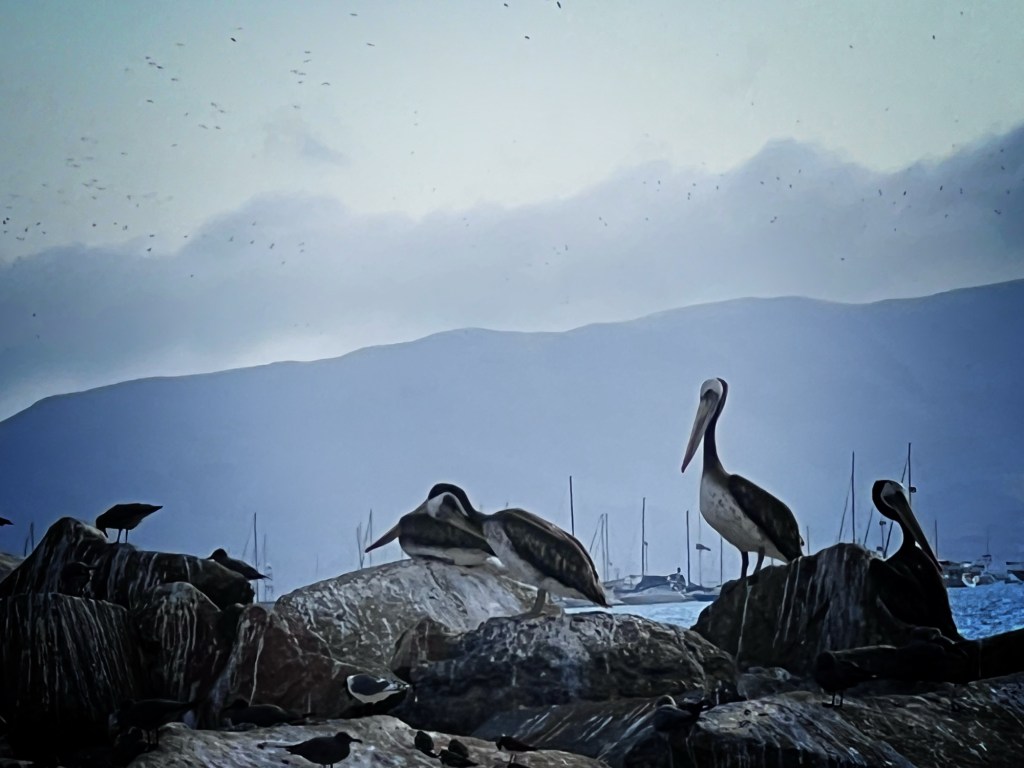
A few pelicans gathered on the rocks!
It was a fun afternoon spent looking at the wildlife if Peru!
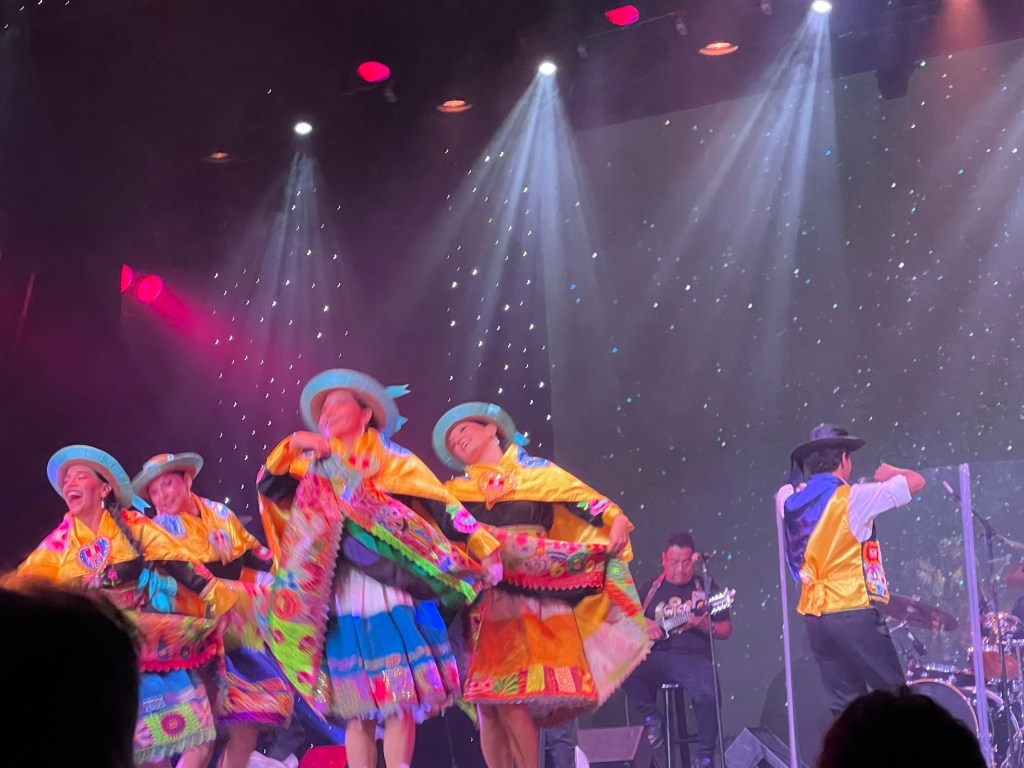
In the evening we were treated to a Peruvian musical company! They were fantastic!
We are now in Peru. Some passengers have left the ship to do a two-nighter to Machu Picchu. It was very expensive, over $3000. It’s on our bucket list so we will return to Peru to do this trip at another time.
From our balcony, we see a lot of dirt or sand – mountains plus sea.
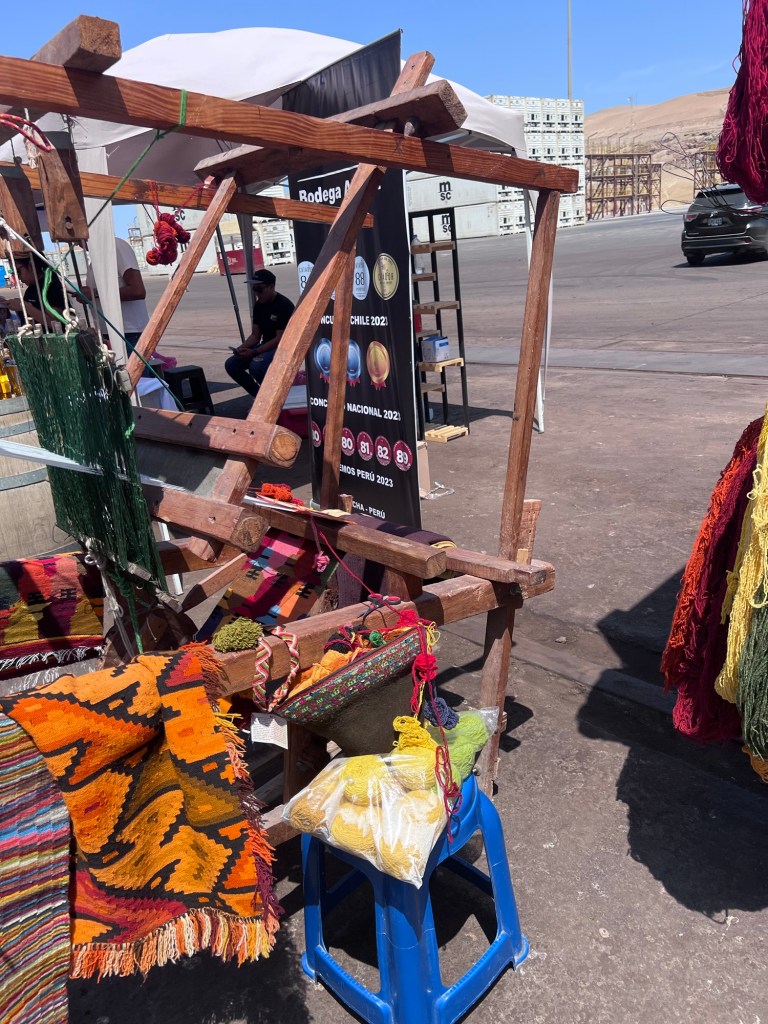
I have the same cold Bruce had two weeks ago so I’m not feeling great. We decided to wait a while and then take the free shuttle to Paracas, a resort town for people living in Lima. Vendors were selling their wares on the pier and one man was working on a loom.
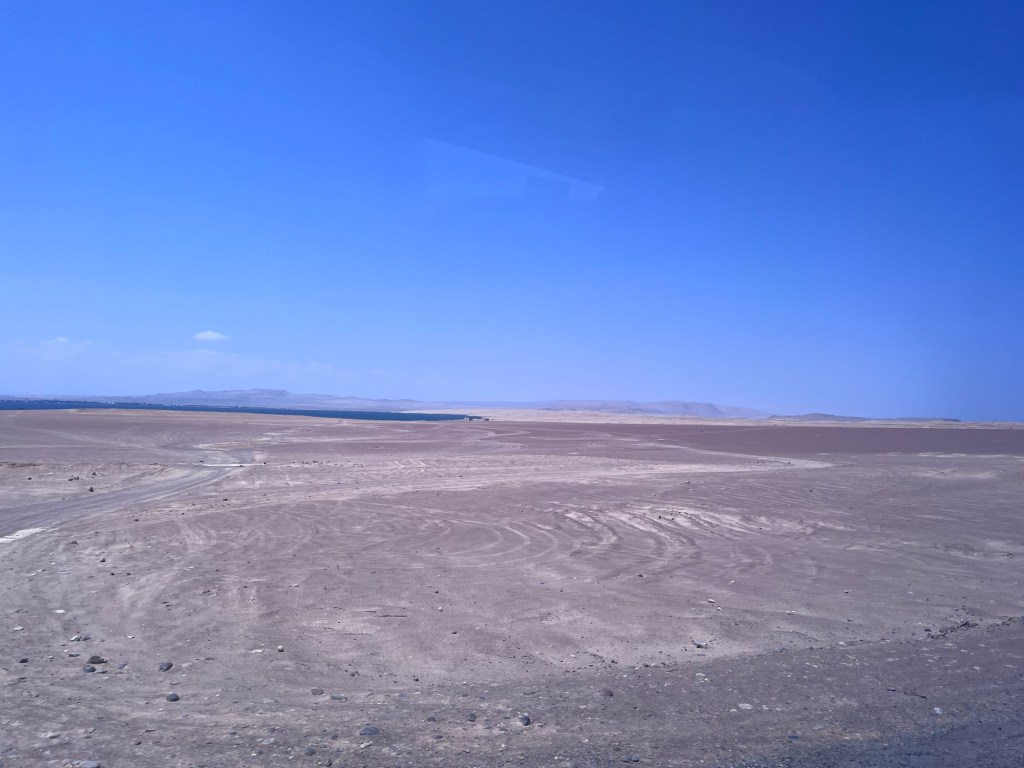
The drive to the town was like driving through a desert but with ocean all around.
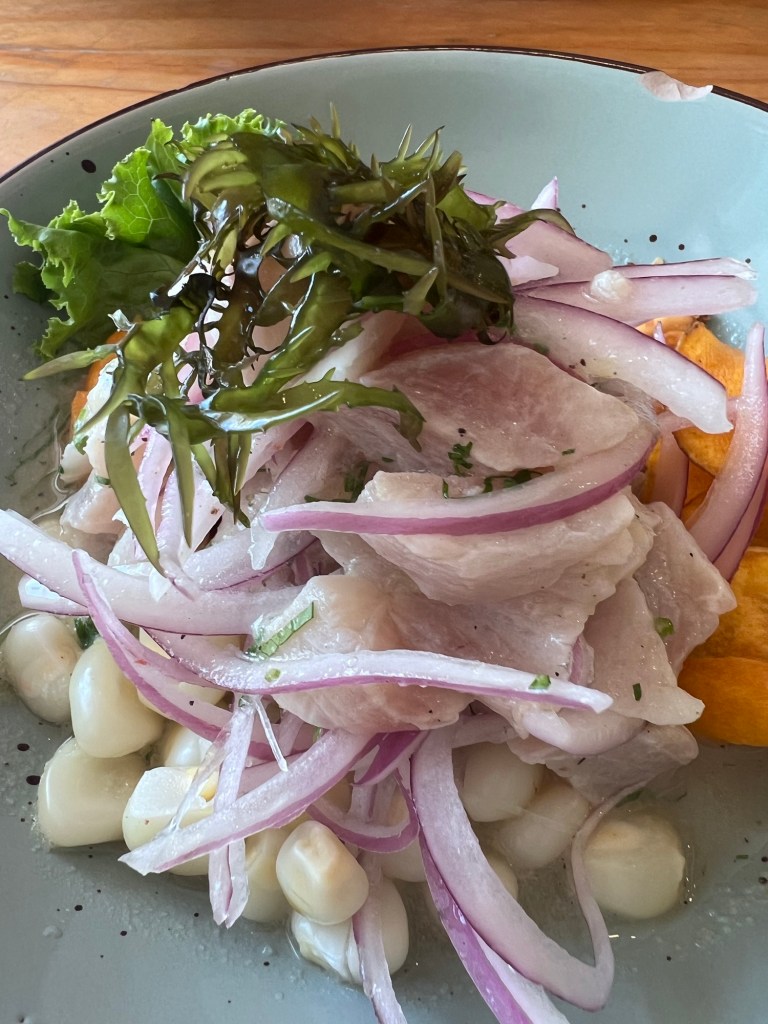
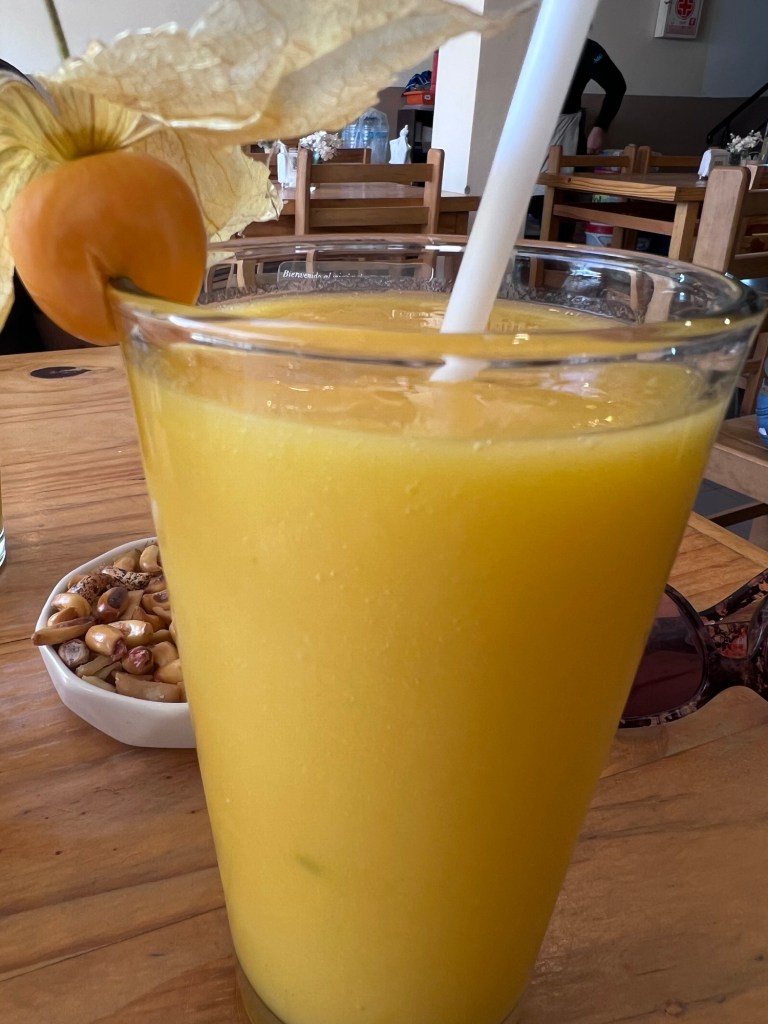
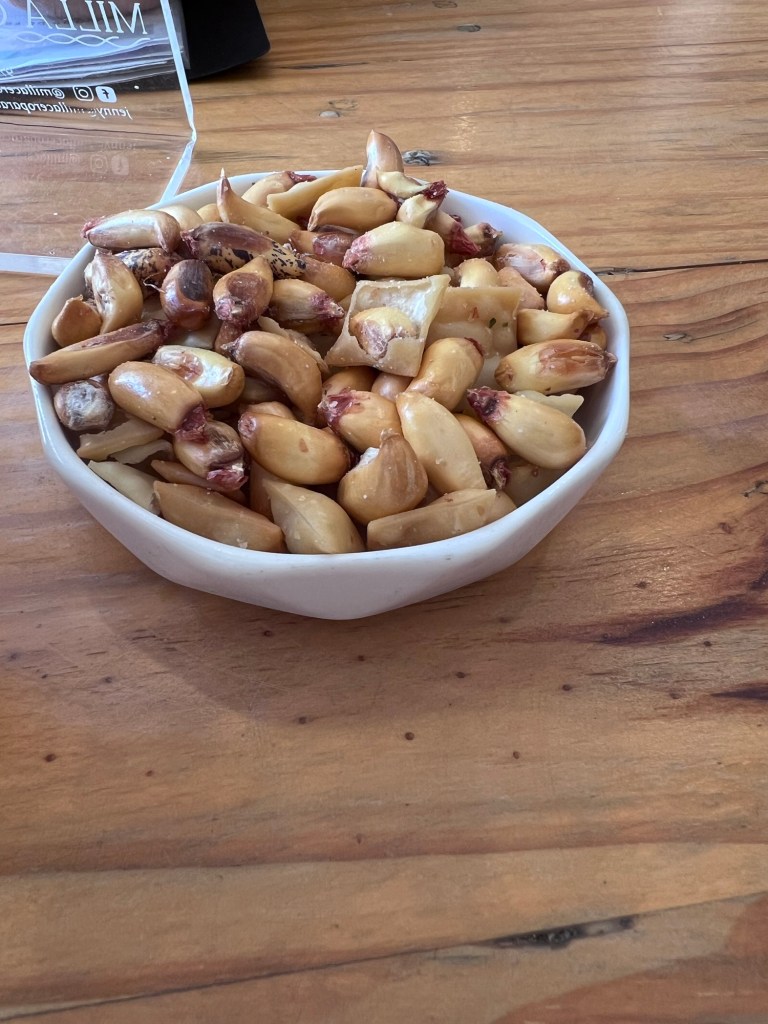
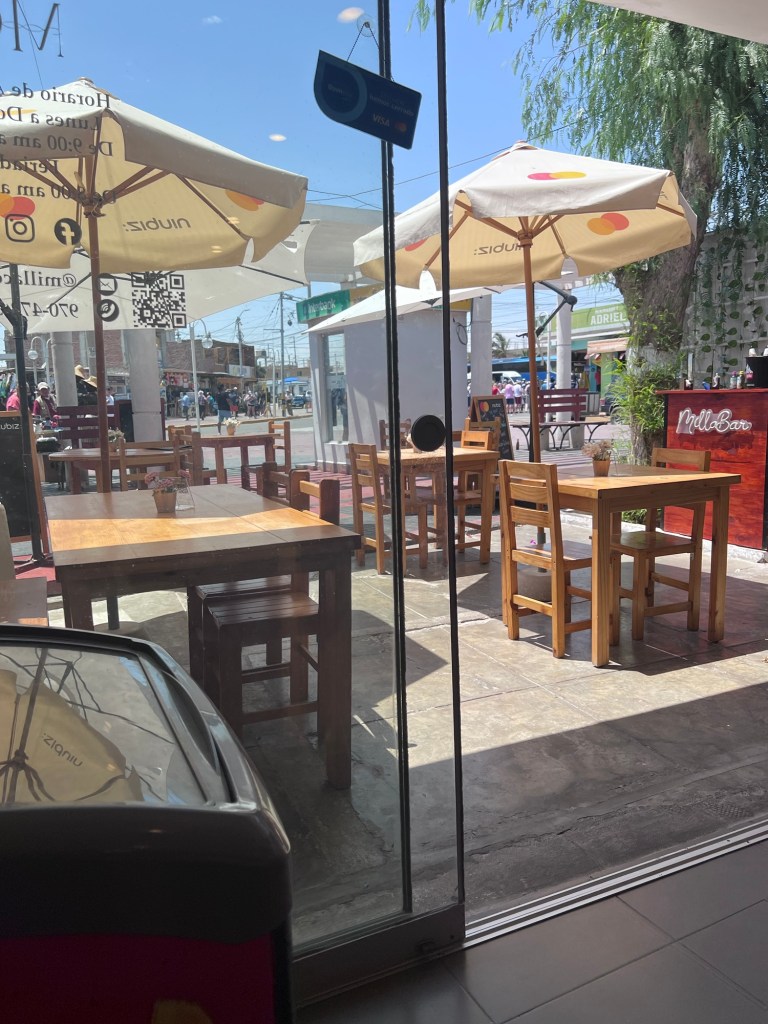
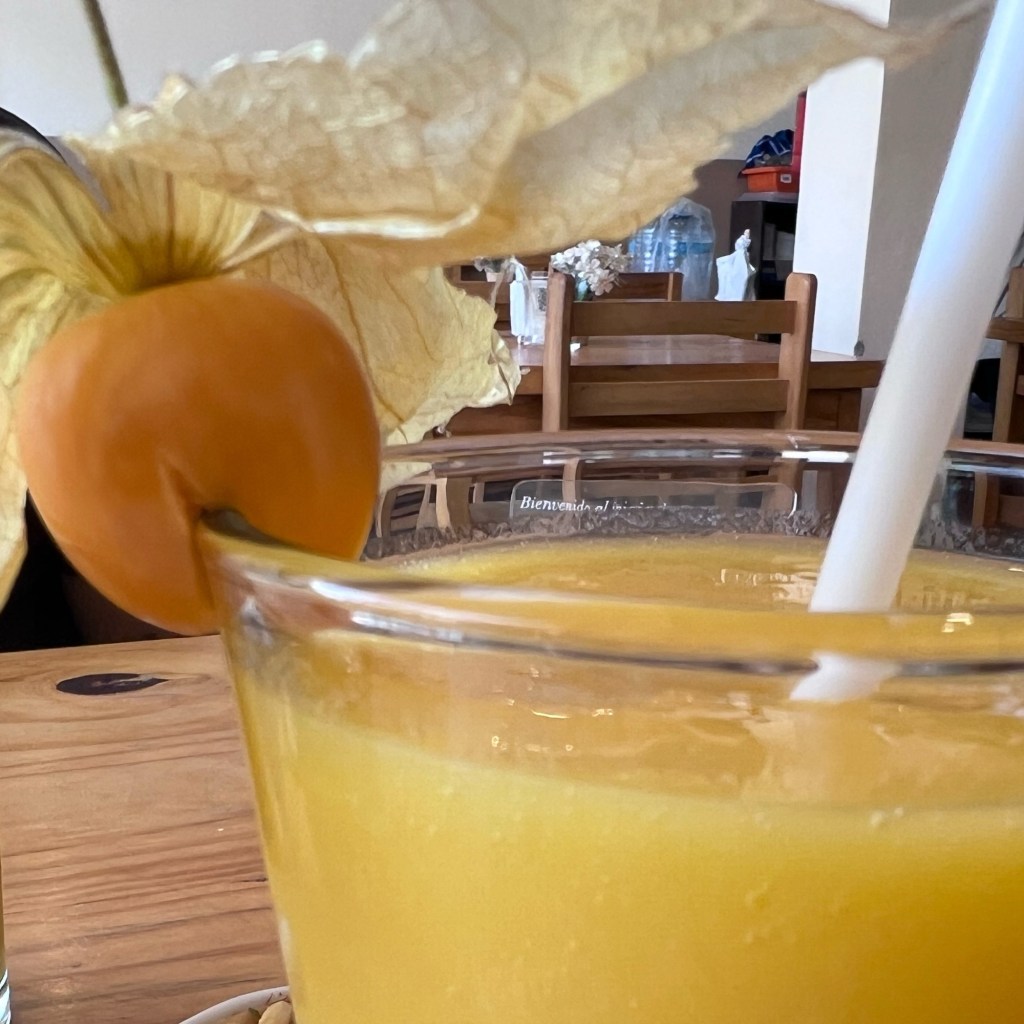
Off the bus and into the town our first stop was at MillaCero. We had a light lunch of fish ceviche and mango drinks.
Aguaymanto is a tiny Peruvian fruit. It came with our mango drink. I ate it before I even looked to see what it was. Now that’s bold!
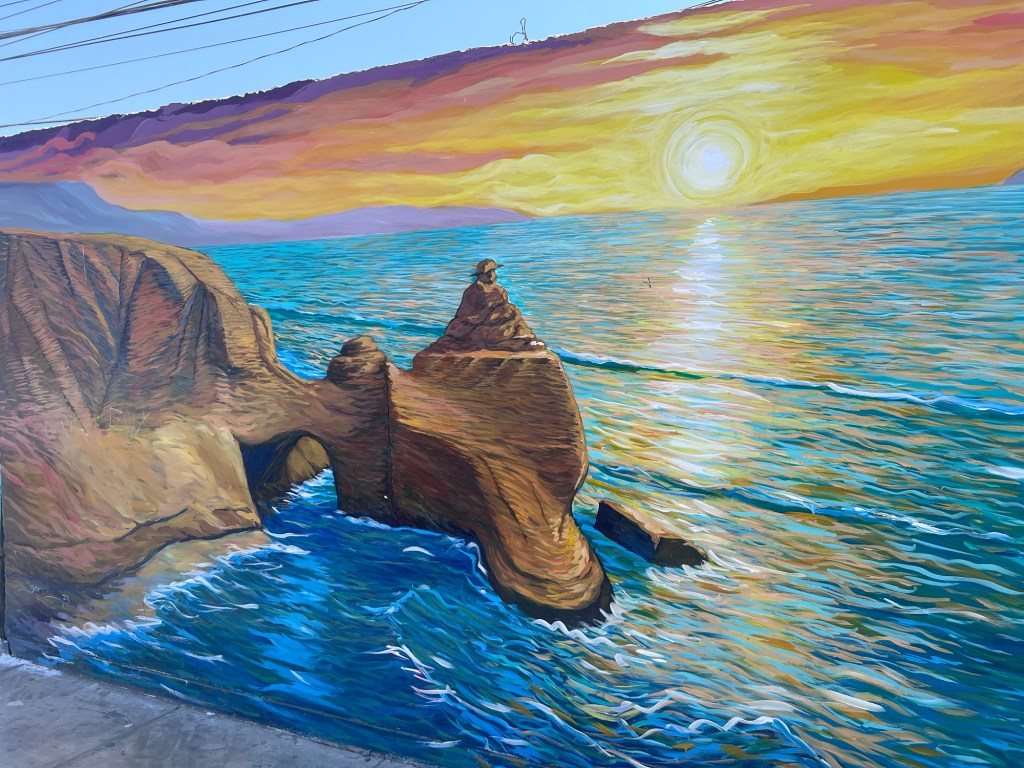
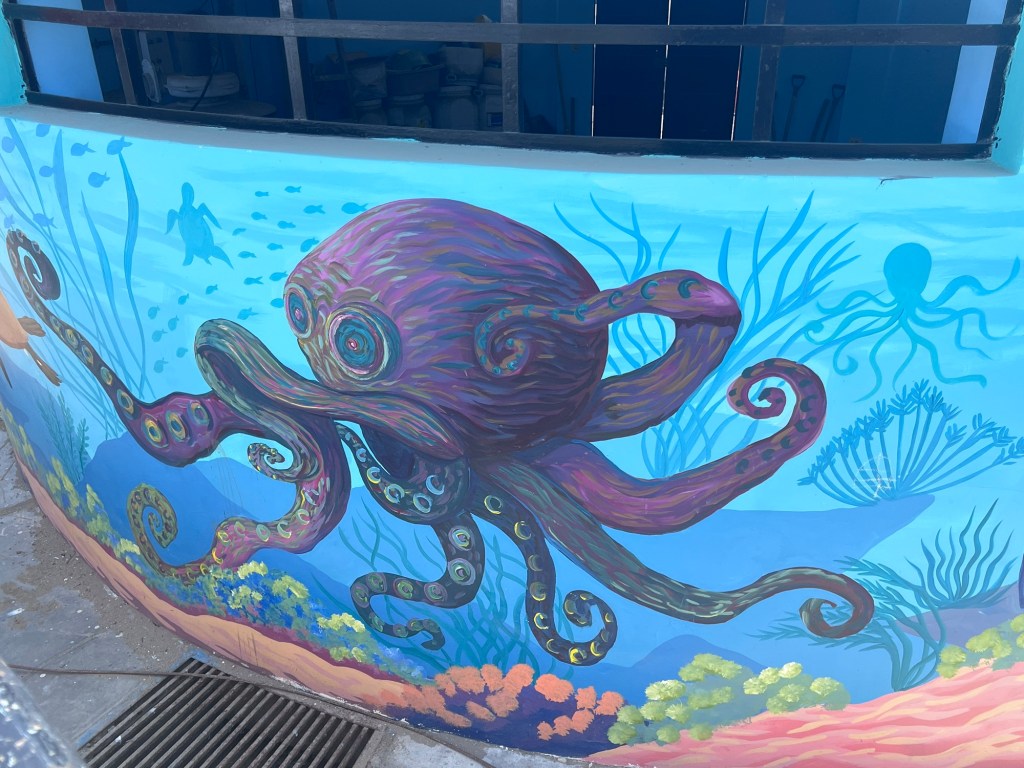
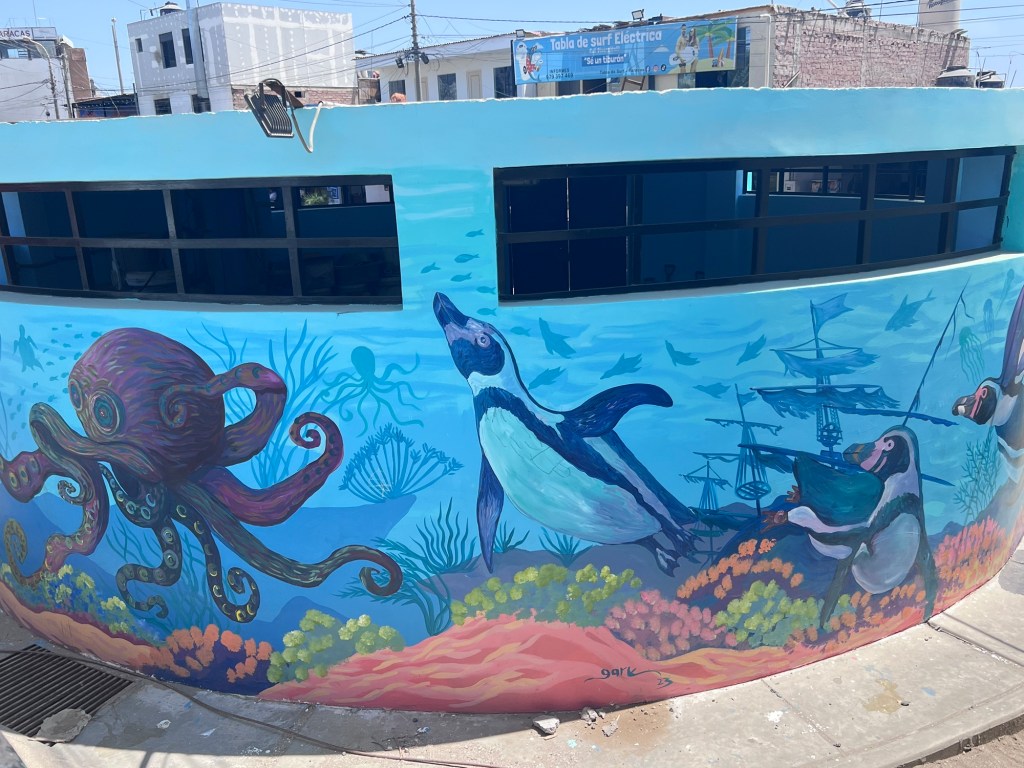
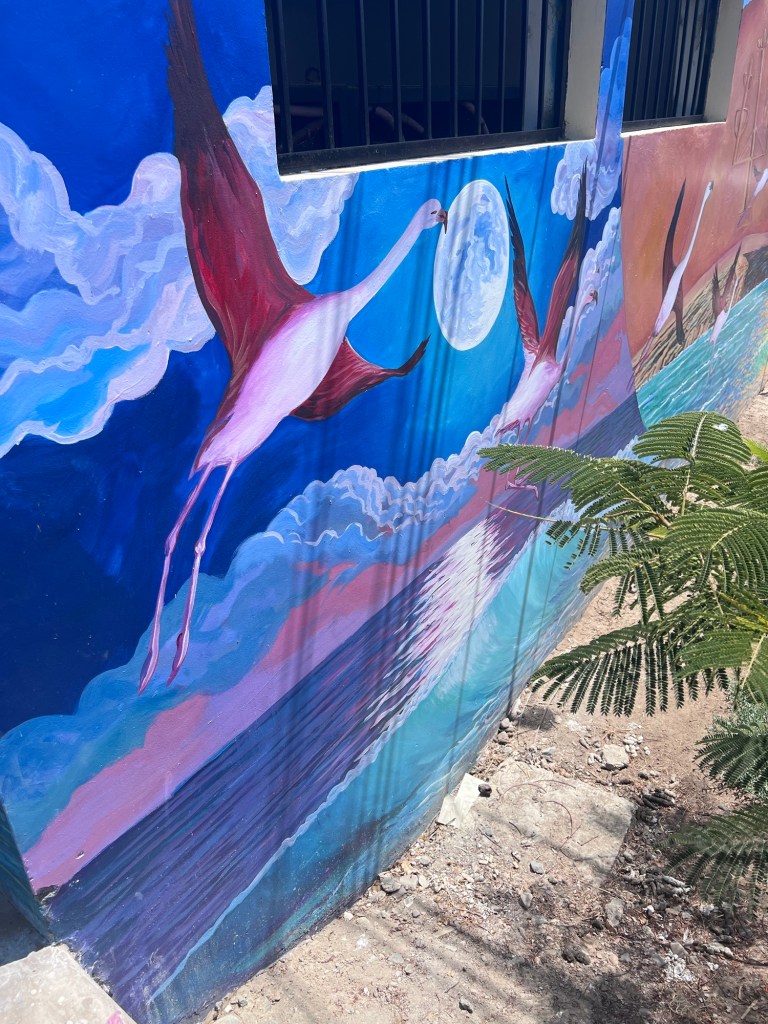
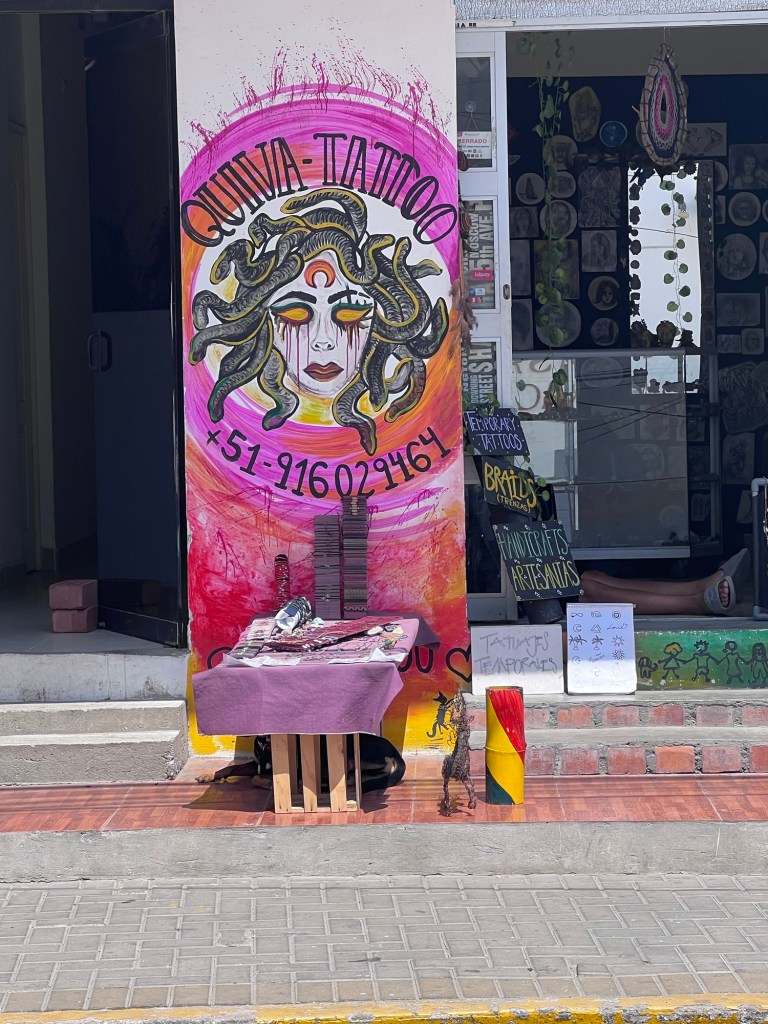
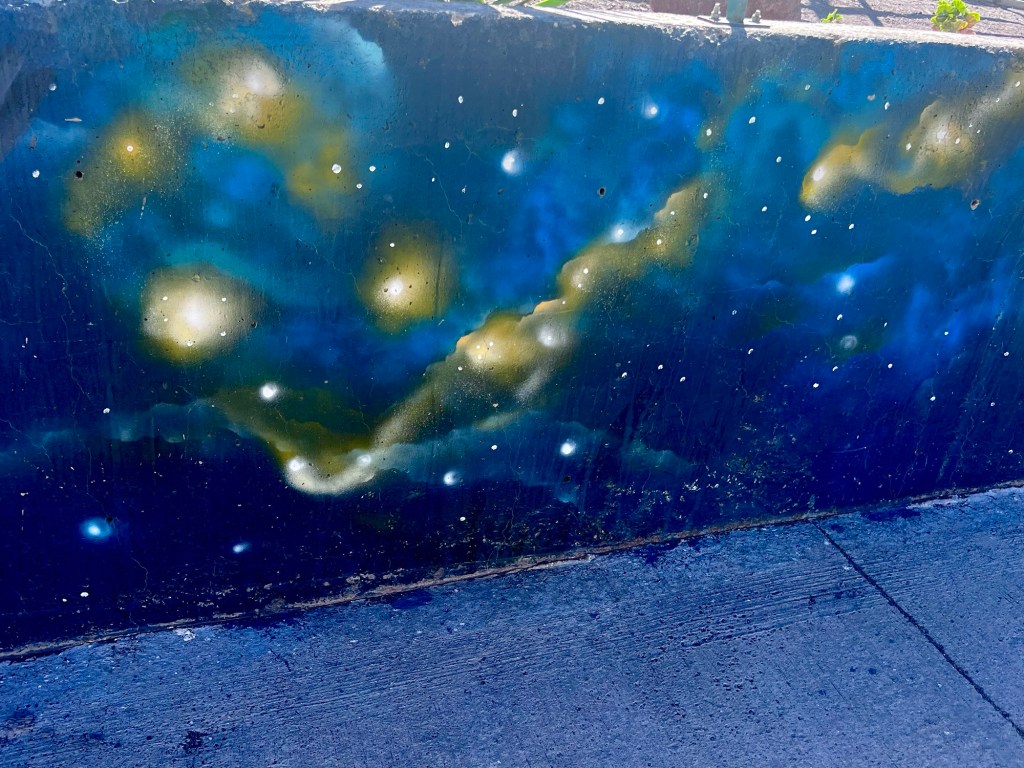
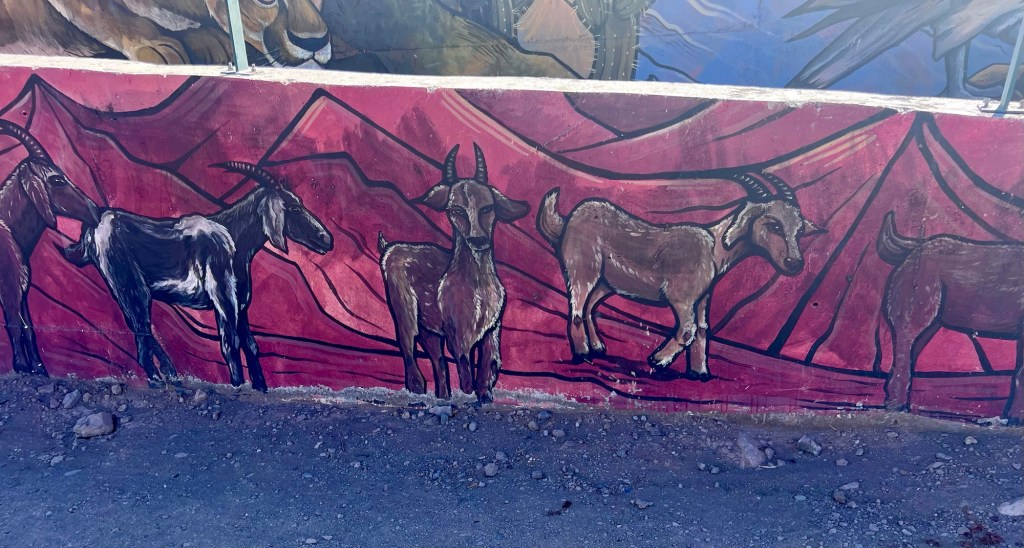
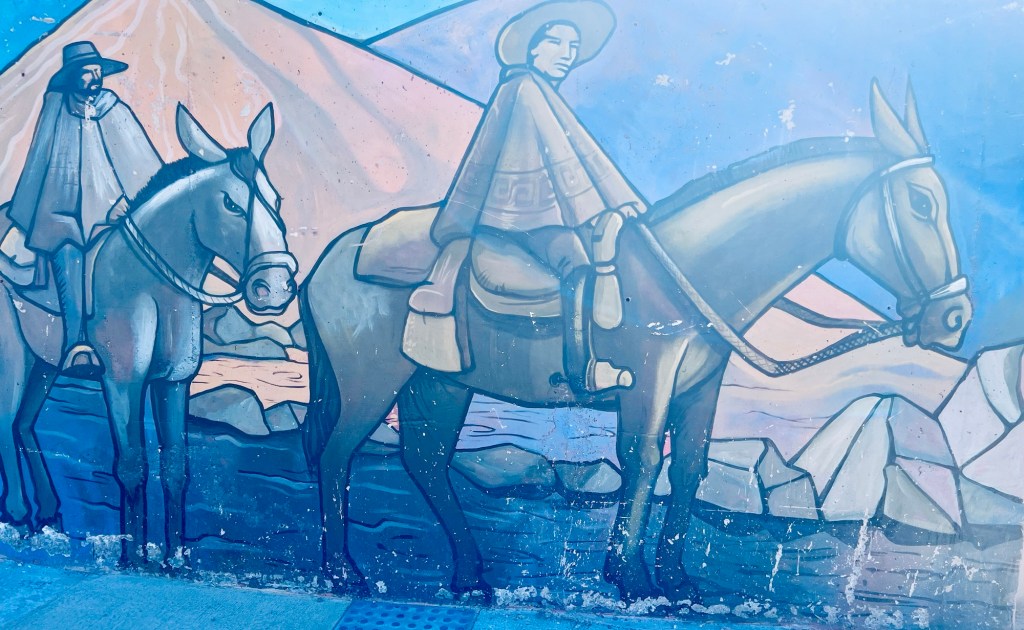
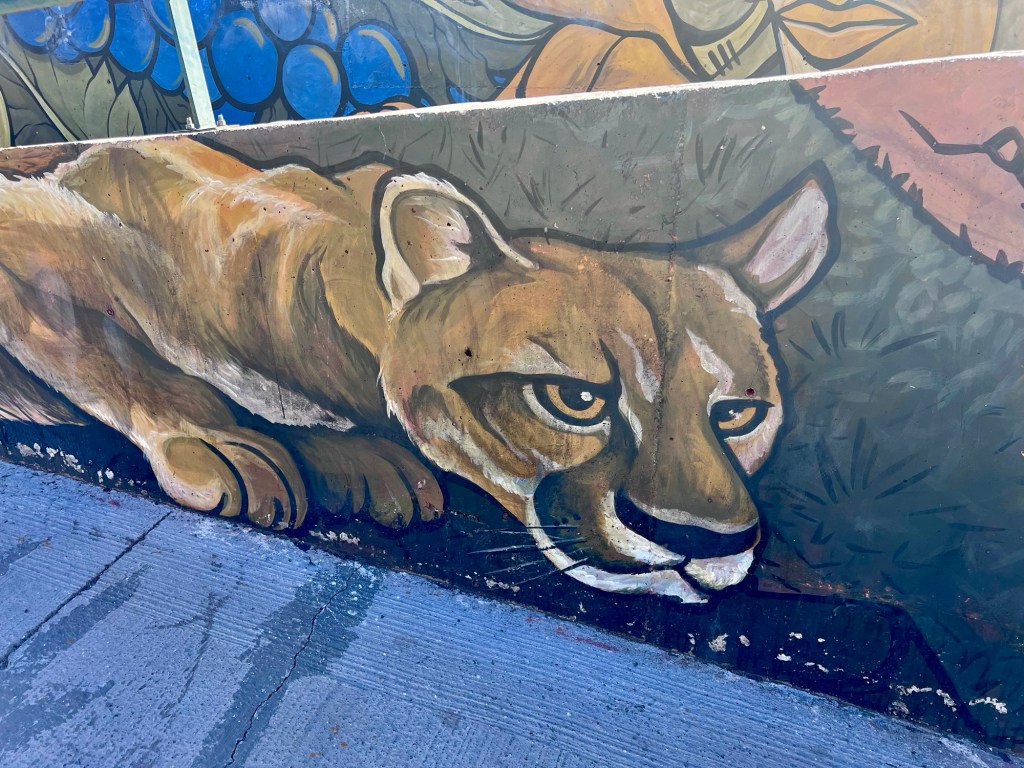
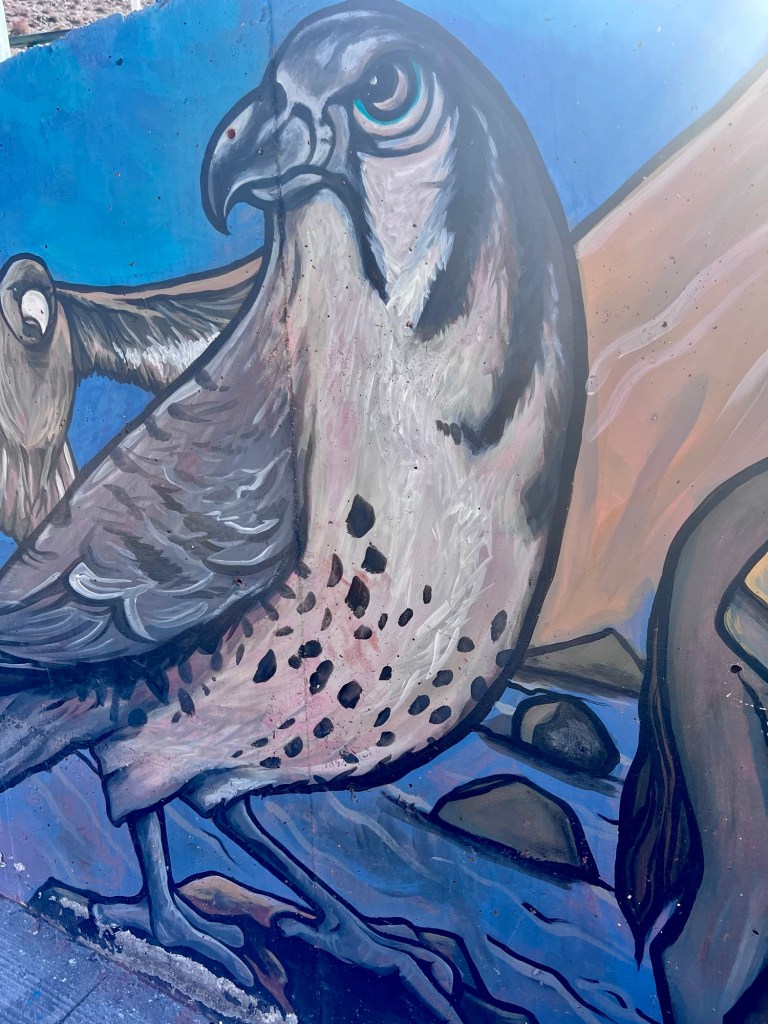
I couldn’t find a church but did find some beautiful street art.
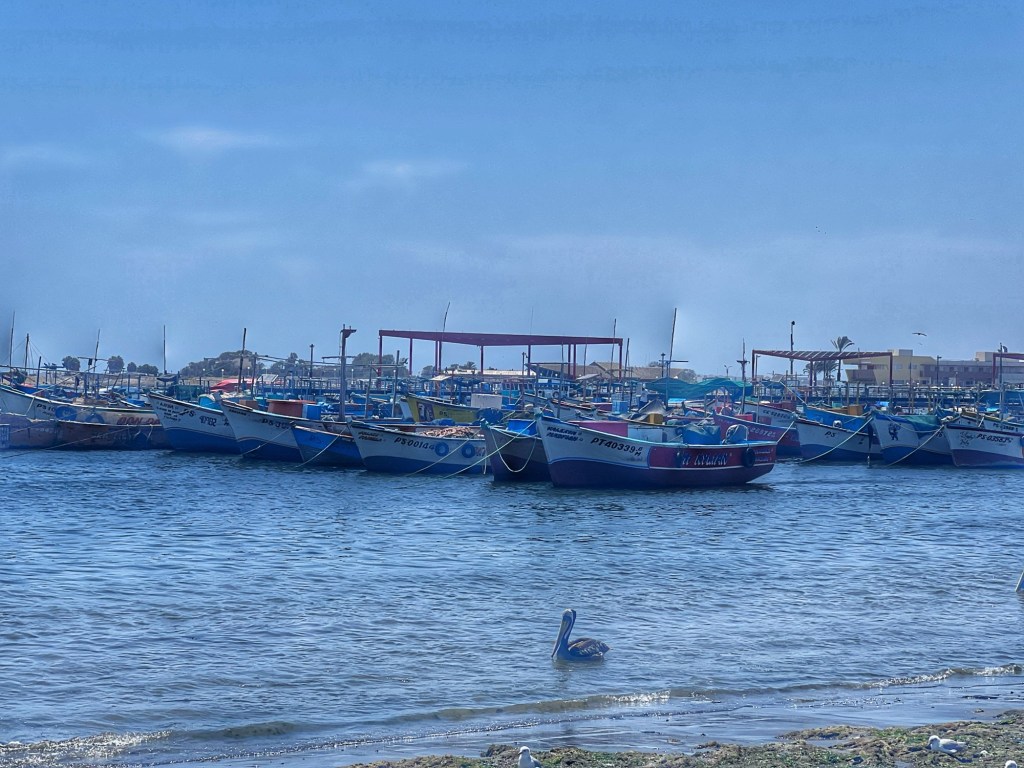
And some beautiful boats in the harbor!
And I can’t forget the friendly pelican! He was posing!
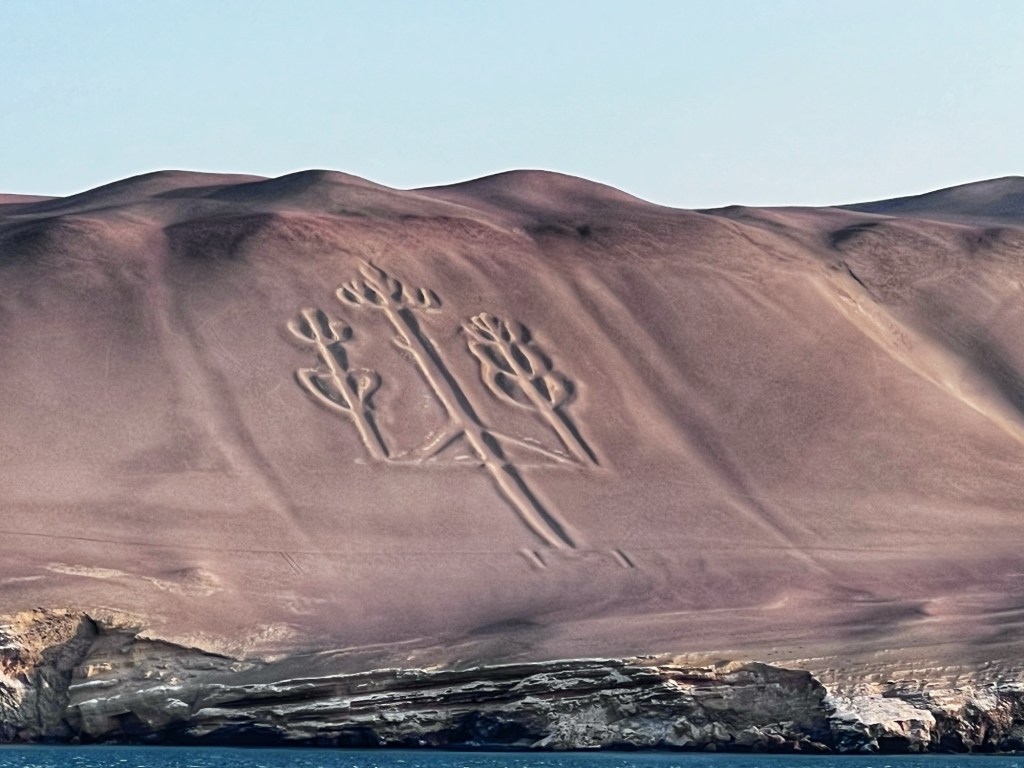
Is it a giant candlestick, pitchfork, or trident? This etching in the sloping hill is called “the Candelabra of the Andes”. It’s approximately 600 feet from tip to base, dependent upon the section measured. In appearance it is a large central line from which two arms branch out to form an overlying U shape. At the top of the main, or middle, line there are smaller lines resembling antlers or candle holders that reach from either side of the main line. These additions also appear on both of the outer arms as well. Overall, the figure has the appearance of a giant candlestick. addition to the main lines of the Candelabra, there is also a second set of tracks from the main lines sent out to support the large, branching arms. Another interesting feature is the lower set of lines looping the sides of the branching arms. The Candelabra was literally etched into the earth and dates back to 200 BCE. It is very similar to the more well-known Nazca lines but at this time nobody knows the purpose.
Our new Captain, yes our former captain left for vacation, detoured so we could see this.
Another early morning rise. I am not sure why this is so difficult except that we have been luxuriating in the slow-to-start mornings. But sometimes we have to suffer through this if we want to see a port. Our view this morning was much nicer than yesterday in San Antonio.
We met our tour guide Sergio at the terminal. The company is Turismo Cochiguaz.
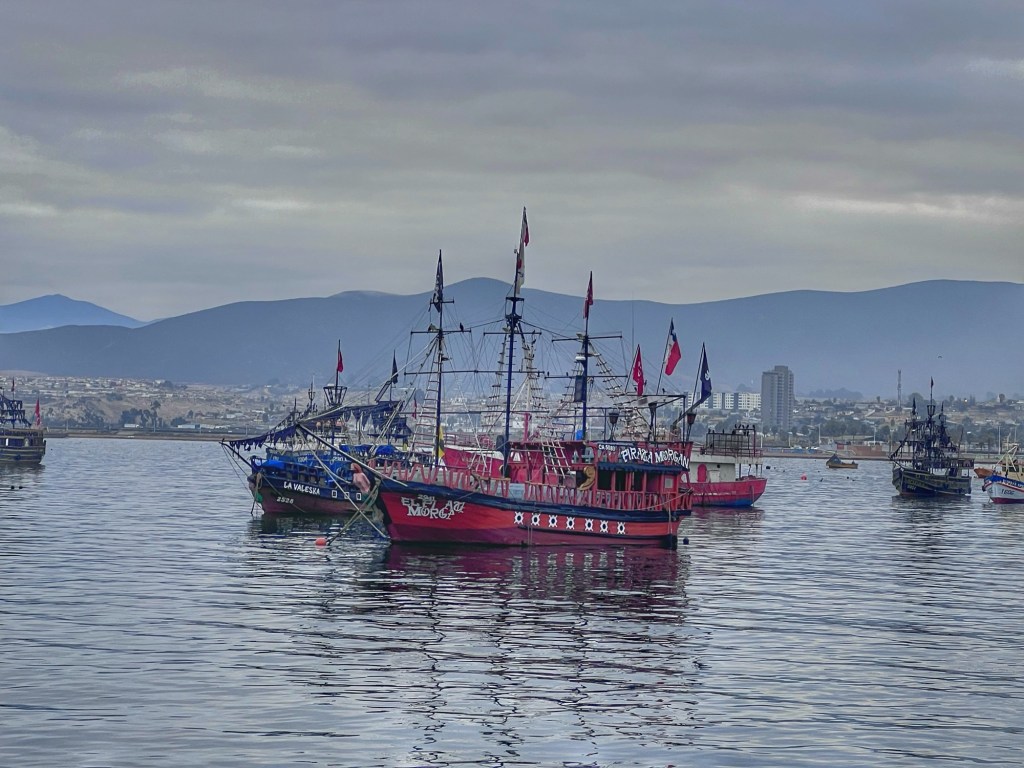
On the way to our transport, we saw pirate ships in the harbor.
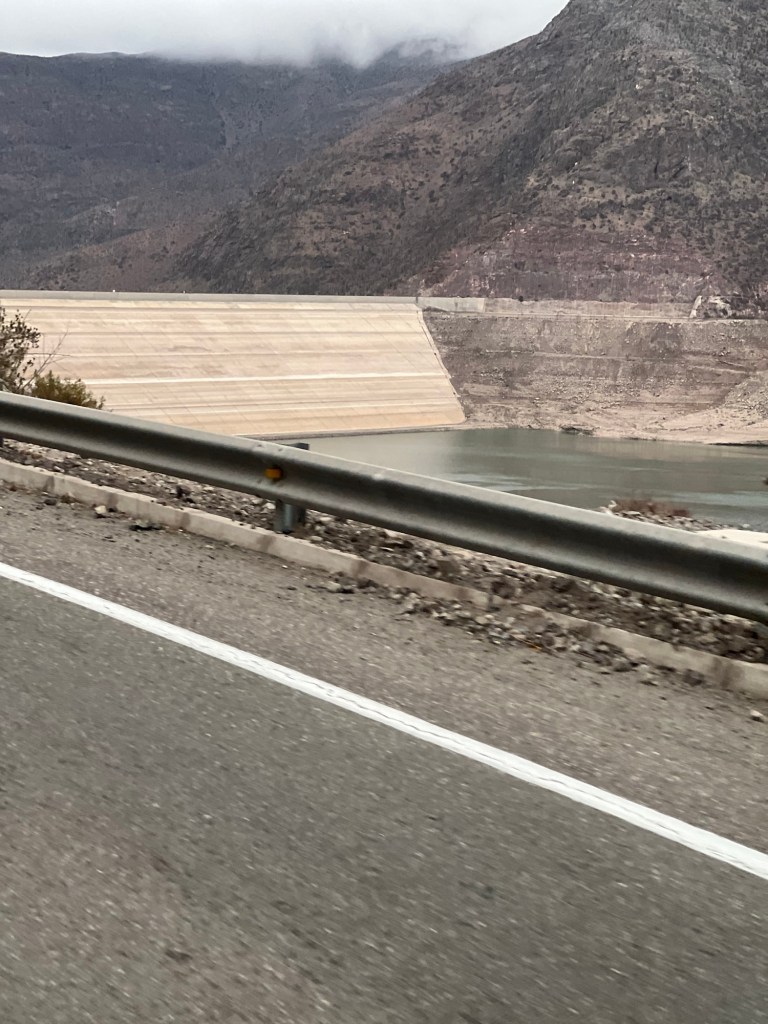
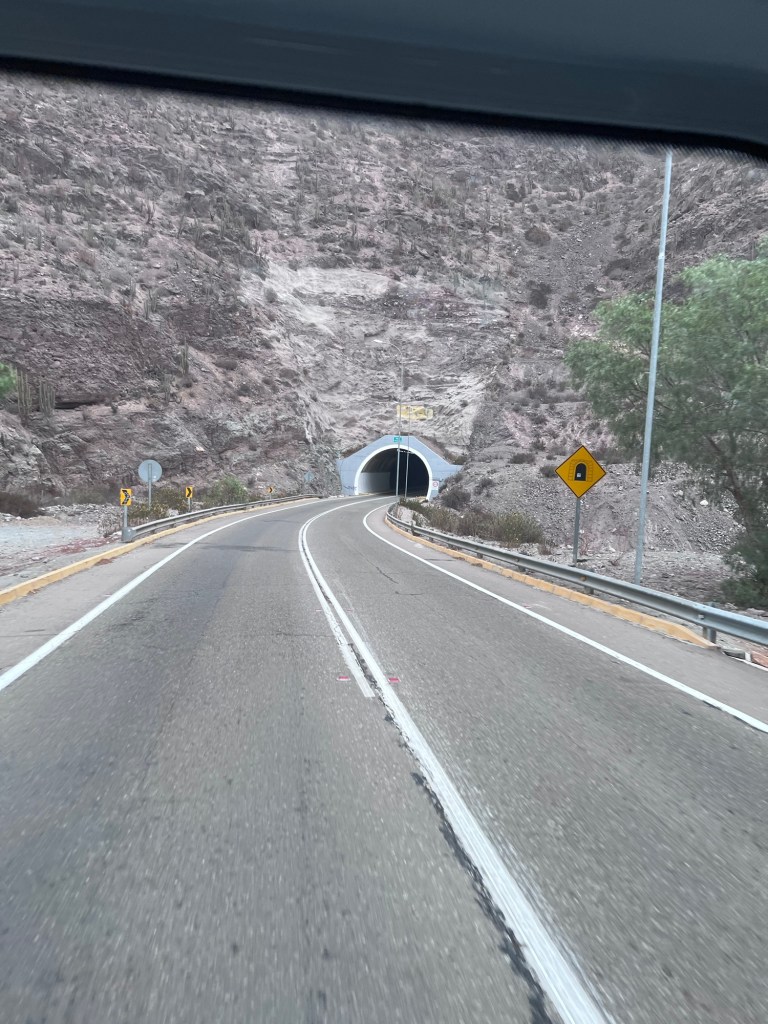
Our trip today was to the Elqui Valley. On our way, we drove past the Puclaro Dam and through the Puclaro tunnel through the mountain.
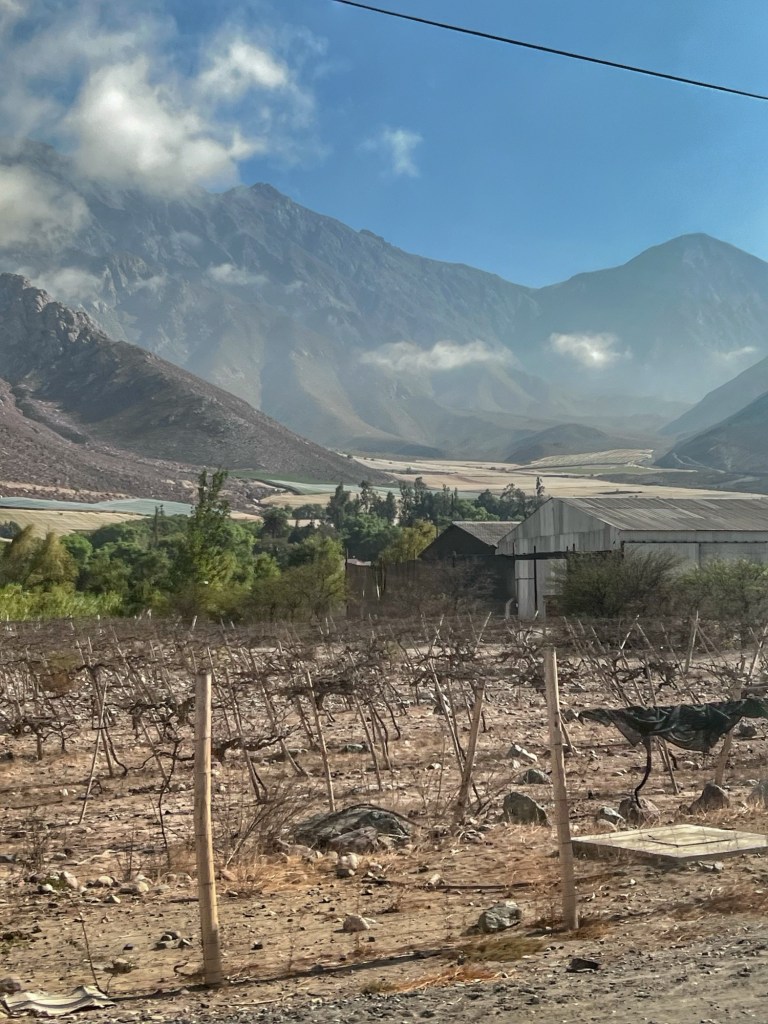
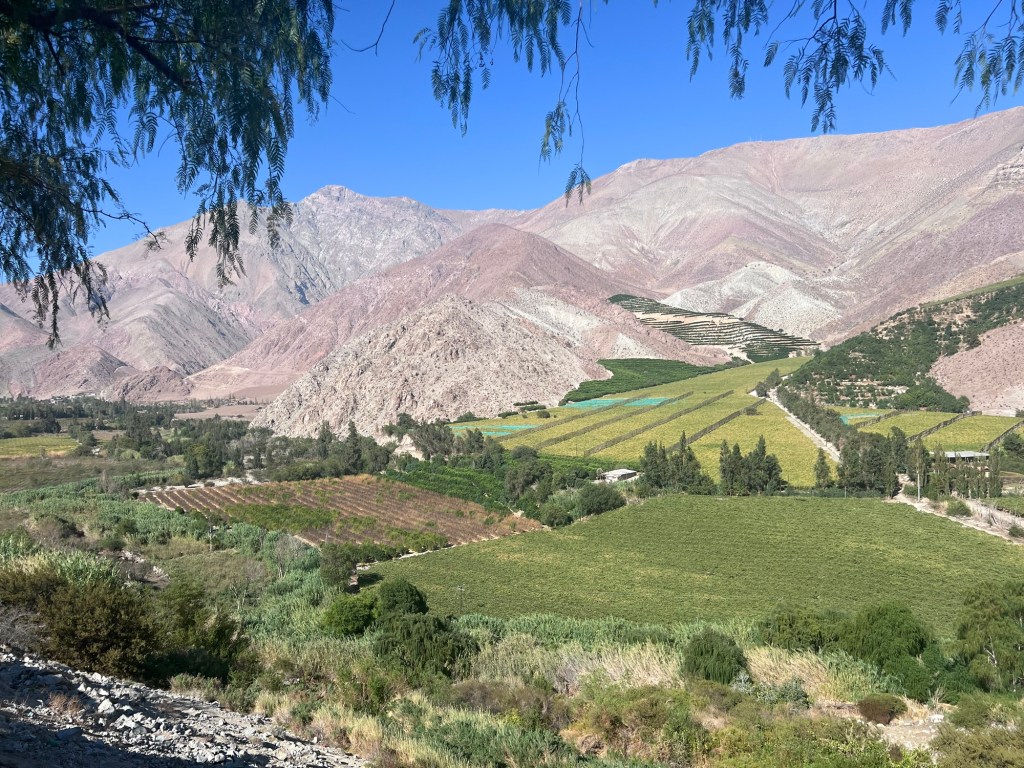
The native indians called the Elqui Valley the trumpet of the Andes. Along the way we saw many vineyards. However, water is very scarce here.
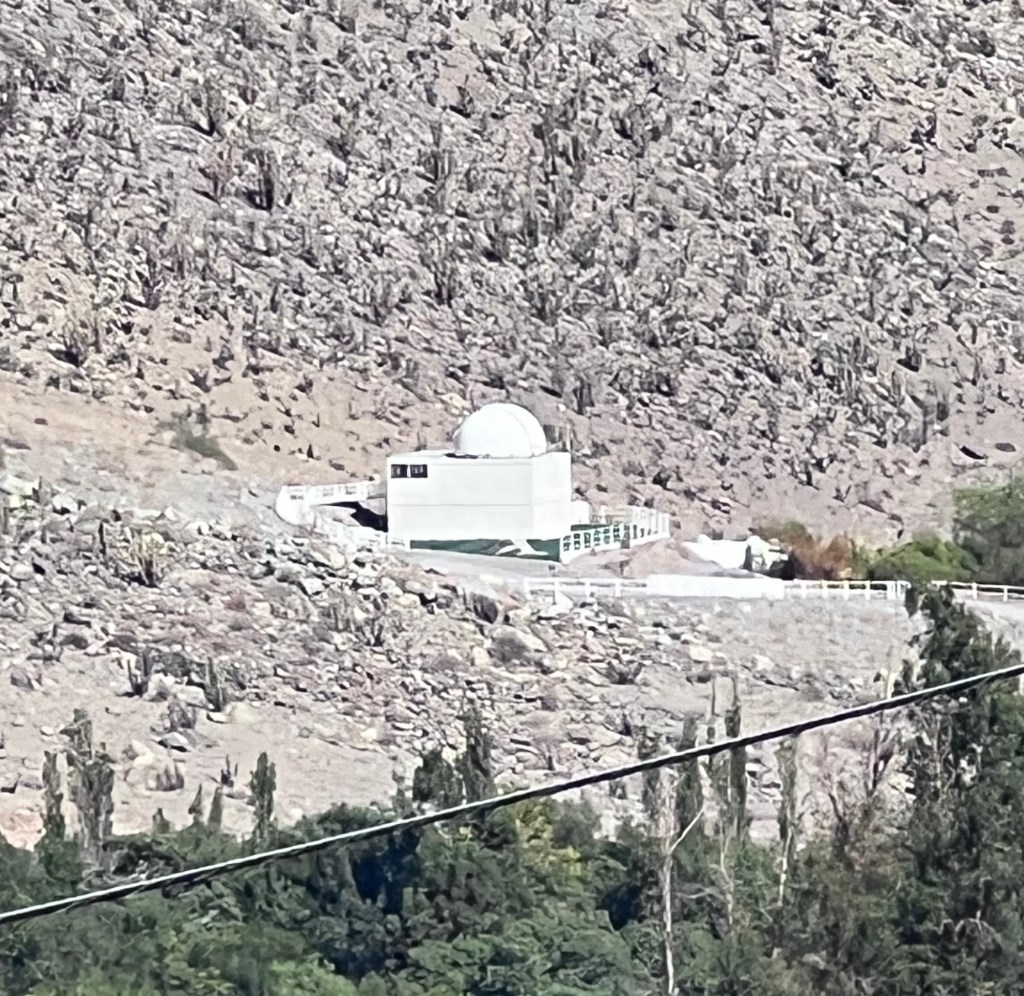
Papaya is known as the tears of the Indian princess. The area has 320 days of clear skies making it an ideal location for astrology.
Our stop to lookout over the Elqui Valley.
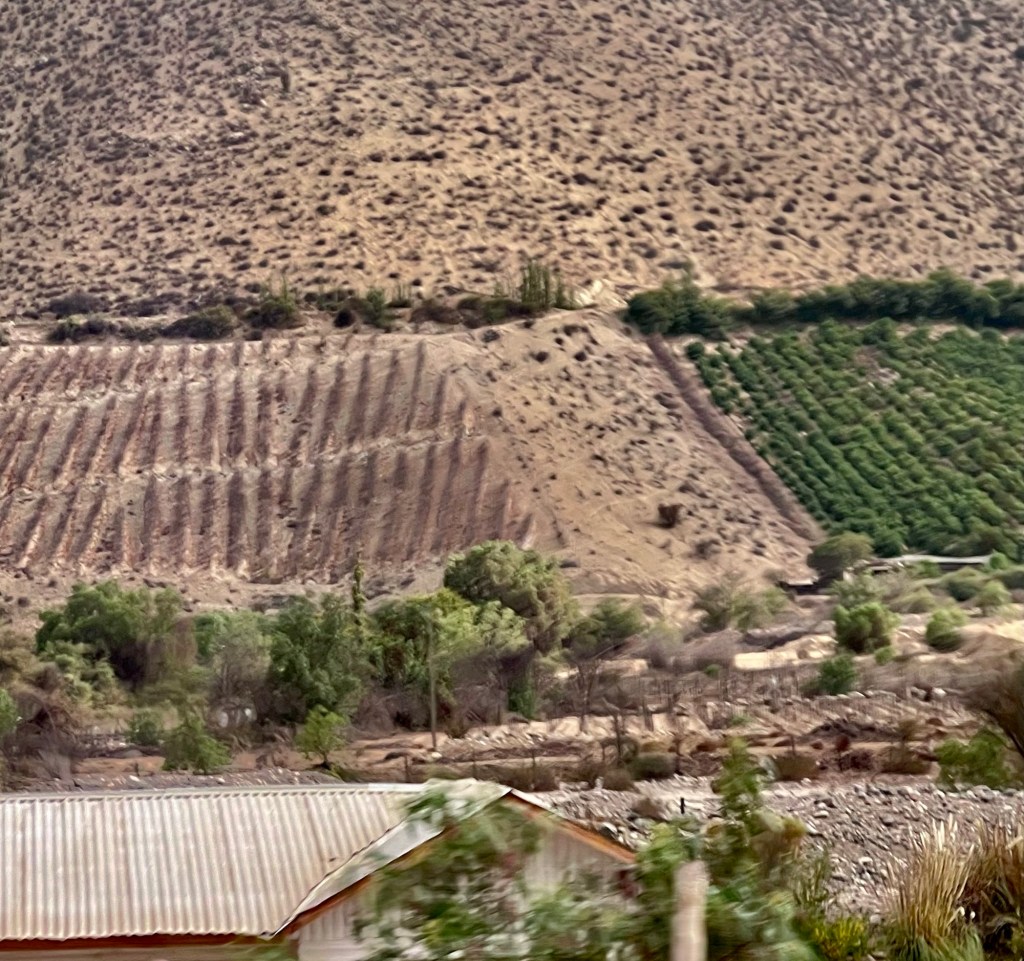
Incas taught the newer tribes how to cultivate and farm the land using a diagonal approach on the hillsides.
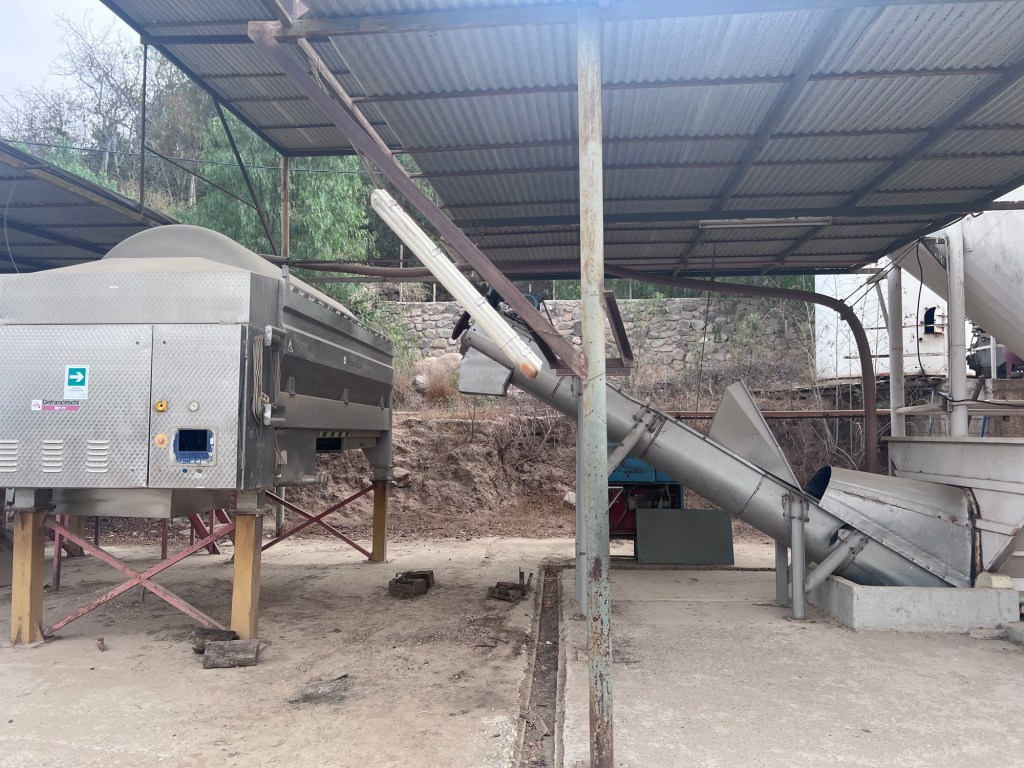
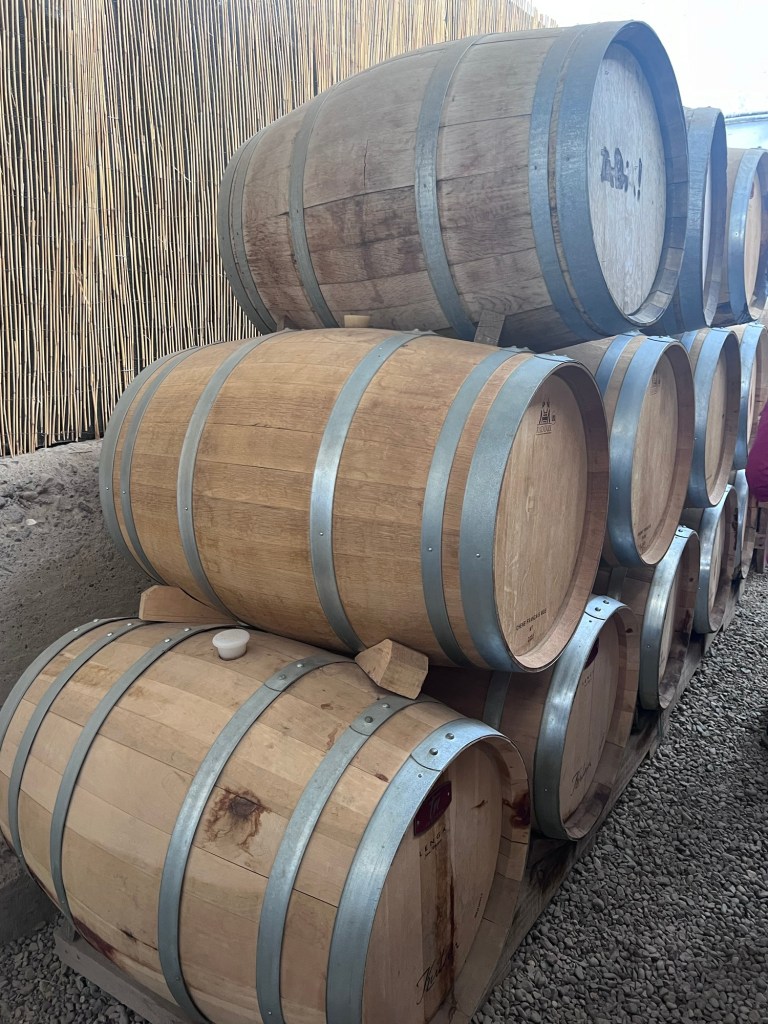
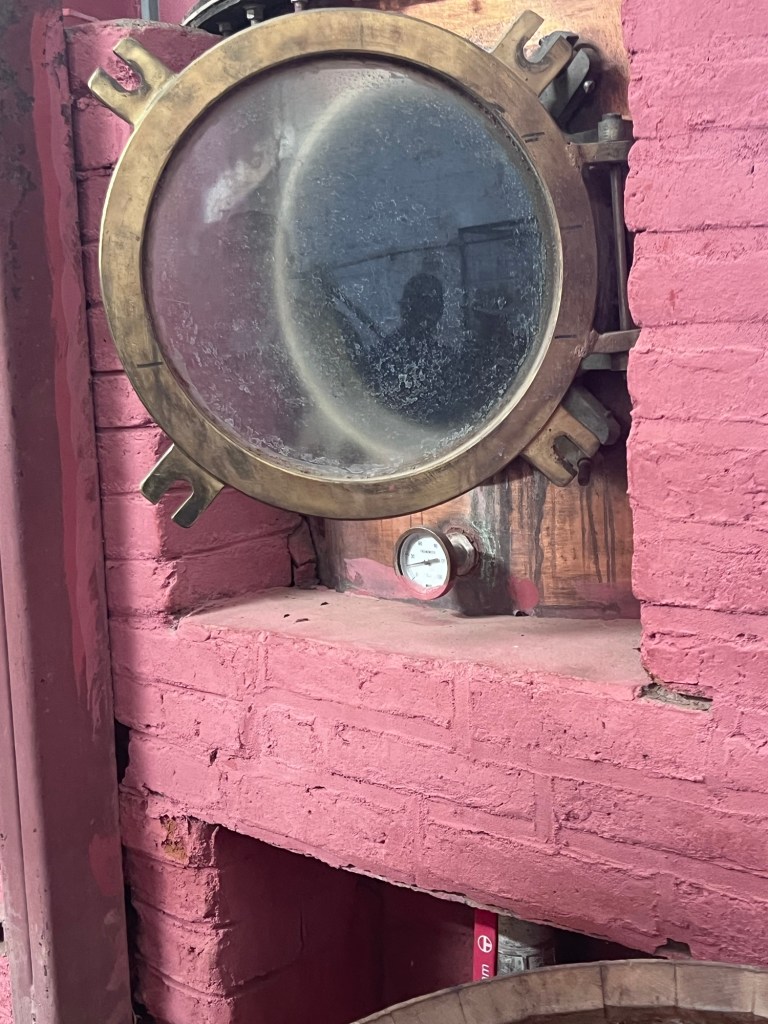
We stopped at Aba Pisquera to learn how they make Pisco, an amber or yellow colored alcohol beverage made in Chili. It is made by distilling fermented grape juice into a high-proof drink and it was developed in the 1700s. It is very strong around 30-50 proof.
We next visited Vicuna, the city where Gabriela Mistral won the 1945 Nobel Prize for literature. She was the first Latin American to win the Nobel Prize for Literature.
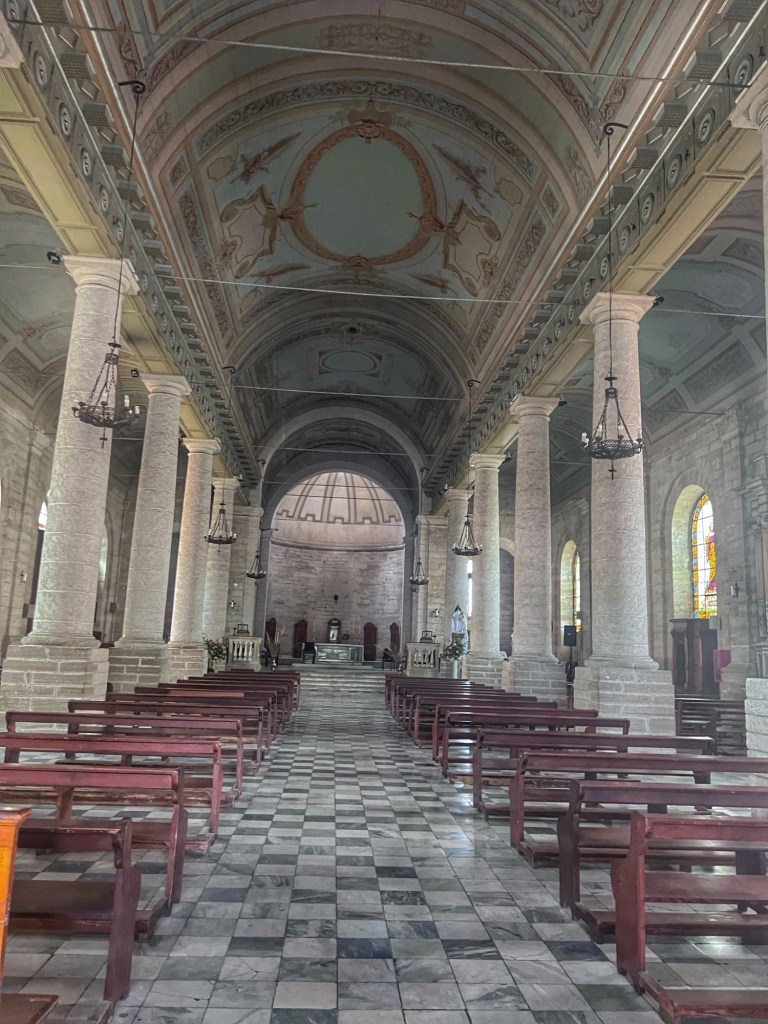
We visited the Immaculate conception church in Vicuna. The ceiling was painted by a Chilean college student.
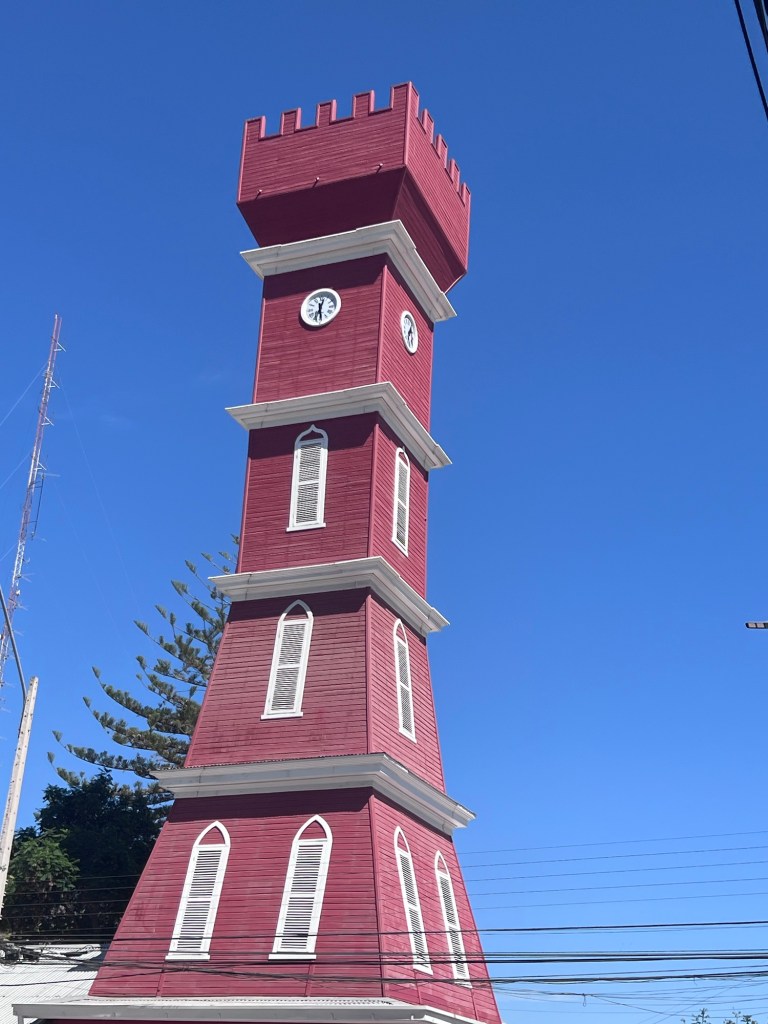
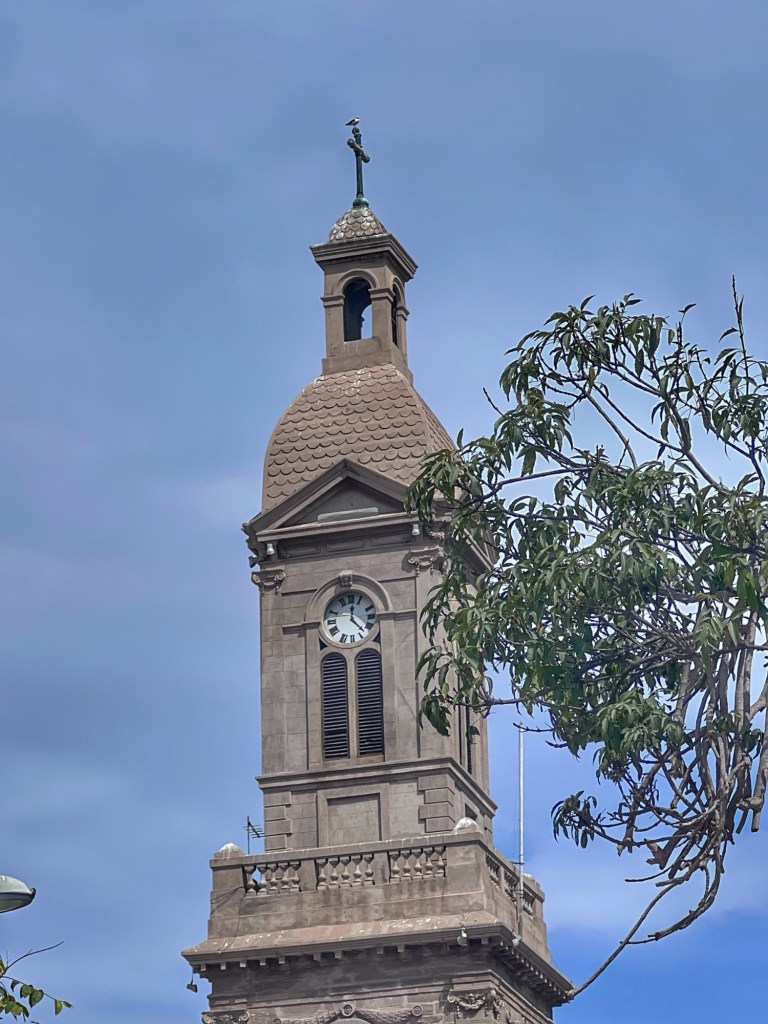
The Bell Tower located around the city square was built in the 1800s and was the city hall.
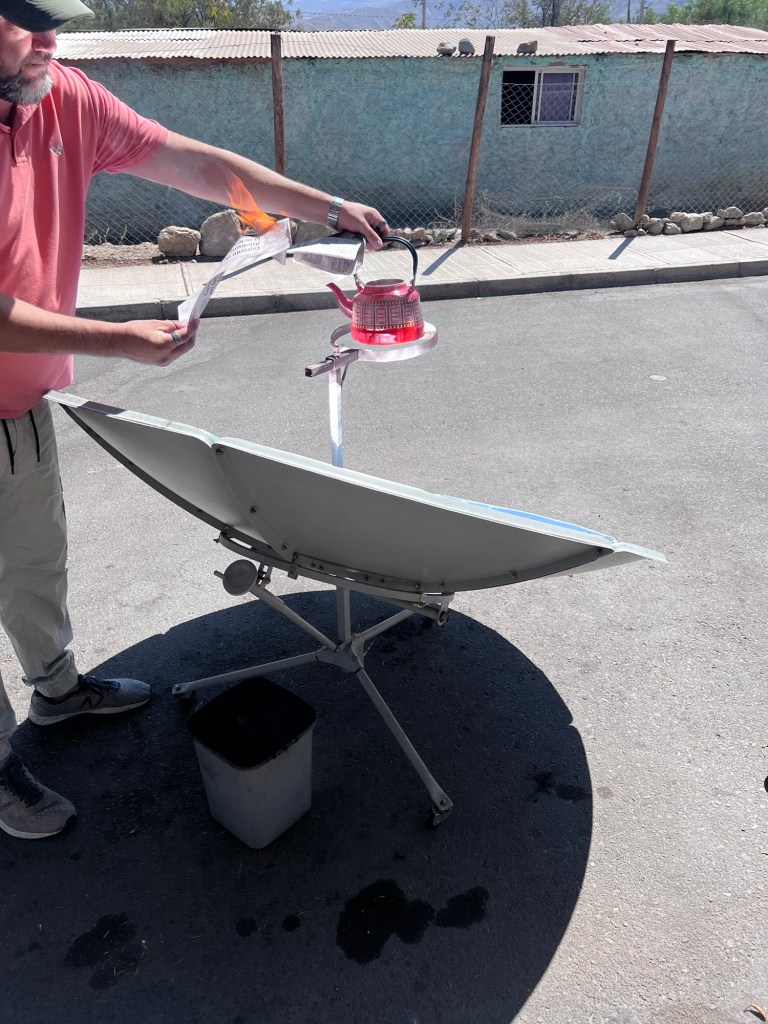
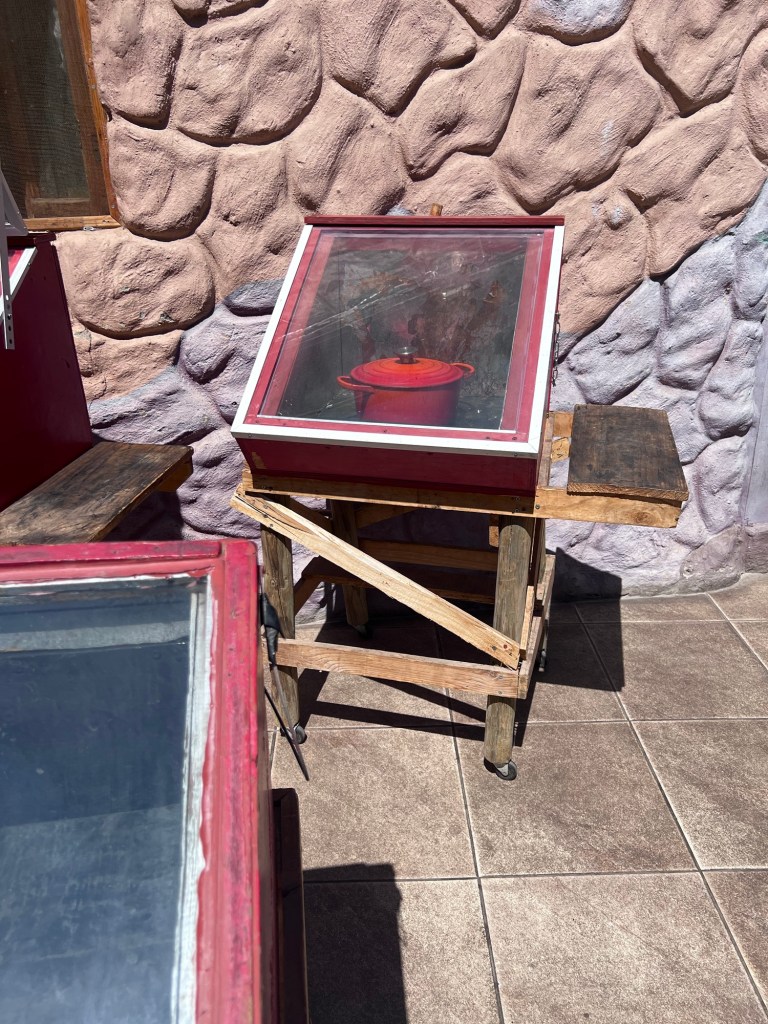
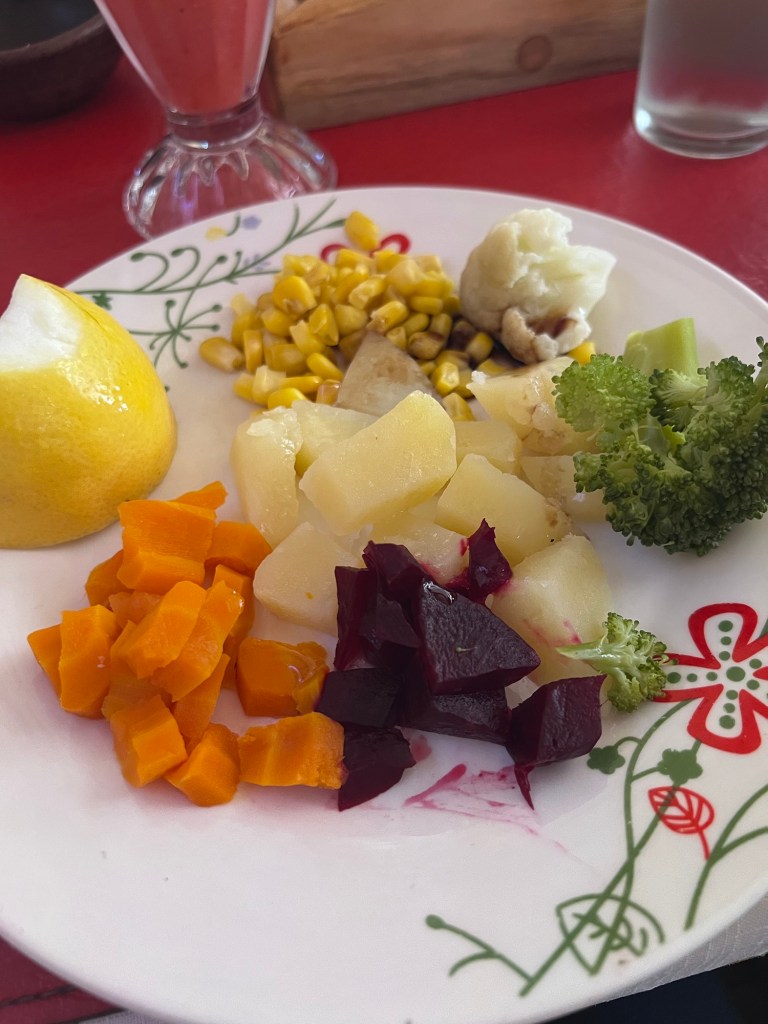
We went for lunch at Entre Cordillera. The owner showed us how they cook with solar.
I had a salad, rice and steak and Bruce had rice and chicken.
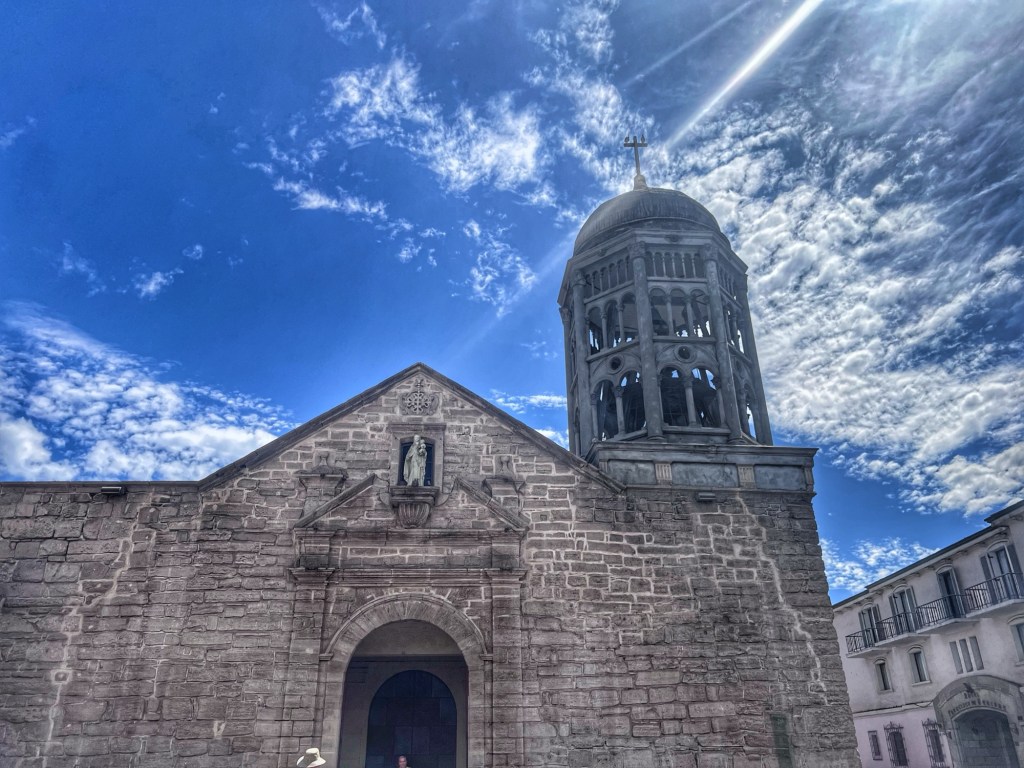
La Serana is the second oldest city in Chili, founded in the 1500s. This was our last stop on our tour. We visited the Cathedral De San Bartolome De La Serena which was built in the 1800s.
Santo Domingo Church was built in the 1600s.
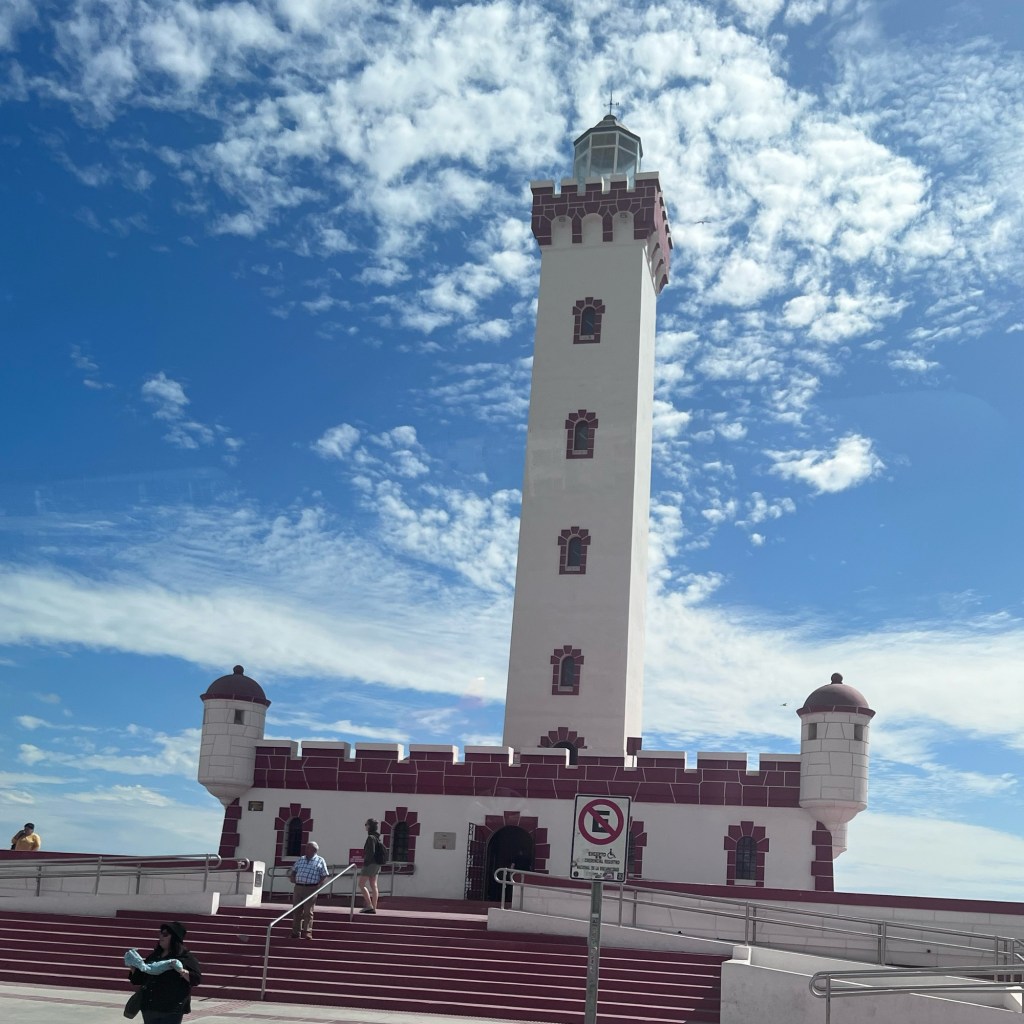
The last photo op was the lighthouse which isn’t a lighthouse. Those of us who have seen many of the real things, were not impressed.
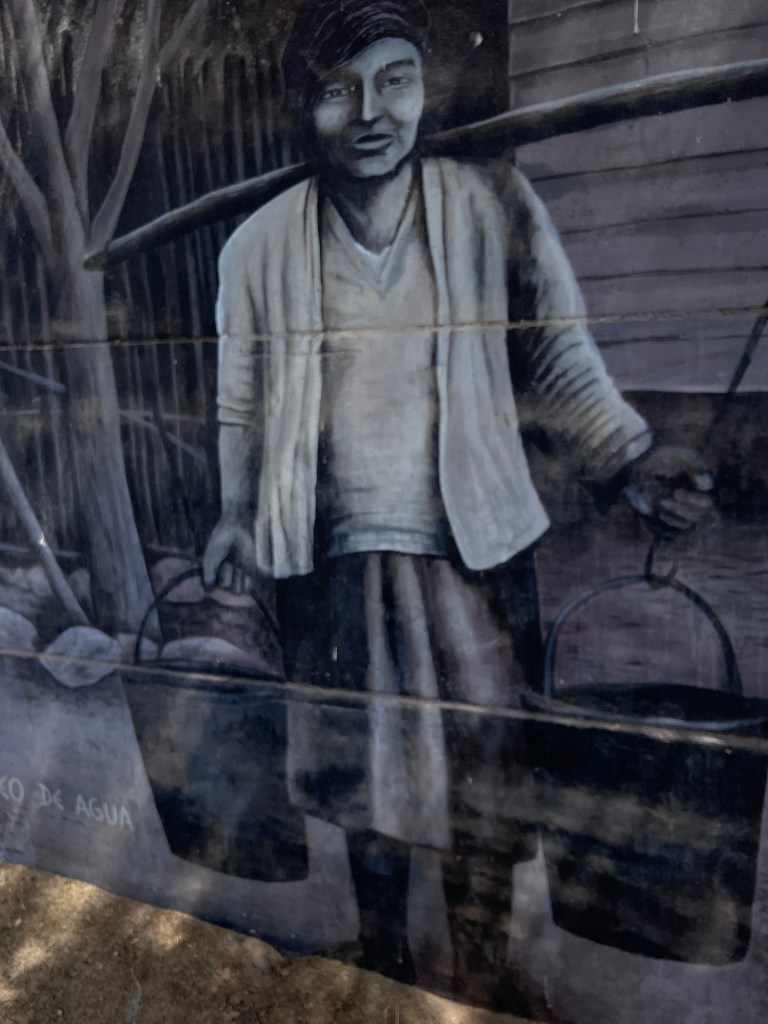
And I can’t end today without some of the beautiful street art!
And we made it to the ship without a minute to spare!
We signed up for a tour going to Santiago with a guy named Steve, who I chatted with on Cruise Critic. I usually like CC tours because there are fewer people, so it’s more personal, and they are usually half the price.
We woke early to meet our group at the terminal building. 12 people were on time and we waited 45 minutes for the other couple, who never showed.
Sergio was our guide for the day and works for Tac Turismo a local tour company.
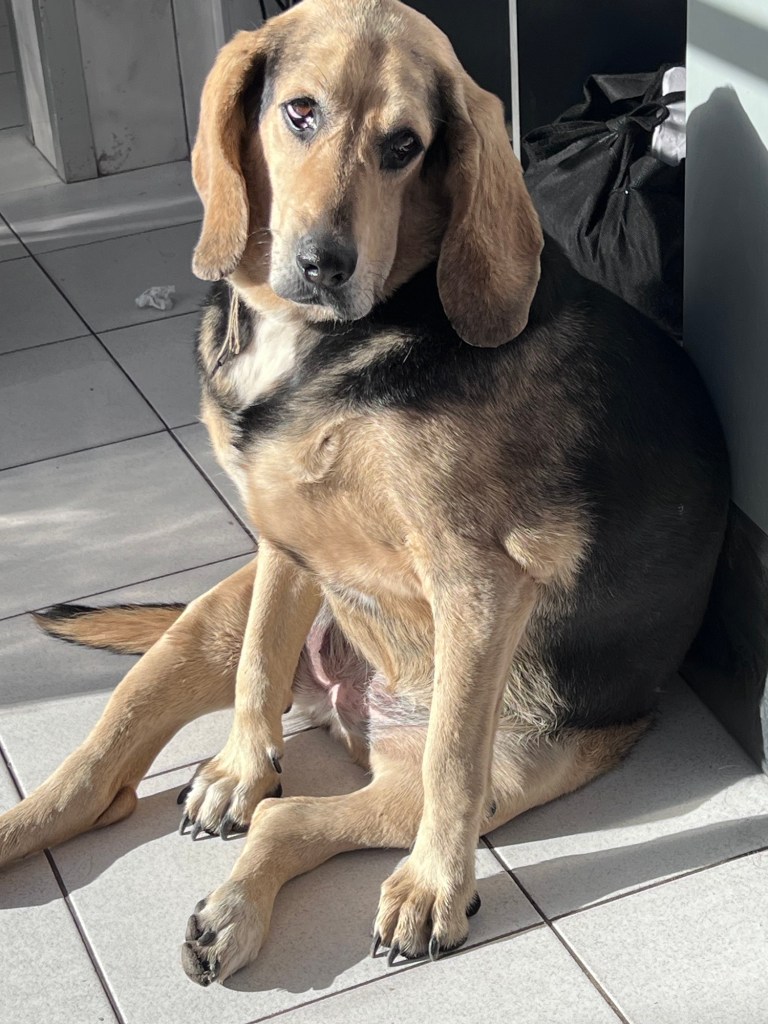
We had a 1-1/2 hour ride to Santiago and our first stop was a gas station where I found the cutest dog! She posed for me. How precious!
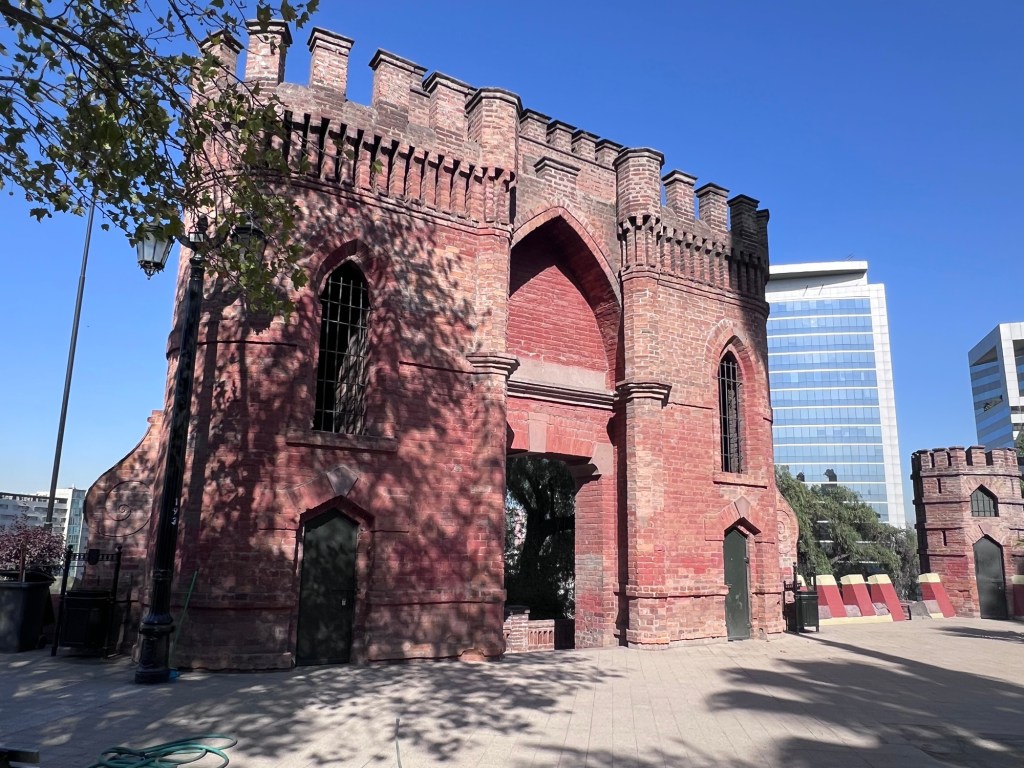
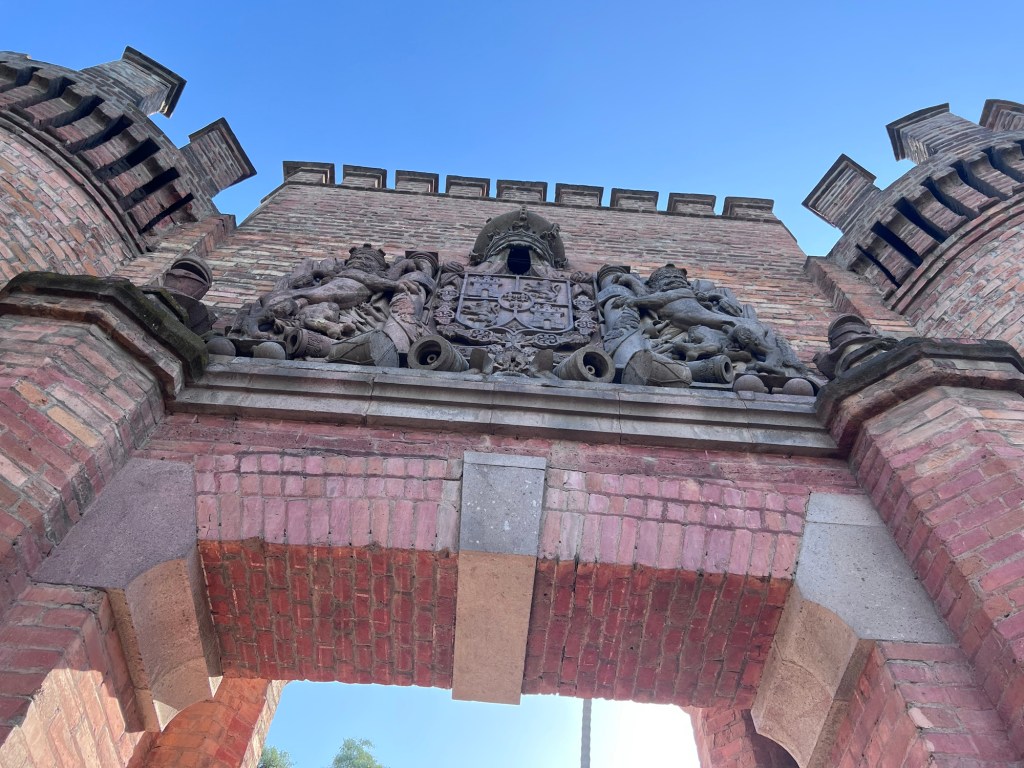
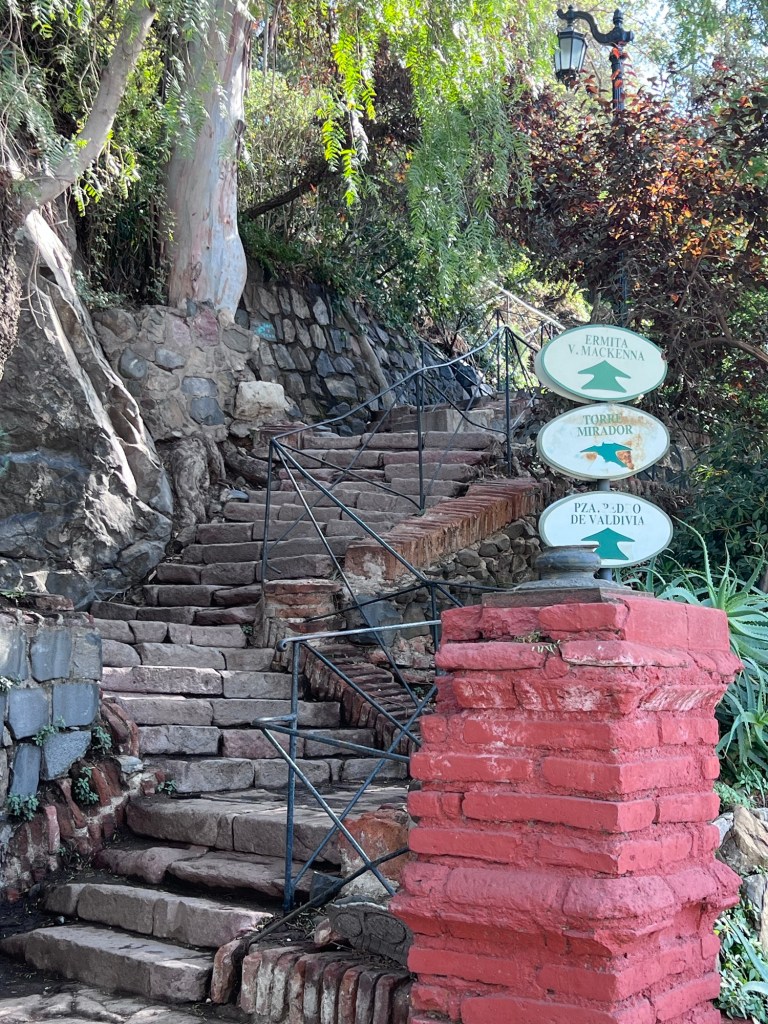
Our first stop was Santa Lucia and Castillo Hidalgo, which is a castle-like structure built in the early 1800’s. Entrance is free and worth a visit.
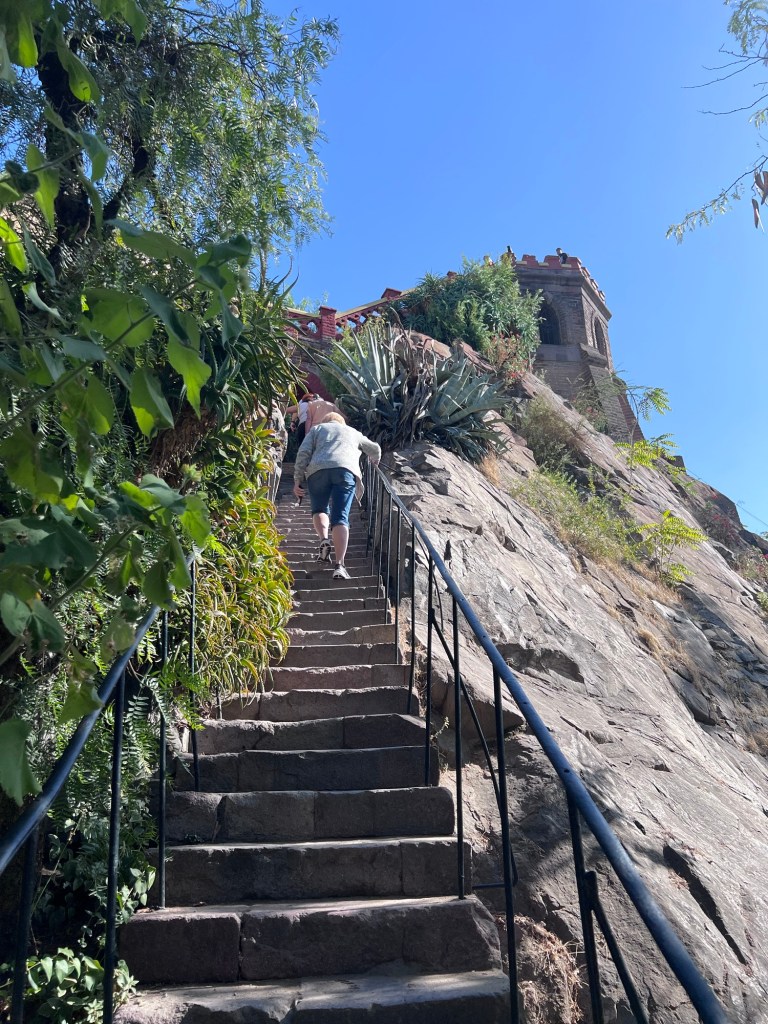
The steps were quite a hike up but we kept hearing the view was worth it! In the distance you can see the Andes Mountains.
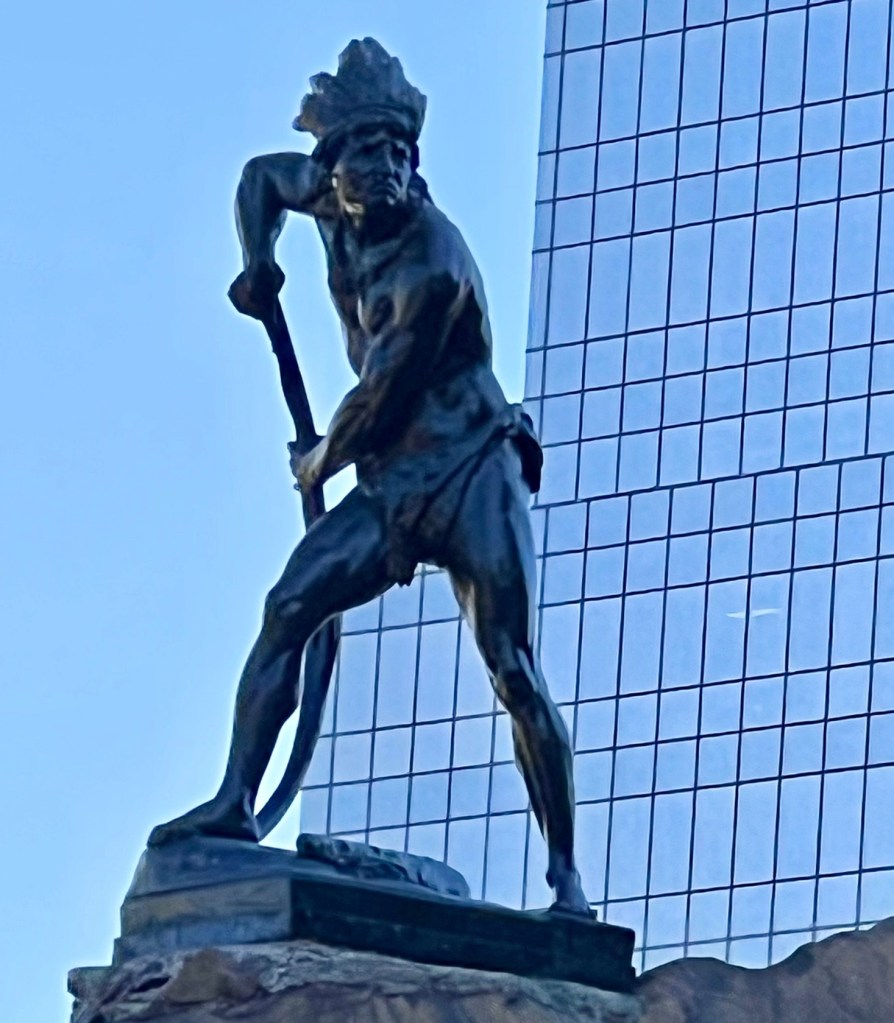
The terrace is called Caupolican Terraza and there is a statue of Caupolican who was a great warrior of the Mapuche people who fought against the Spanish conquistadors.
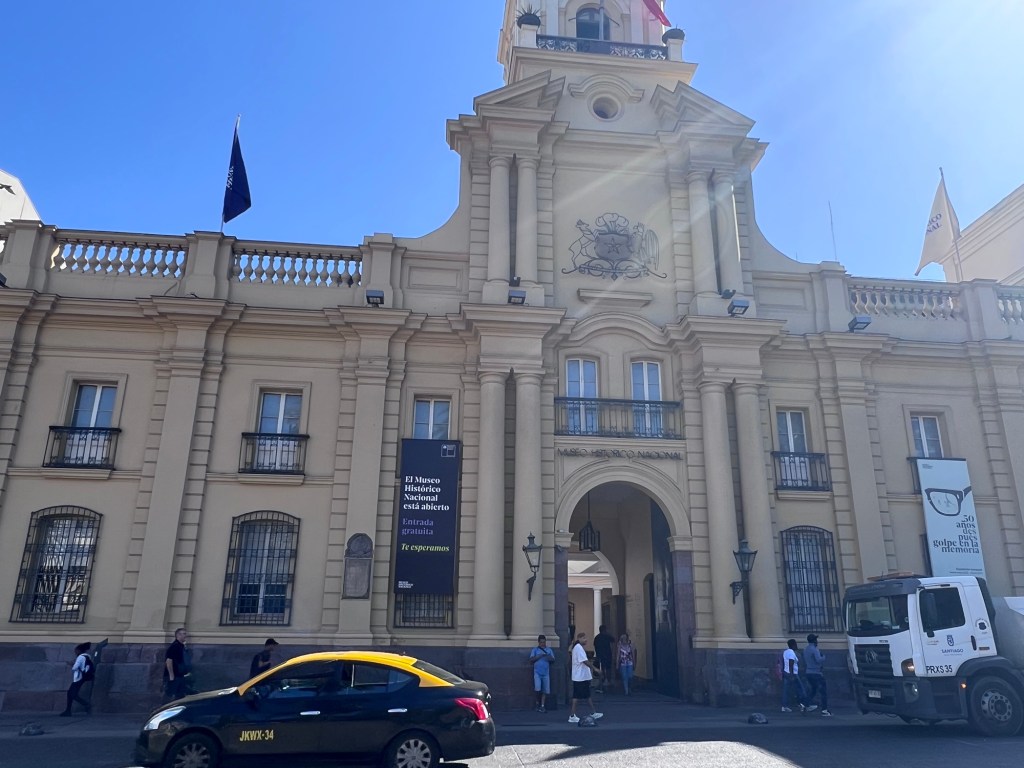
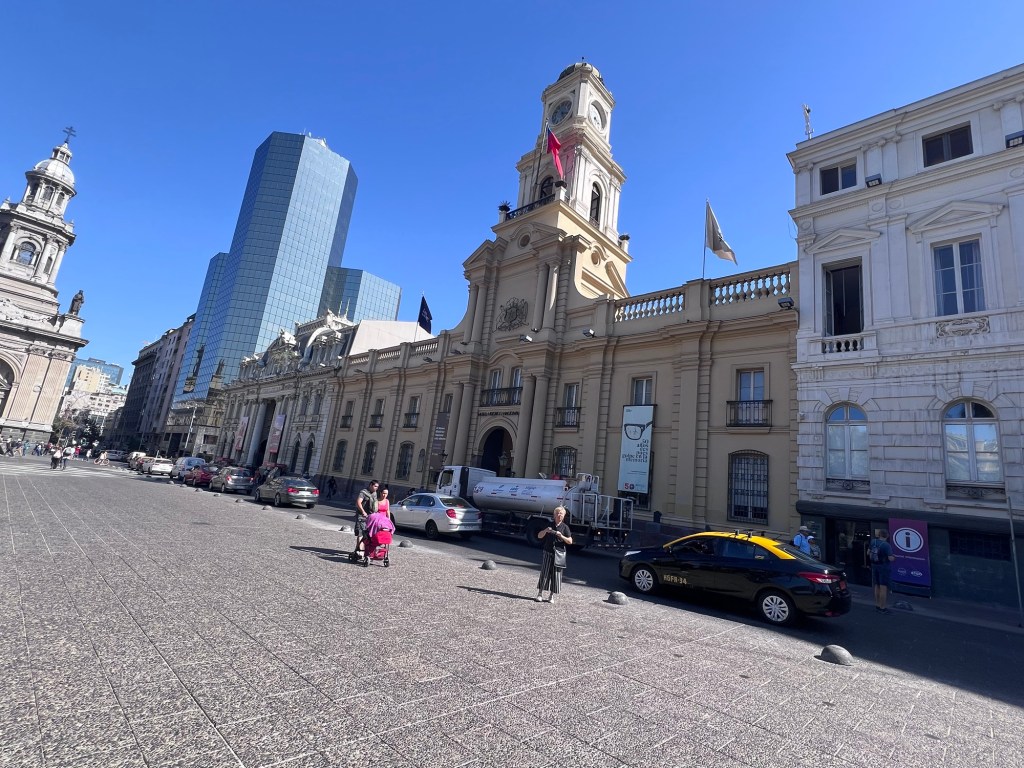
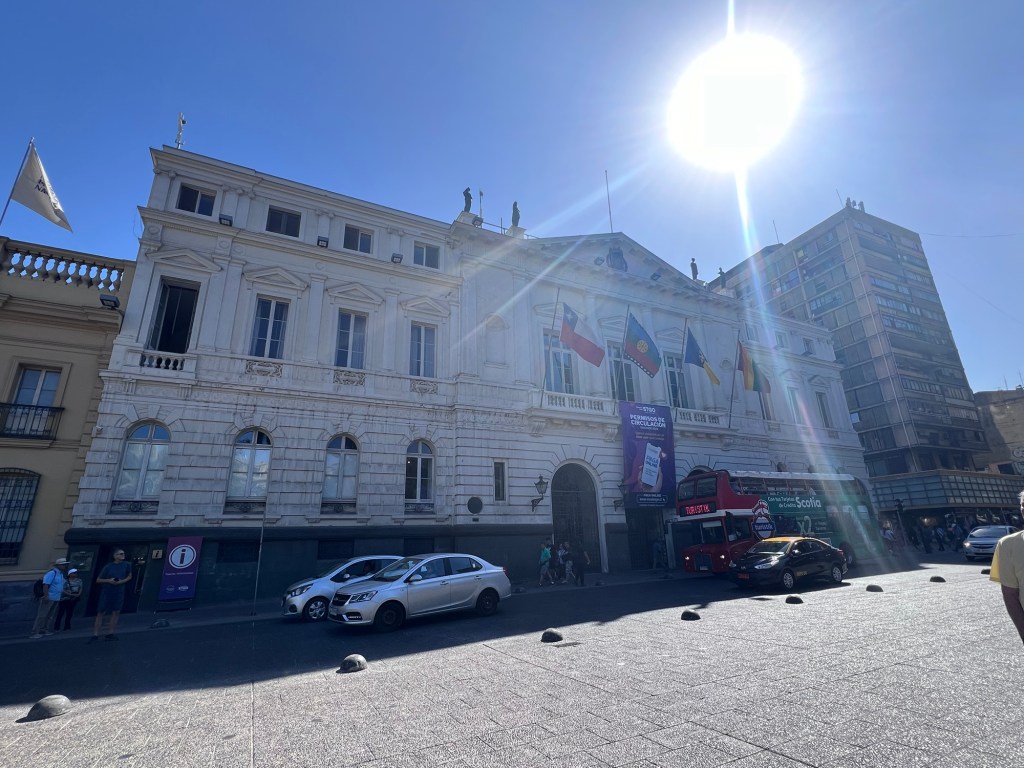
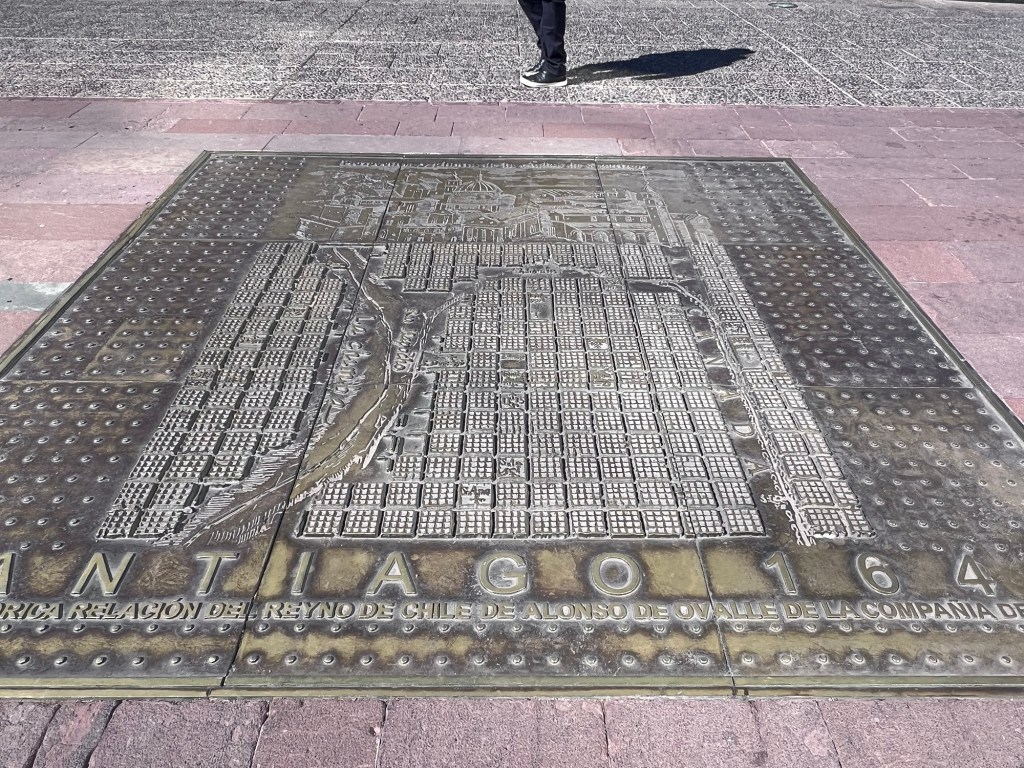
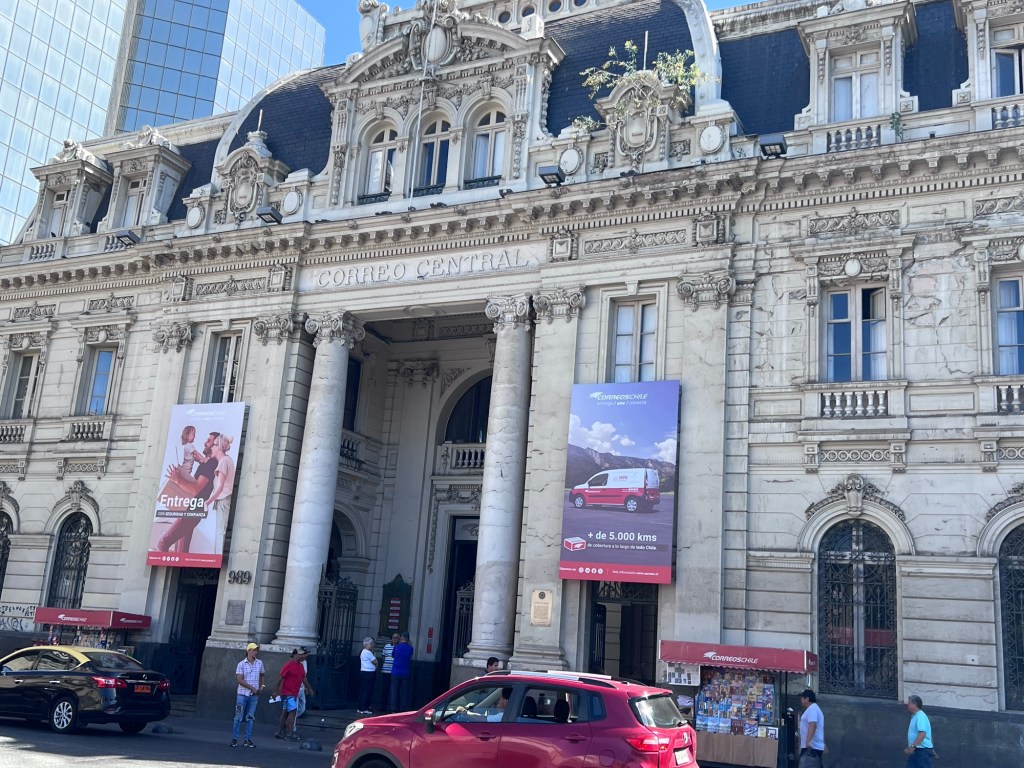
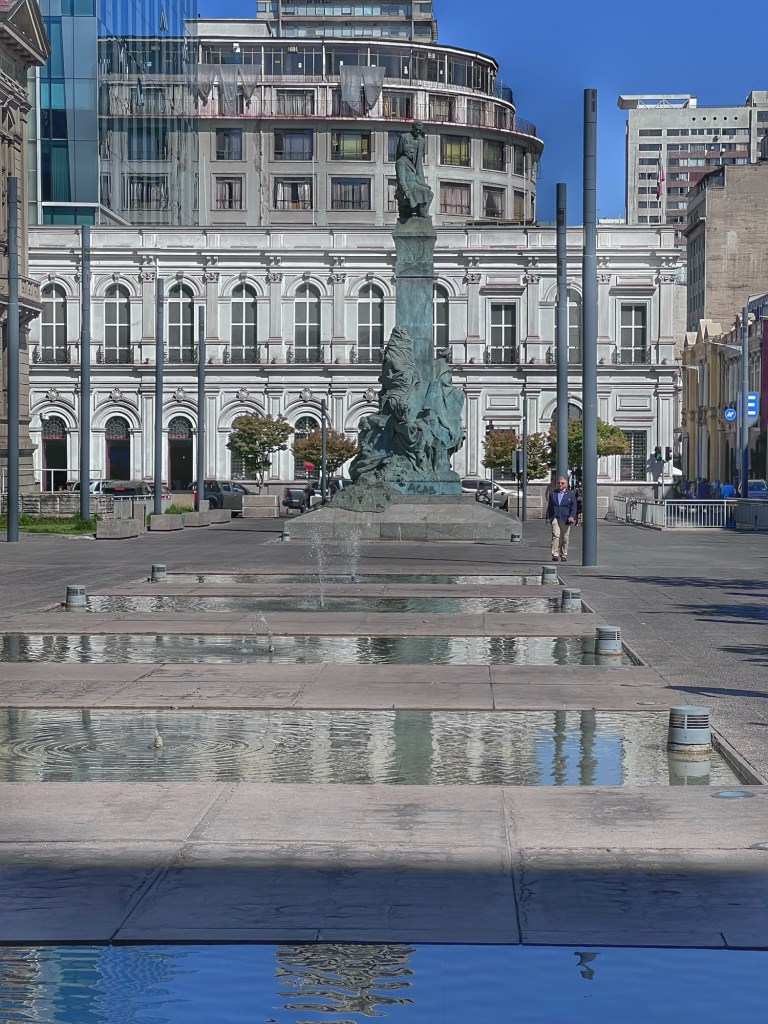
Our next stop was the Plaza de Armas where we saw the Mayors House, the central post office and museums.
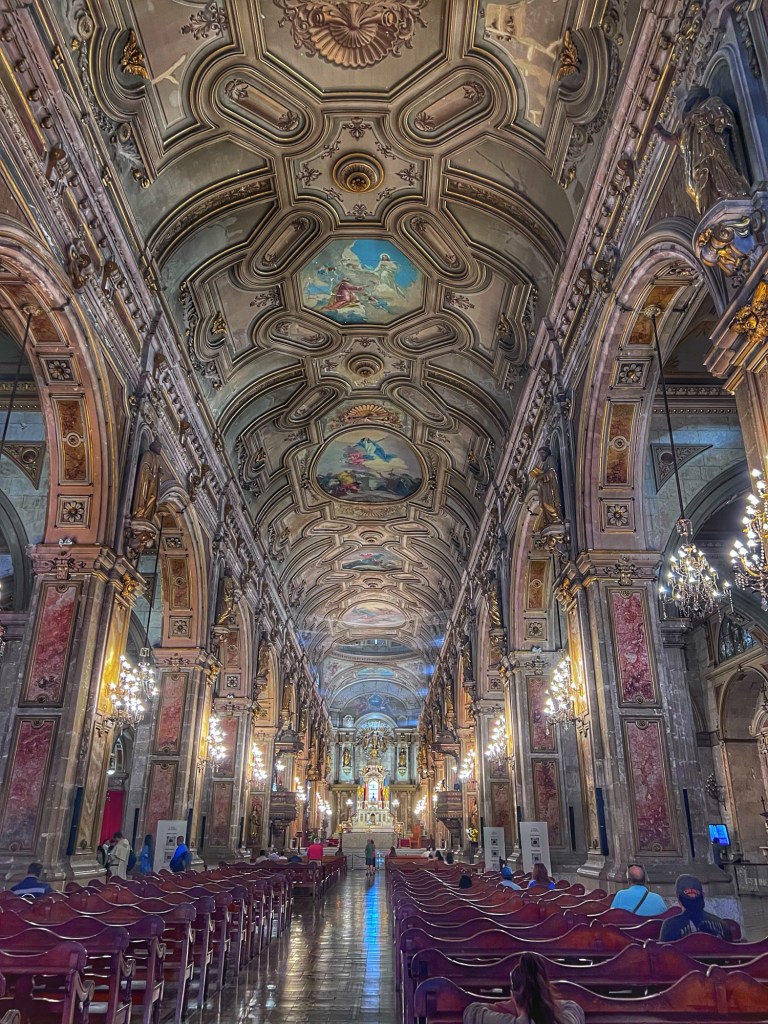
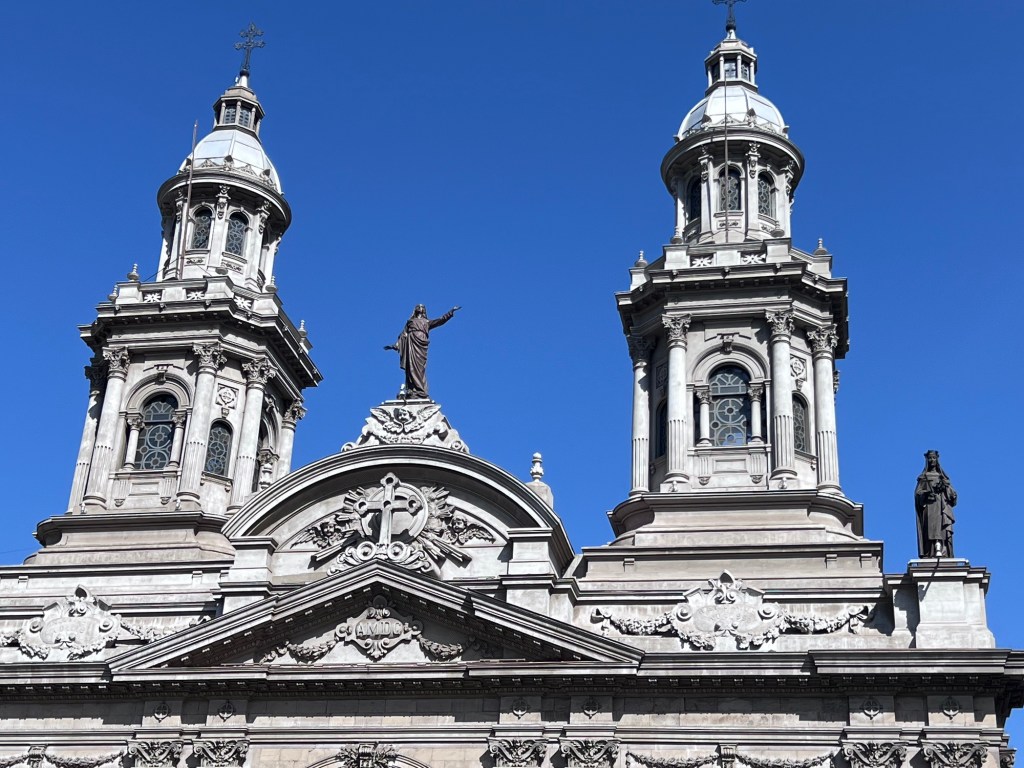
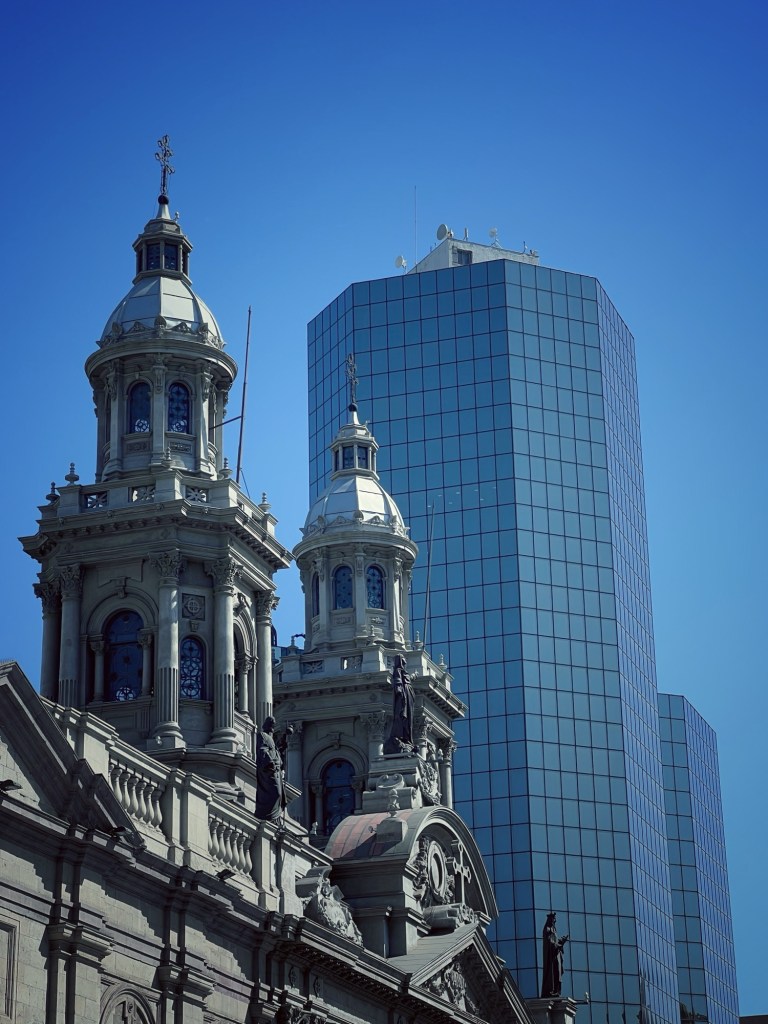
And of course the Cathedral Metropolitana.
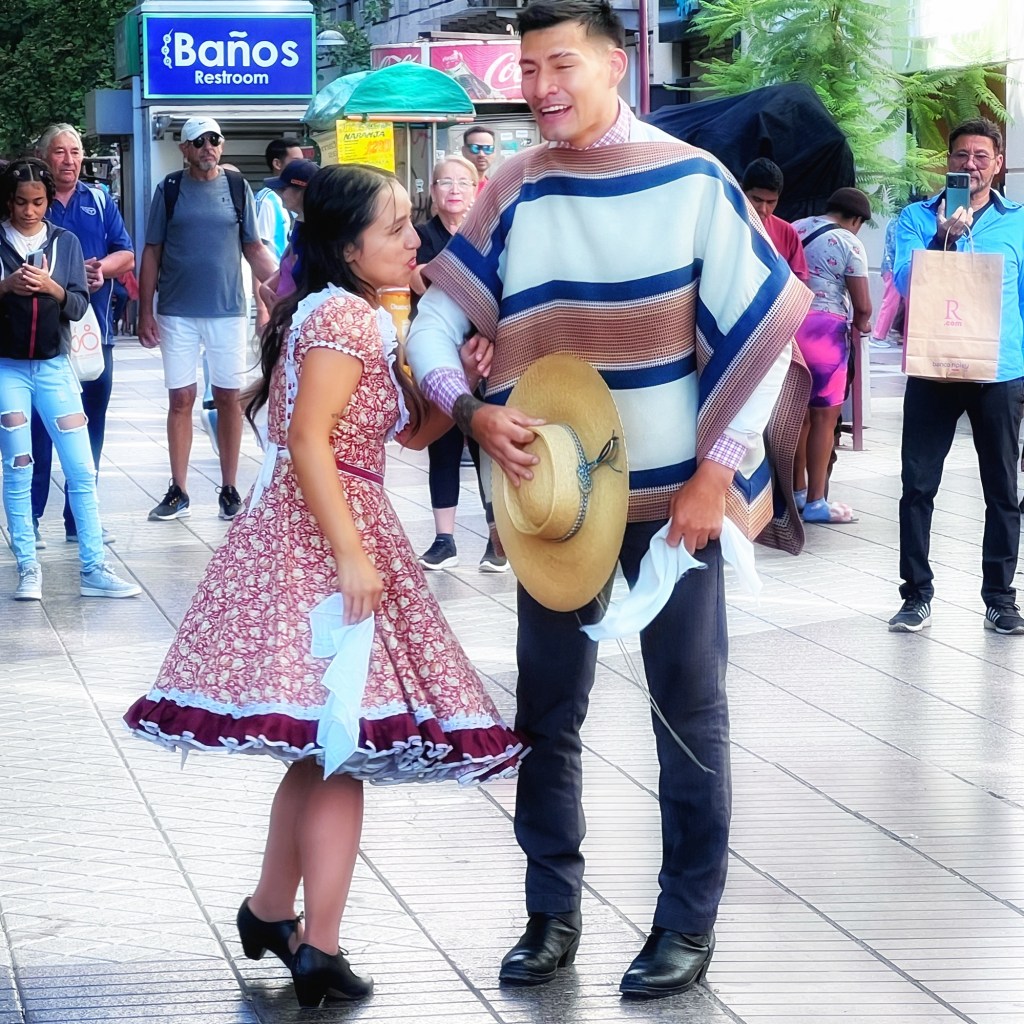
We just caught the end of a local dance pair on the plaza dressed in native costume!
There were many historic buildings and it was a quick trip. I wish I had more time to get a feel for this city!
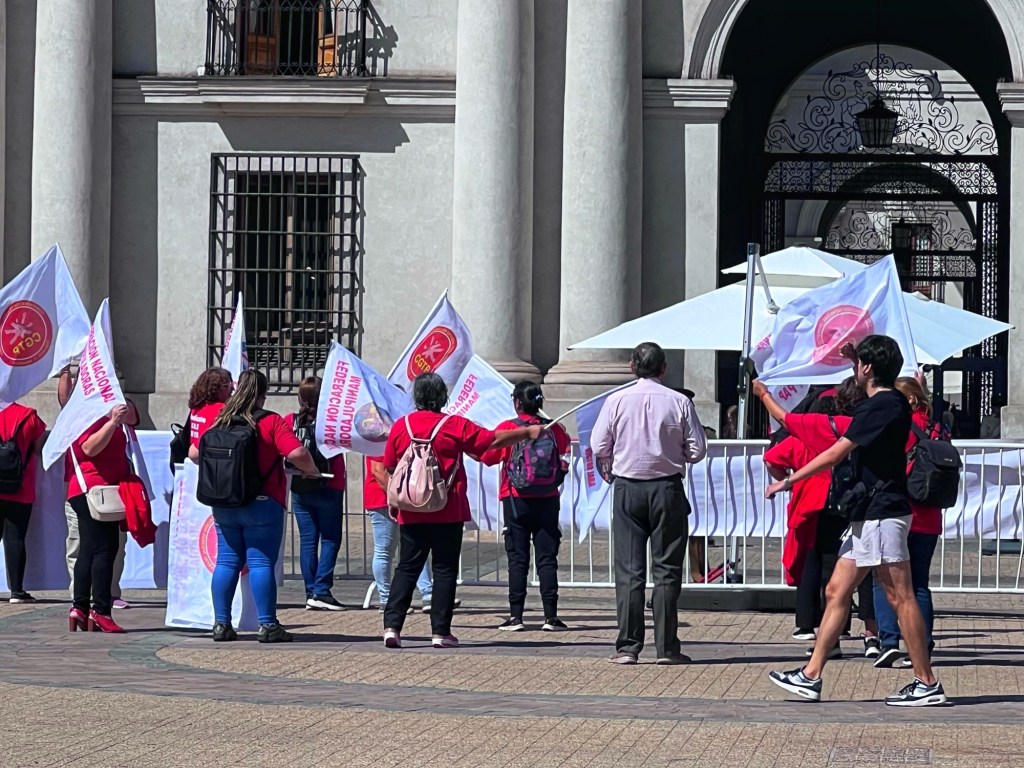
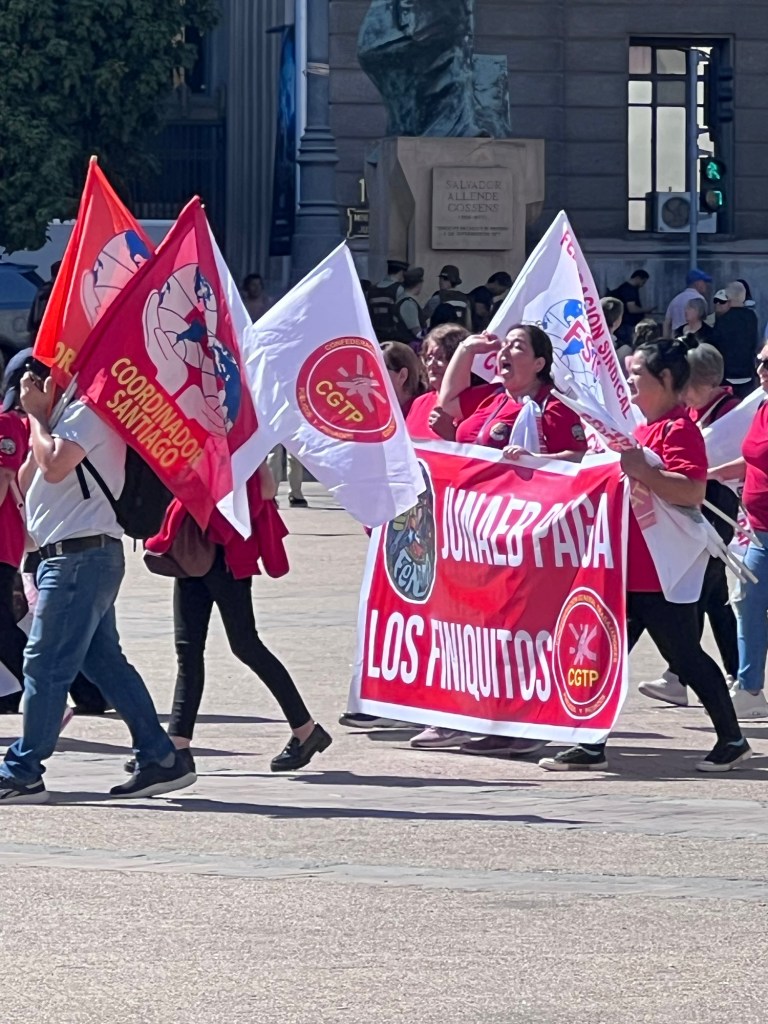
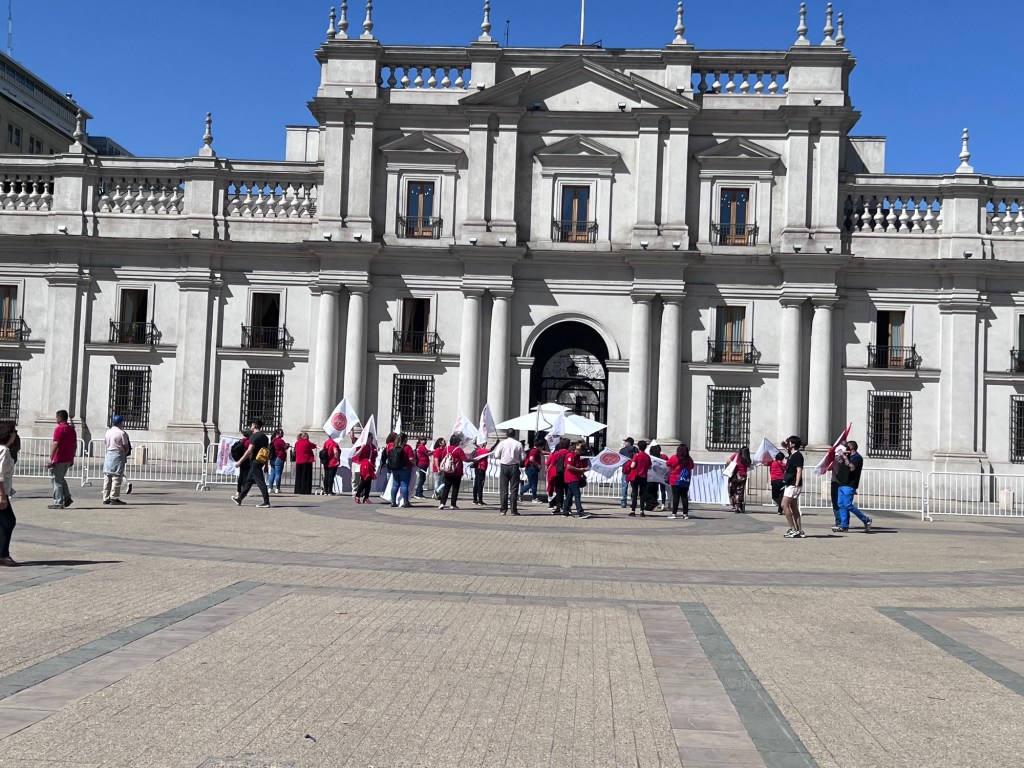
We also caught a demonstration in front of the Government building.
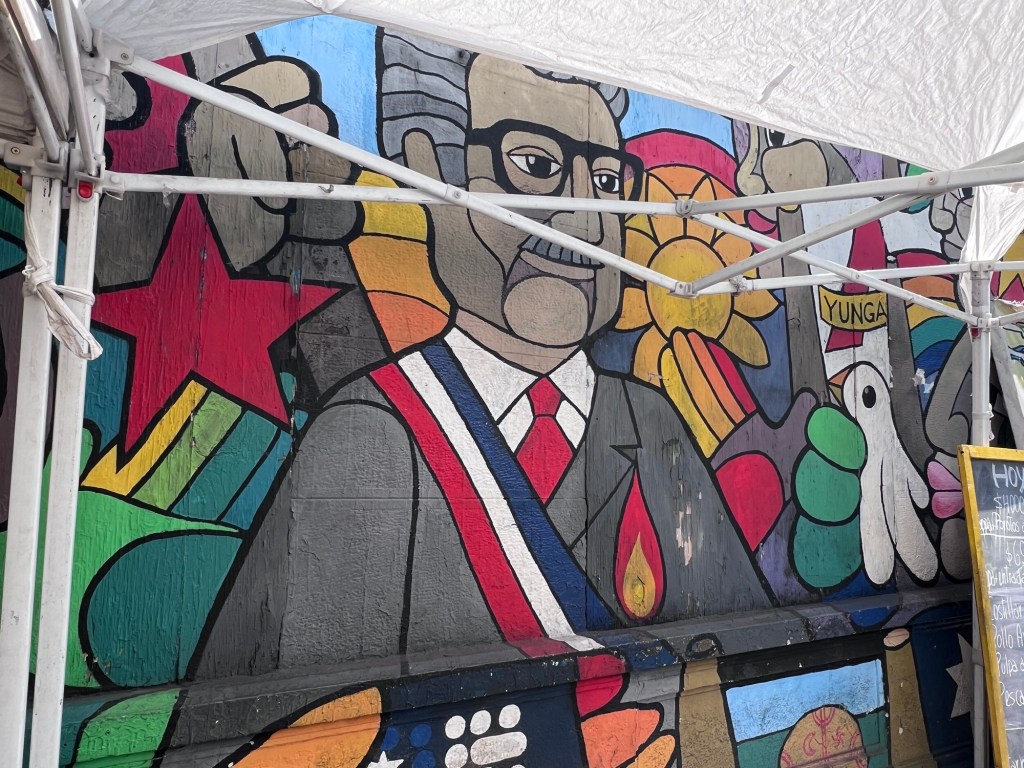
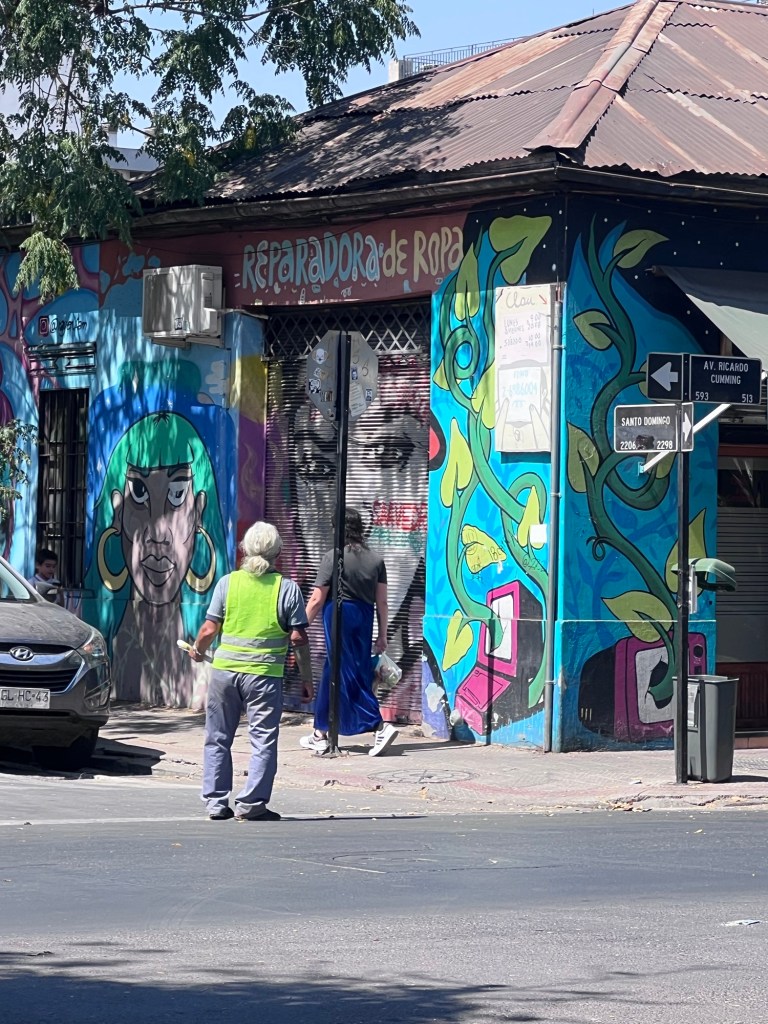
I did have the opportunity to find some street art!
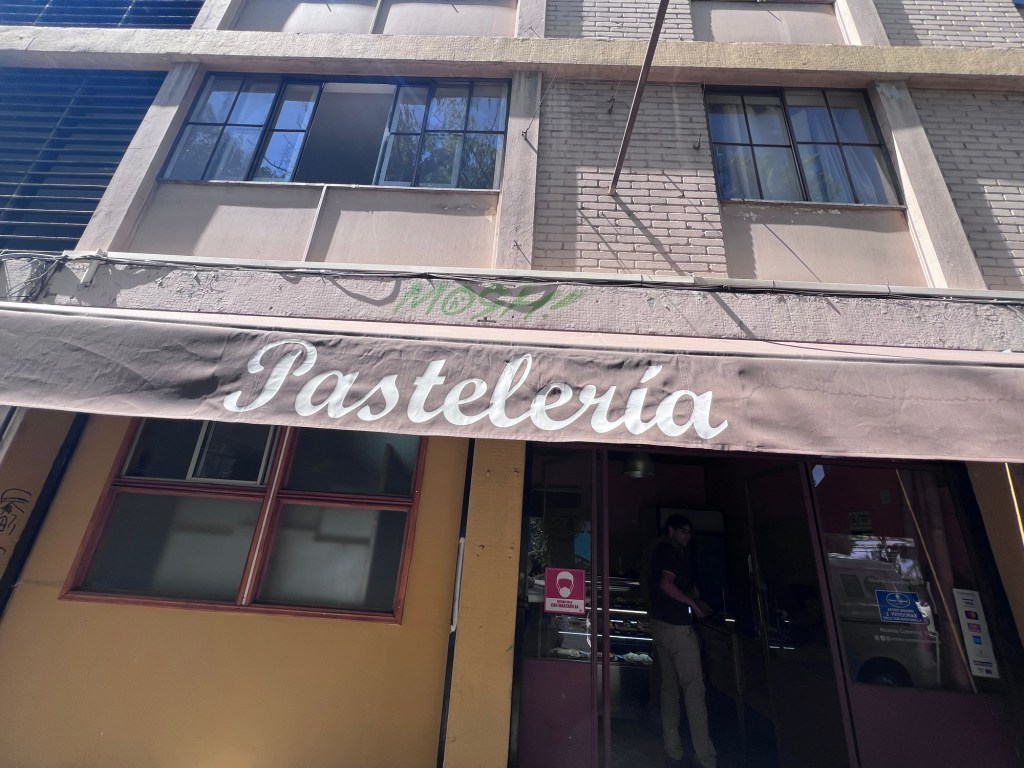
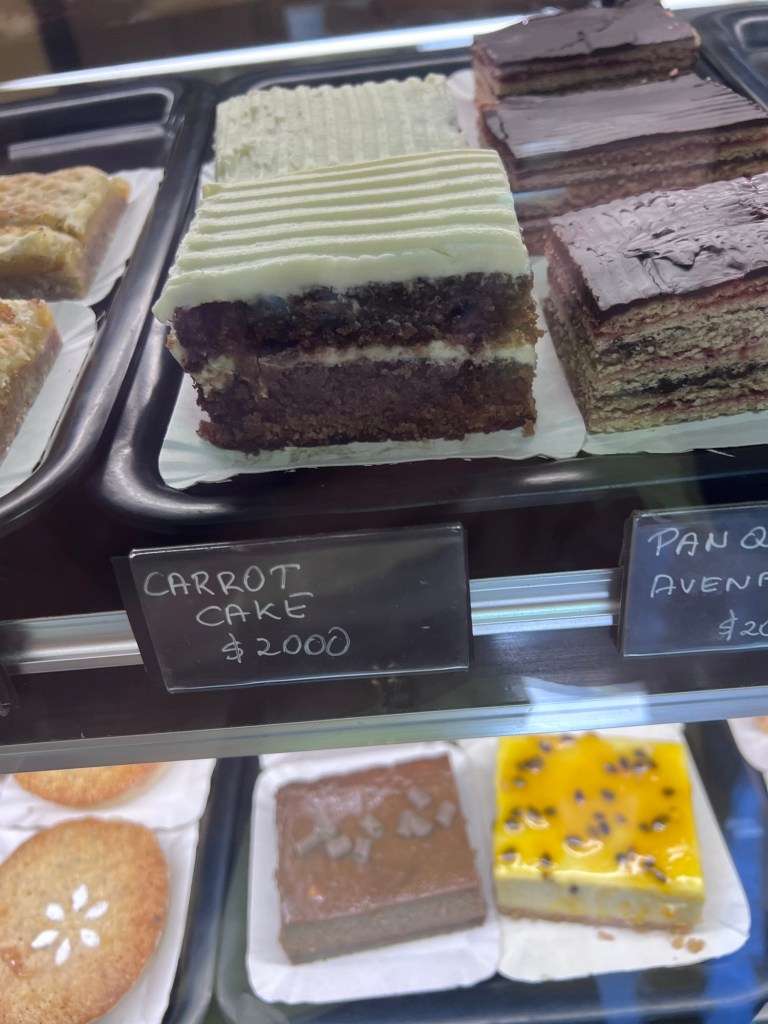
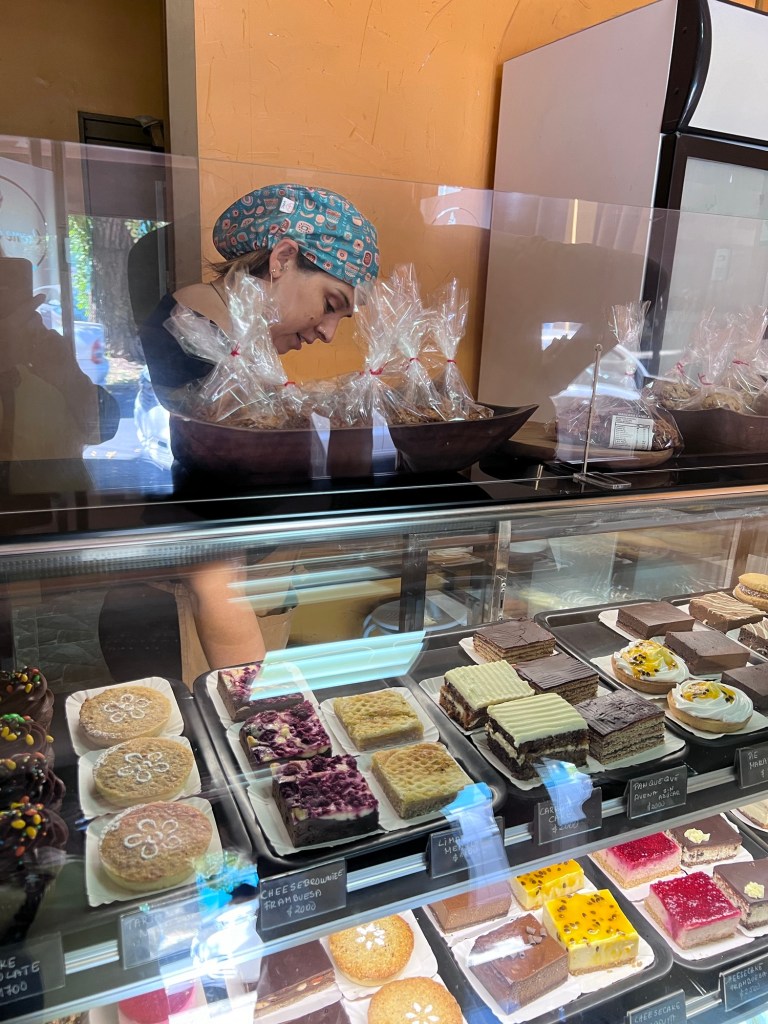
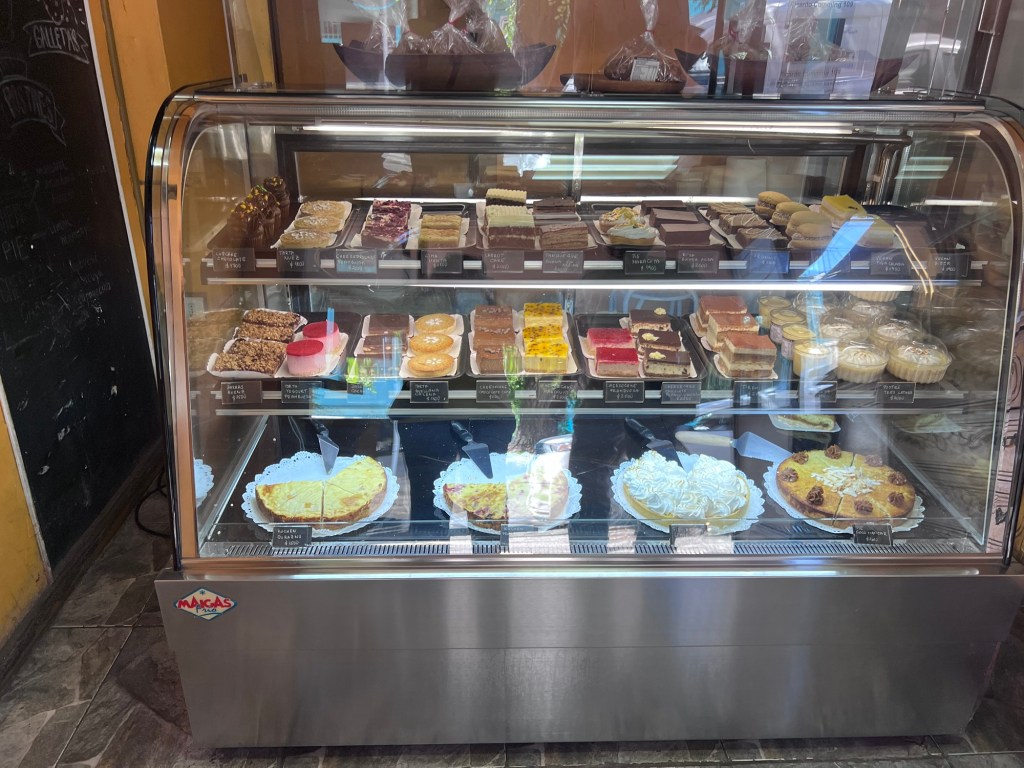
And of course a visit to any city would not be right without a visit to a bakery!
So all in all a good day – not quite enough time to catch the real flavor of a place but just enough to peak my interest!
We are back on the ship, watching the sunset! Life is Grand!
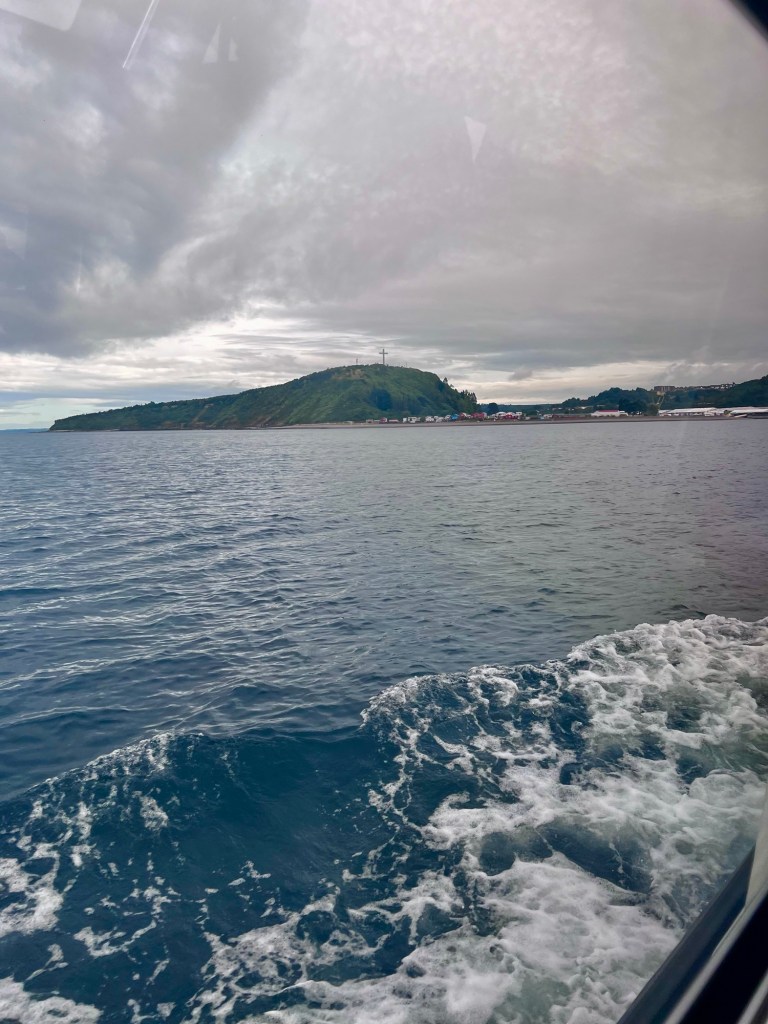
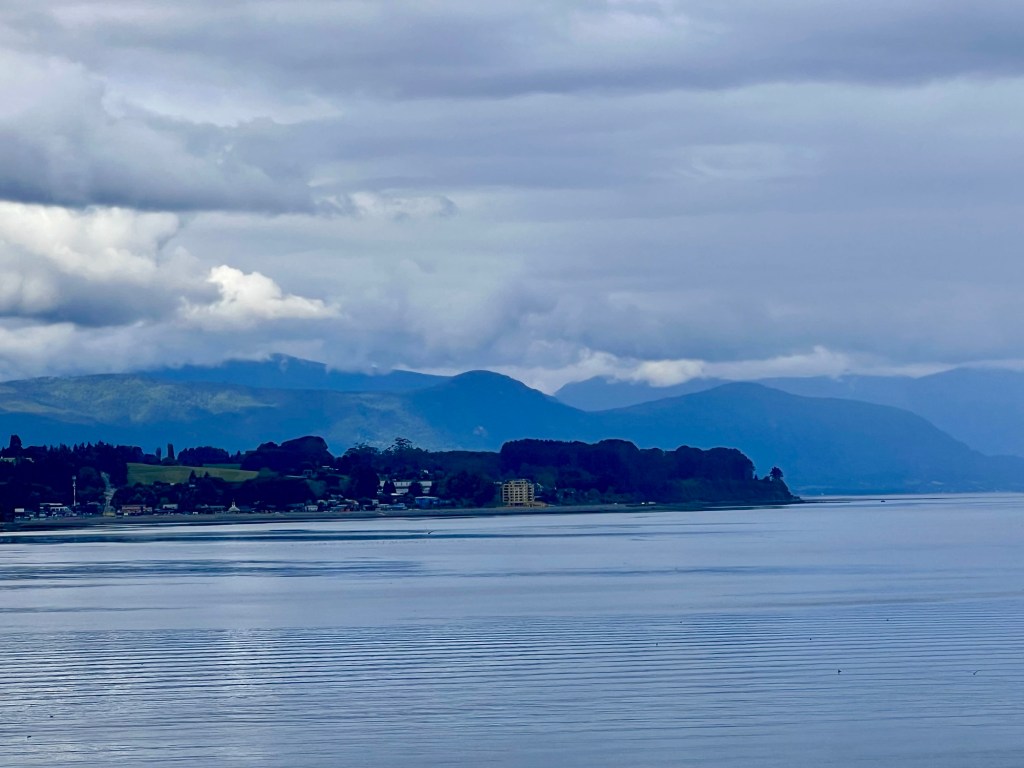
It’s our last tender port so we decided to sleep in and miss the crowds. We arrived in Puerto Montt, Chili at 8 am. The port was not very exciting to look at from our balcony because cloud covered the volcanoes in the distance.
We were going to eat breakfast at the buffet but it stopped serving at 10:30 just as we arrived. One of the things I don’t like about Holland America is that they don’t leave a section open so latecomers like us can get a bite. Well quickly we regrouped, collected out stuff and off the ship we went.
We saw a harbor seal on the way into port but unfortunately was unable to take a photo.
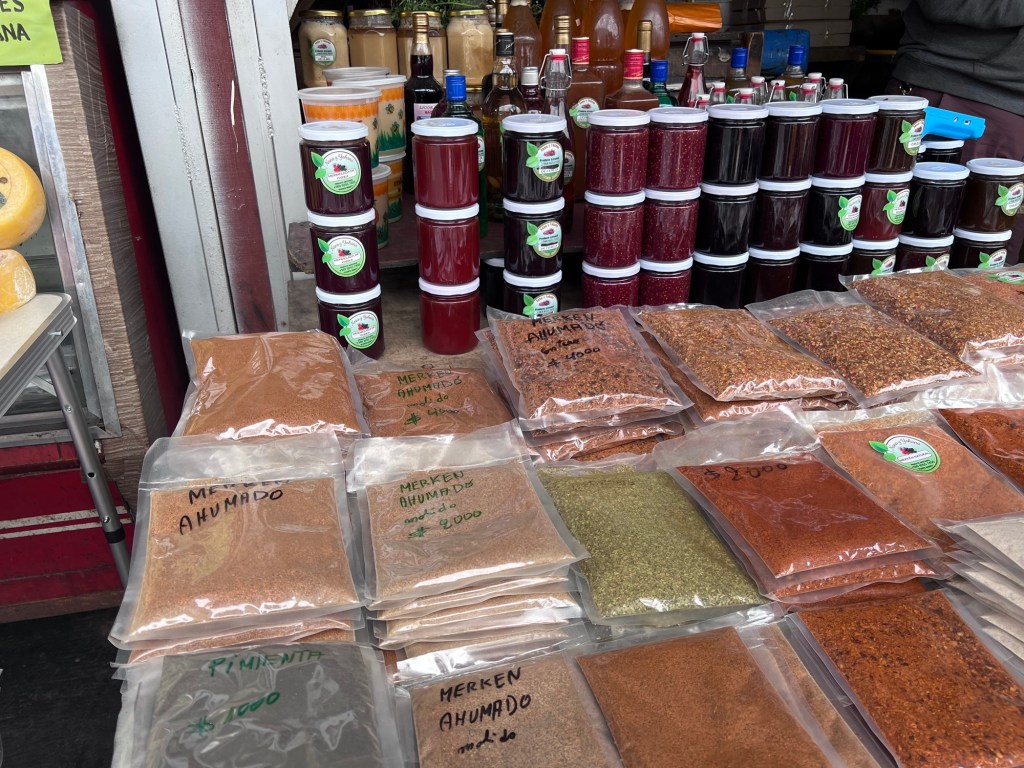
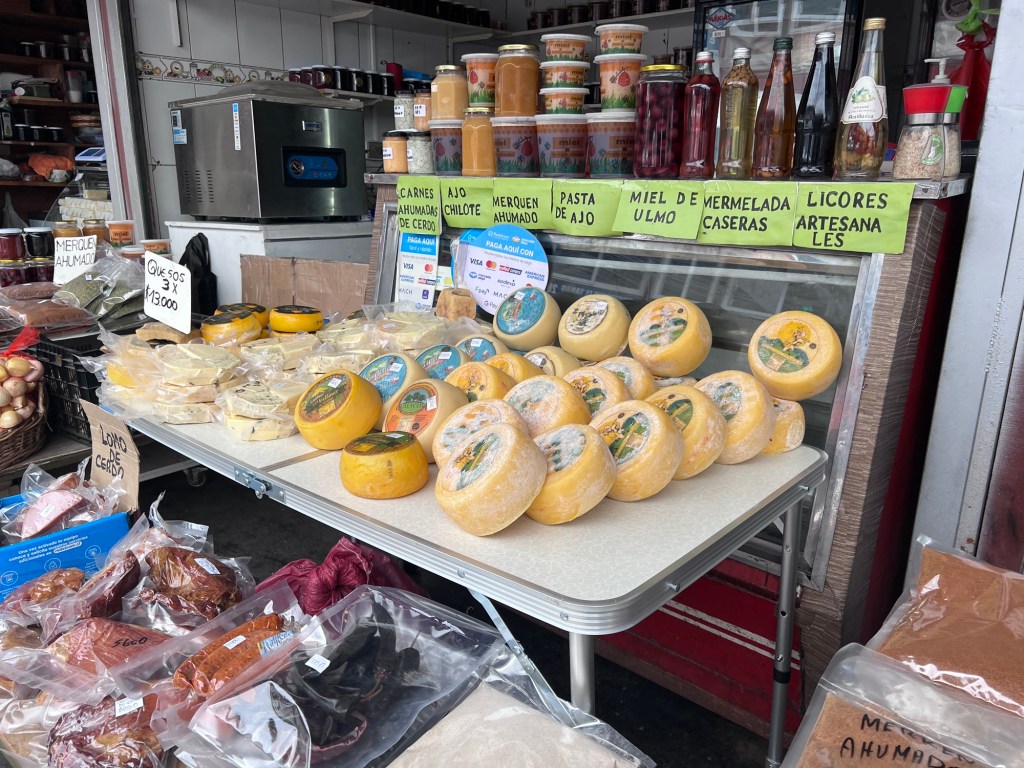
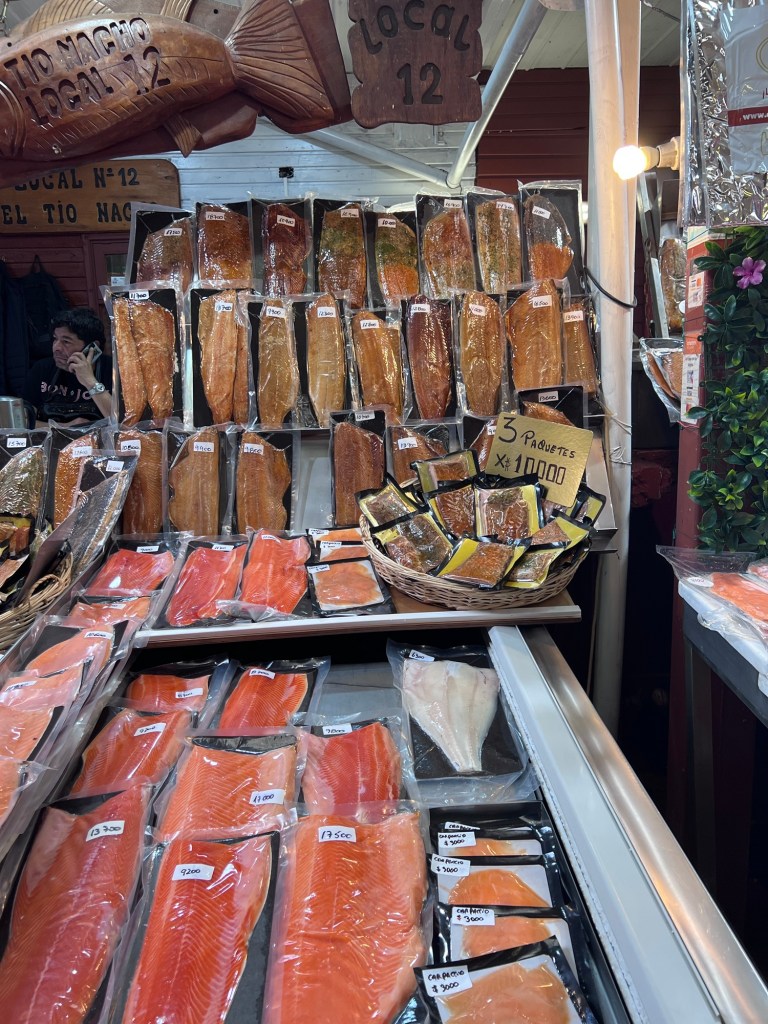
We decided to walk to the artisan’s market where they sell everything from hats to fish.
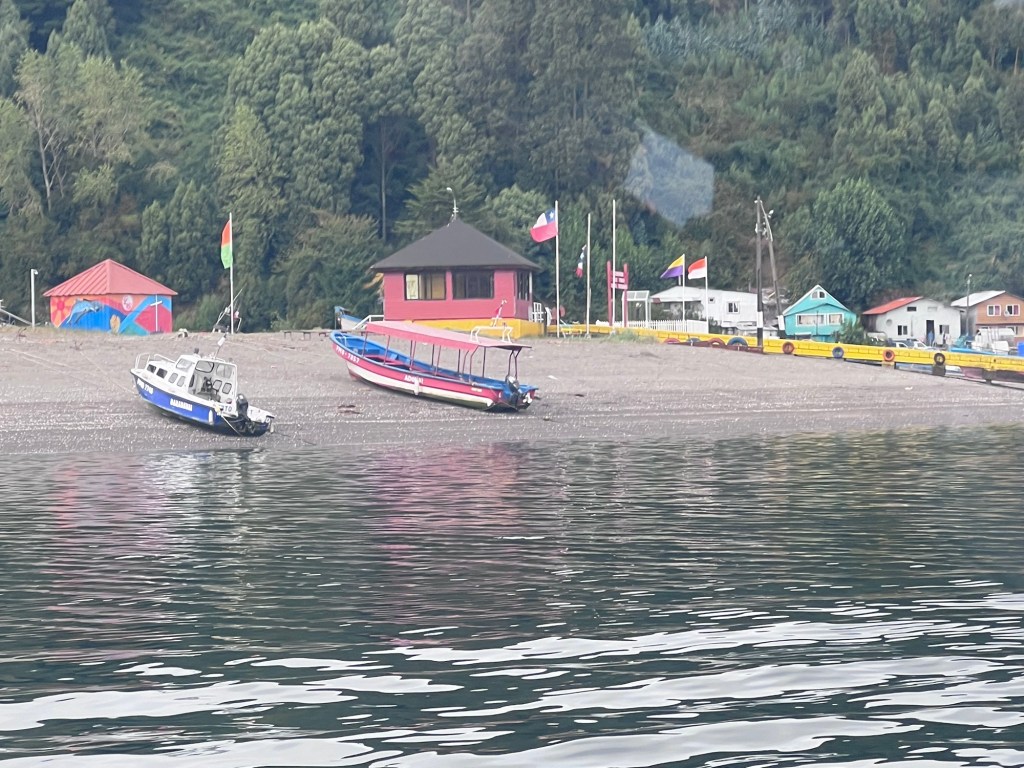
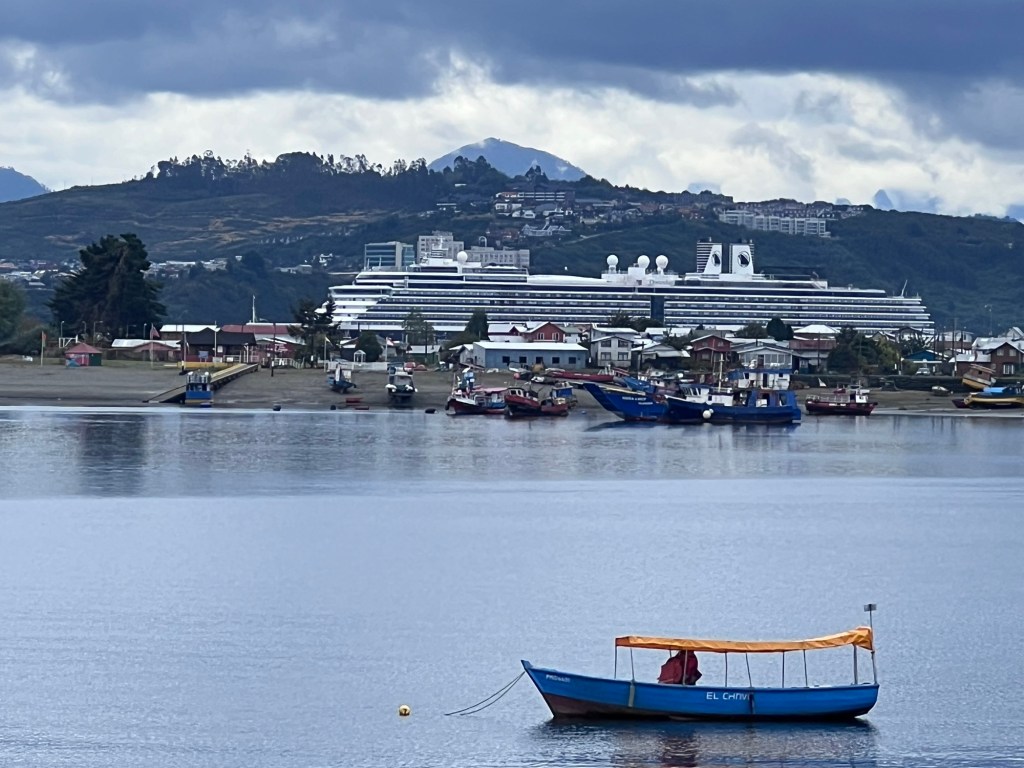
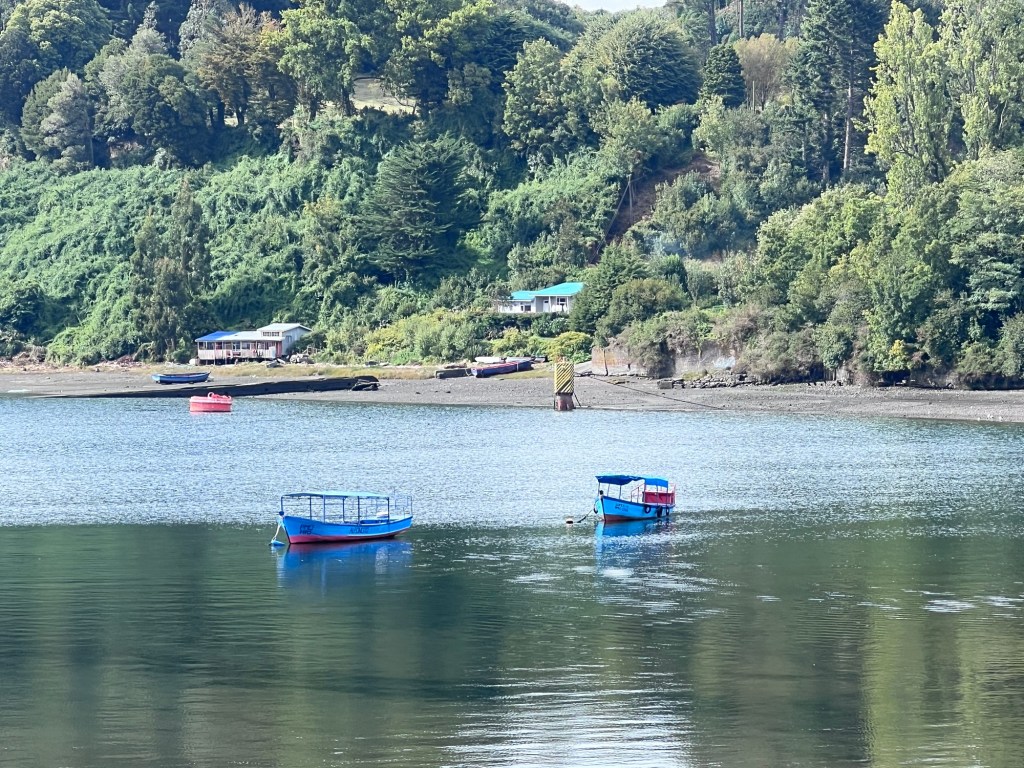
The boats in the harbor were very colorful!
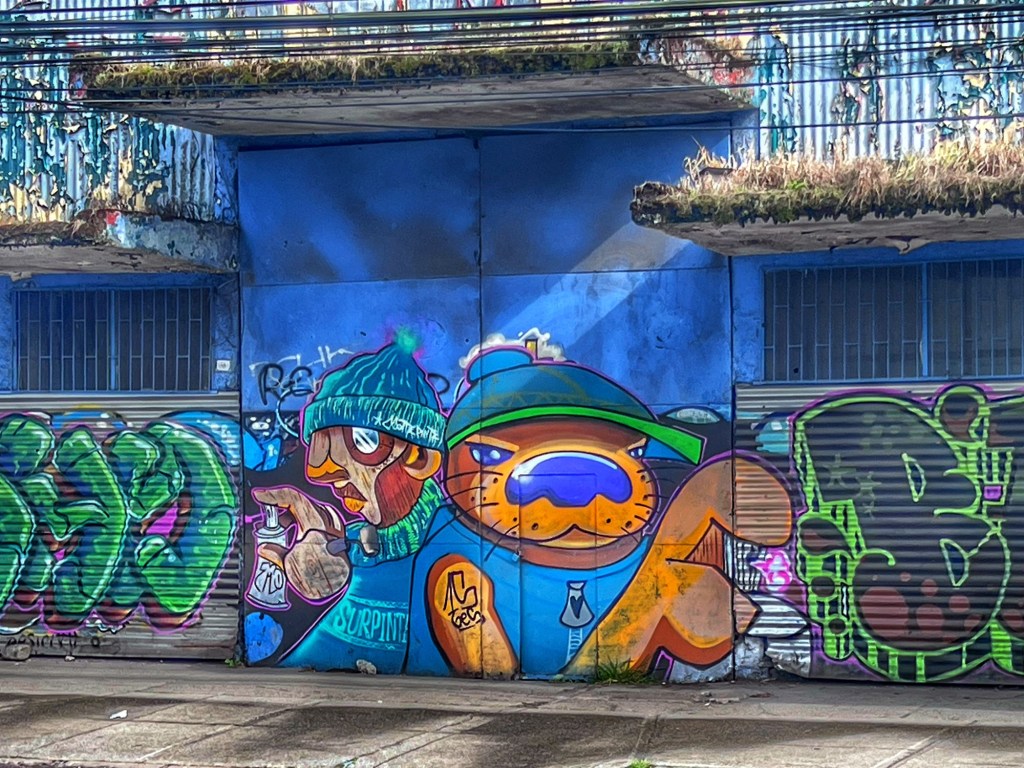
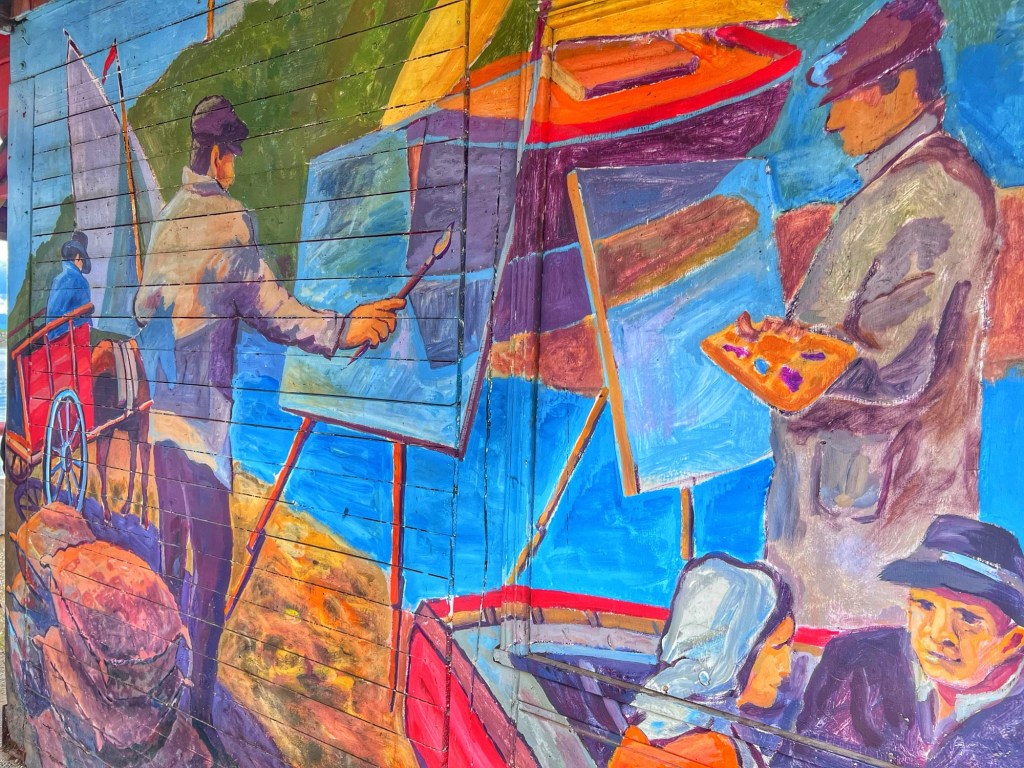
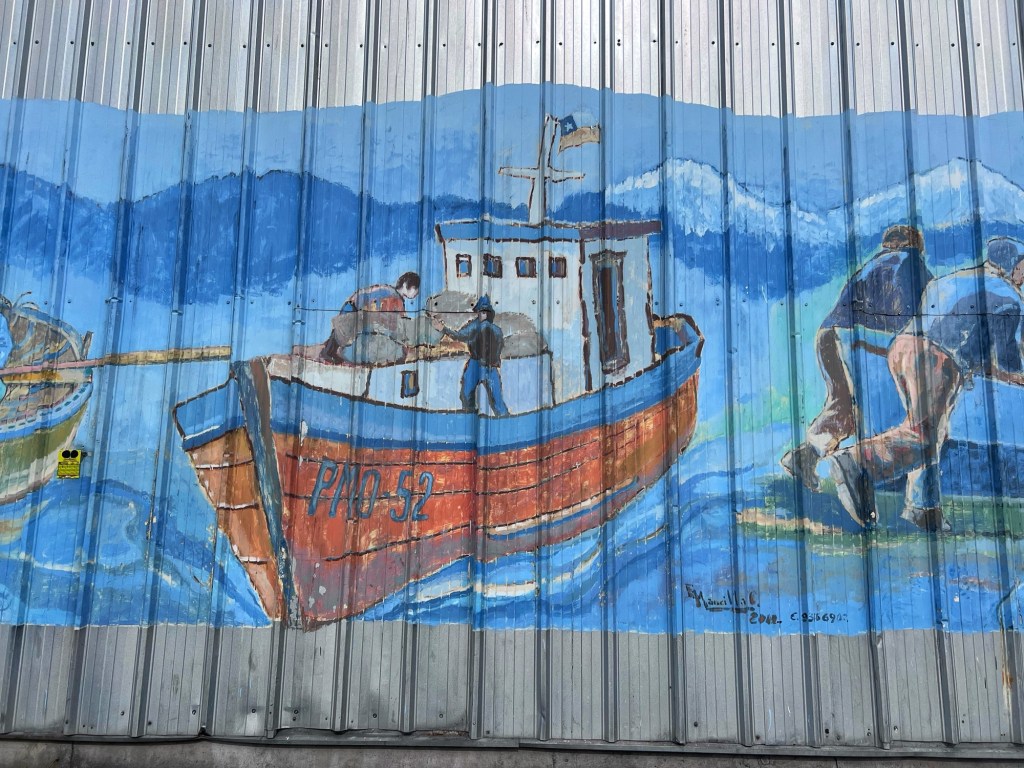
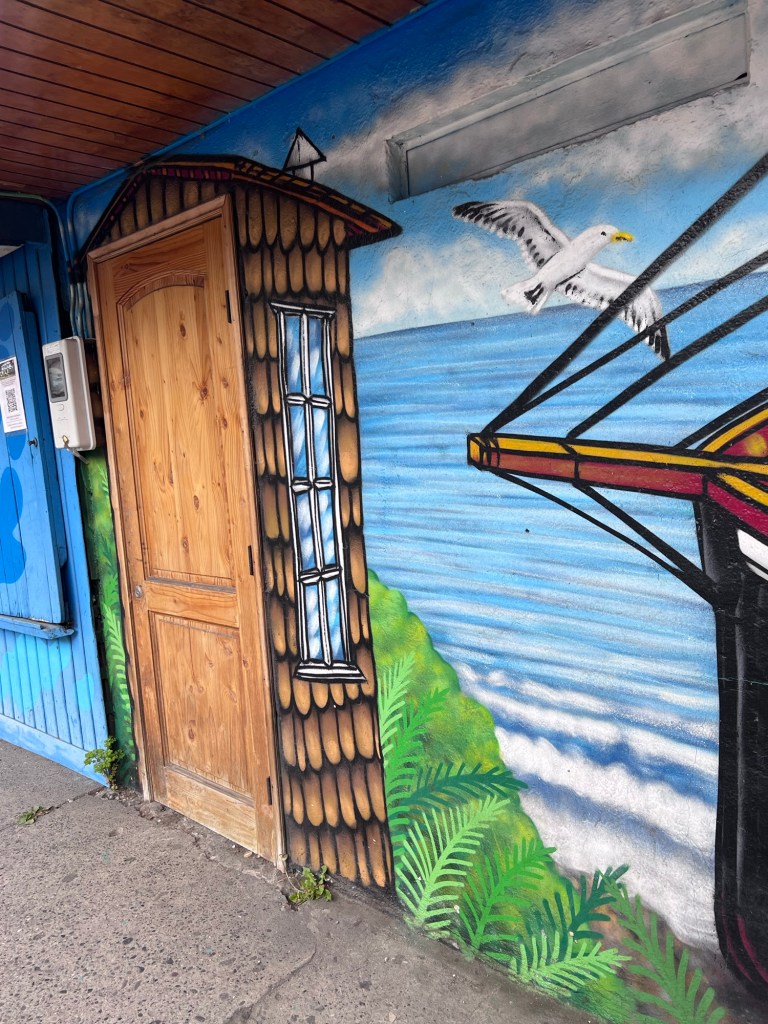
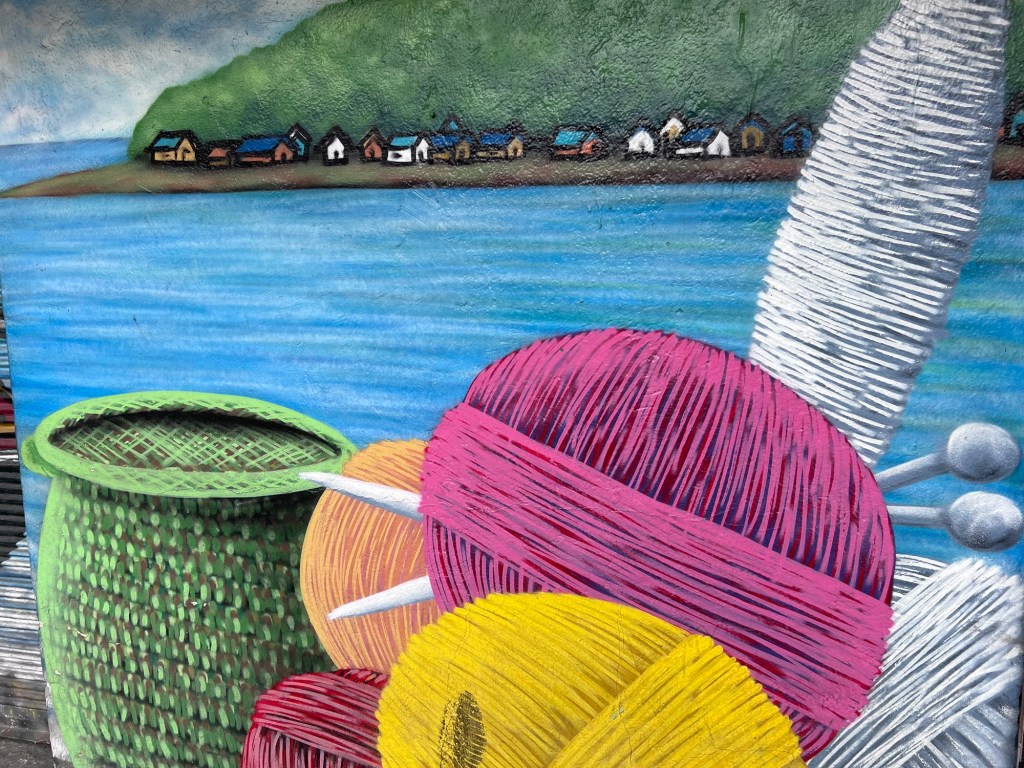
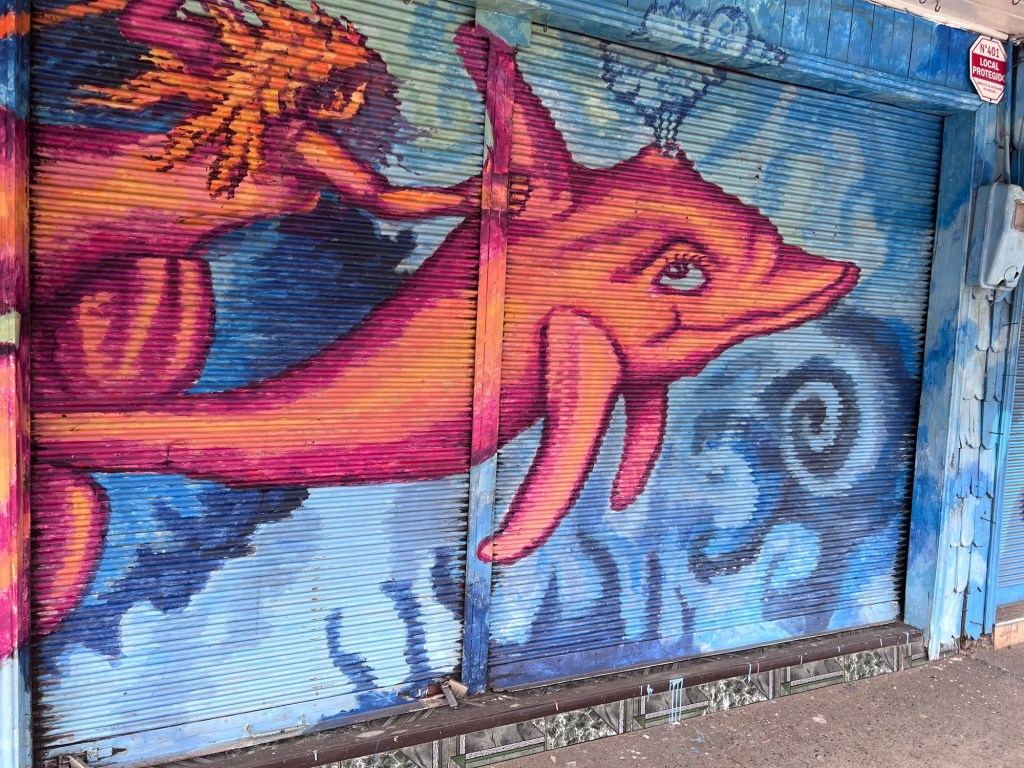
I also spent a bit of time photographing street art!
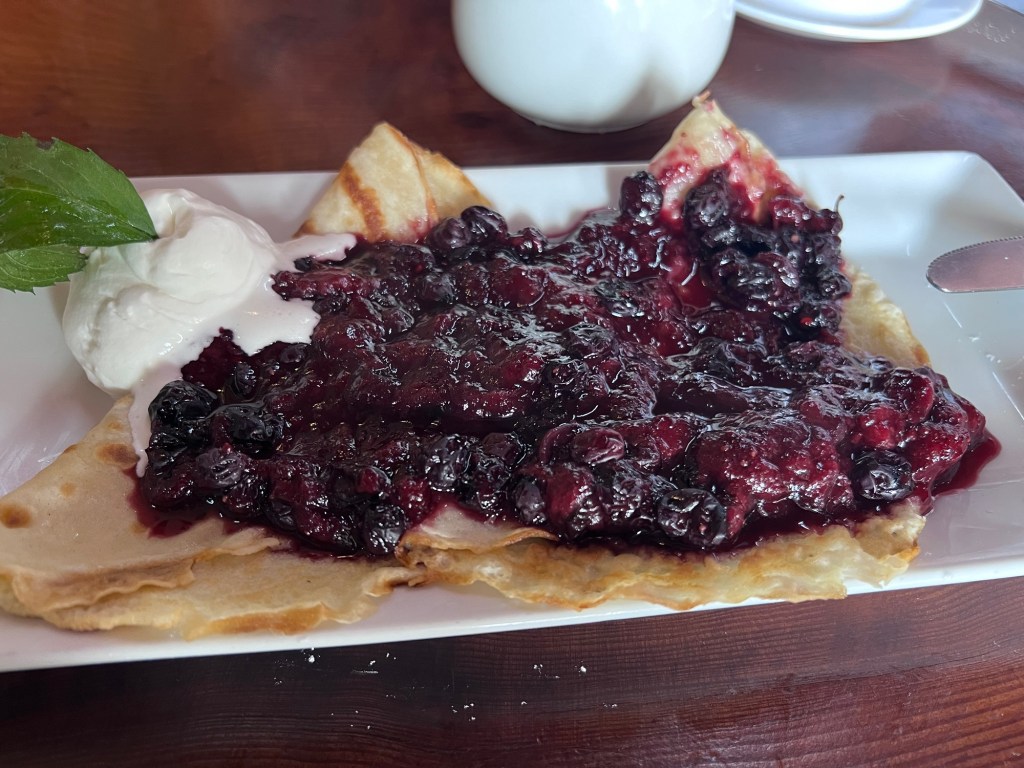
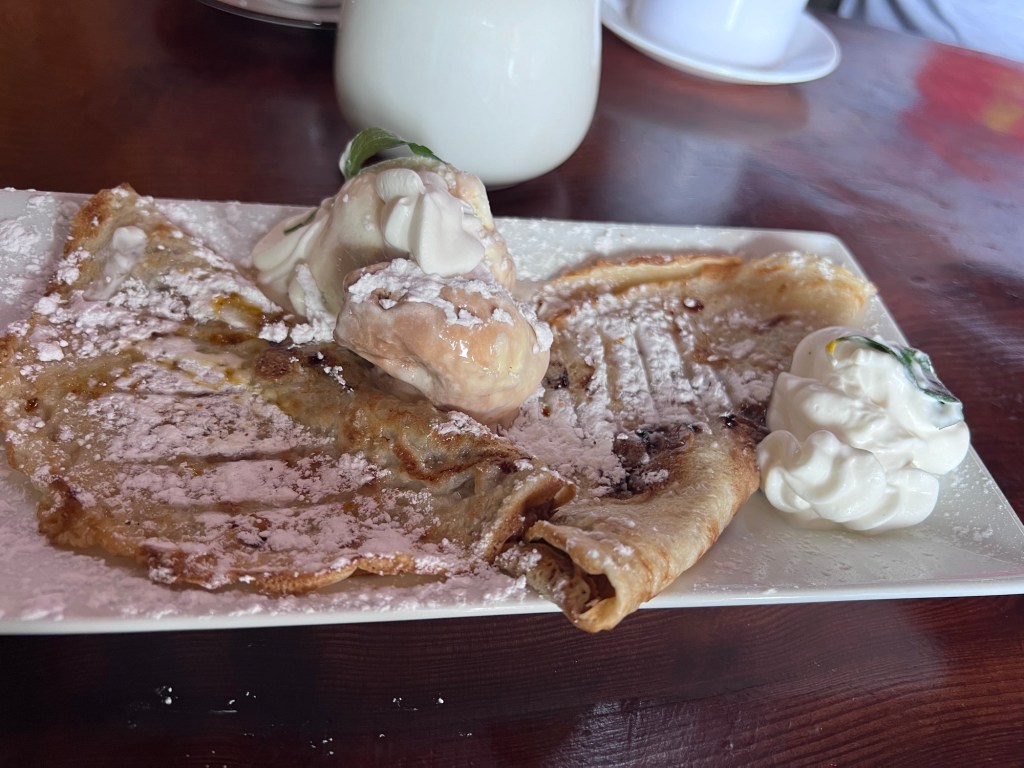
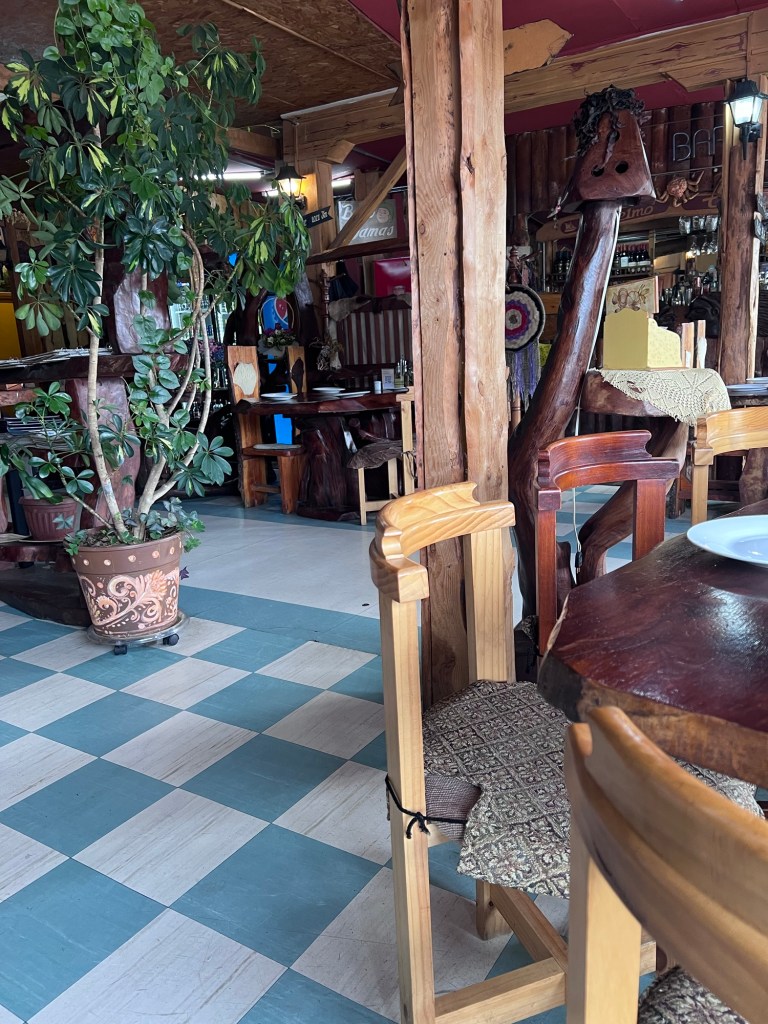
We stopped at a little restaurant, La Surana, for our breakfast. We both had crepes. Mine had fruit and Bruce had ice cream.
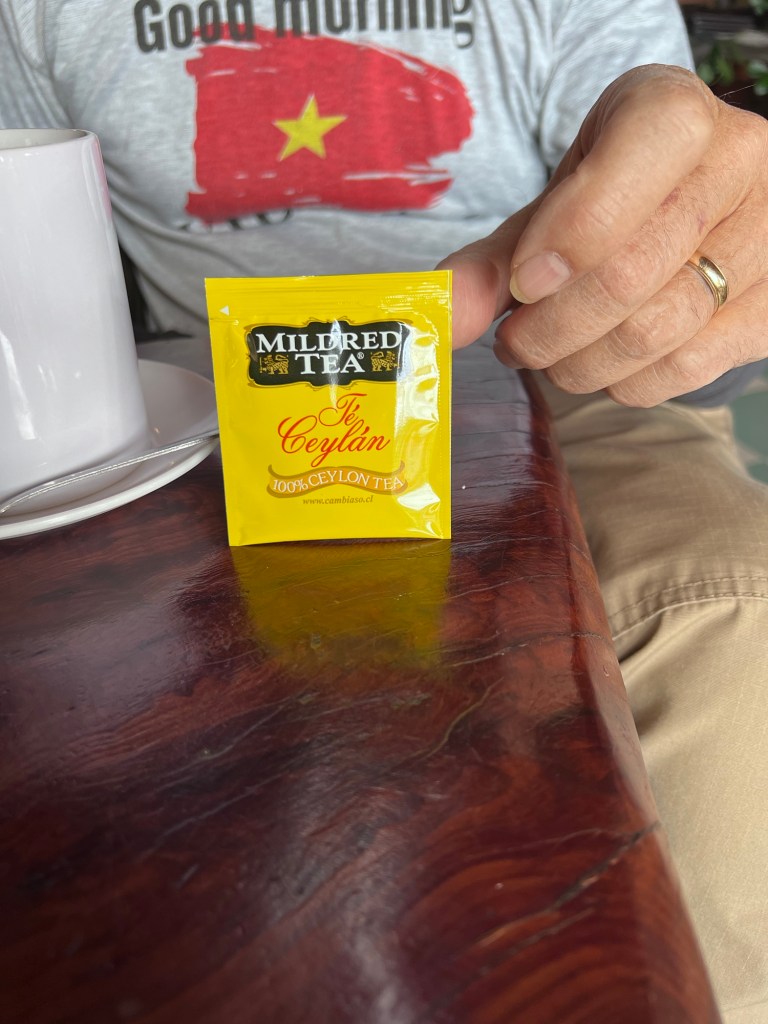
Now Bruce’s tea was a funny story. He ordered black tea with milk. So they brought him a cup of hot milk and a tea bag. So he thought that was it. He started steeping the tea in the hot milk when they came with hot water. He said it tasted like a cup of warm milk.
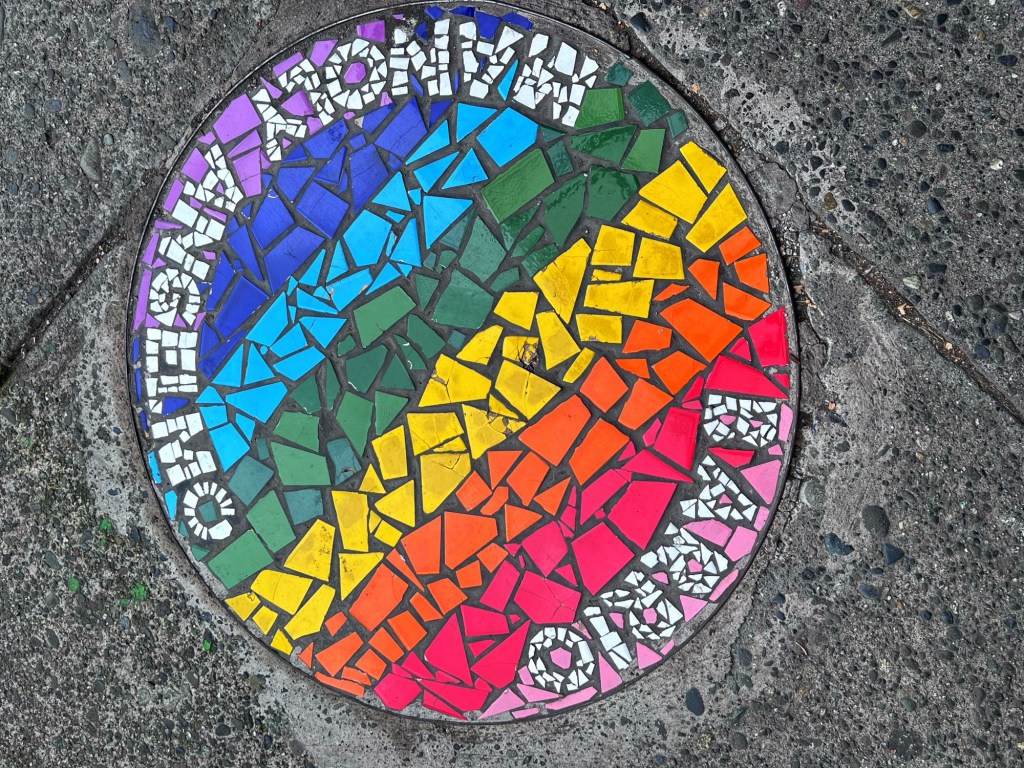
They really brighten up their sewer caps in Puerto Montt.
It was a fun few hours in Puerto Montt. We could have taken tours to volcanoes or waterfalls as well as checked out other parts of the city. But our few hours out and about in the markets stopping for a pastry was perfect for us!
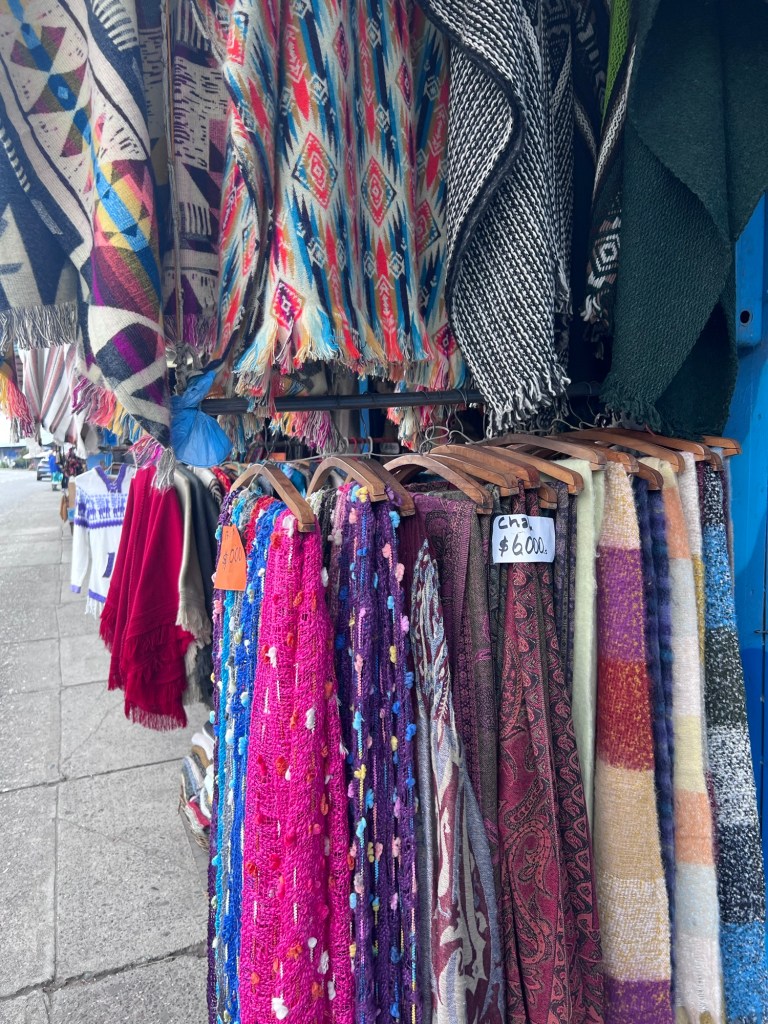
I learned about alpaca and what it is and what it’s not. Unfortunately most of the stuff the vendors were selling was acrylic and possibly made in China. I learned that alpaca feels cool, that it doesn’t hold odors and it is fairly heavy. We did find a few local craftspeople and bought a few gifts from them.
Now we are back on the ship ready to set sail. It was a very relaxing day in Puerto Montt.
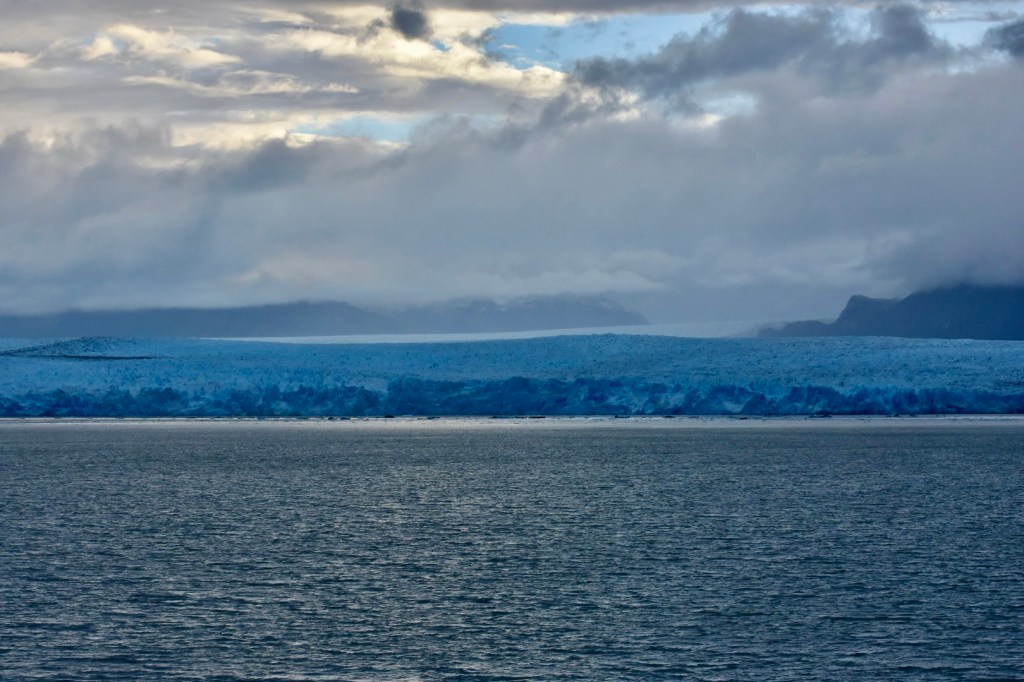
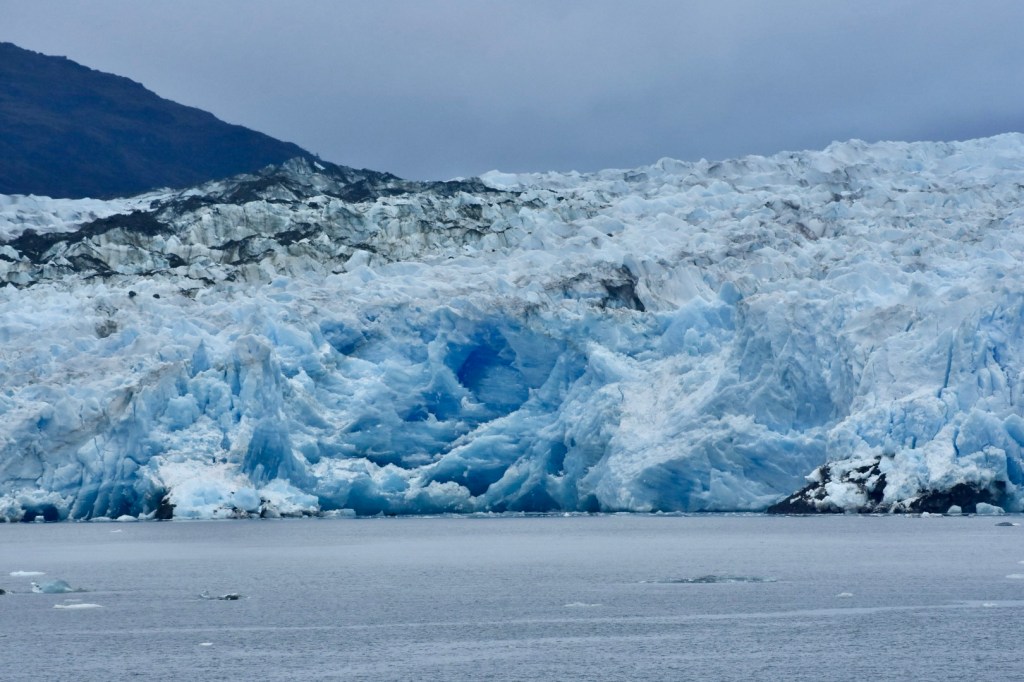
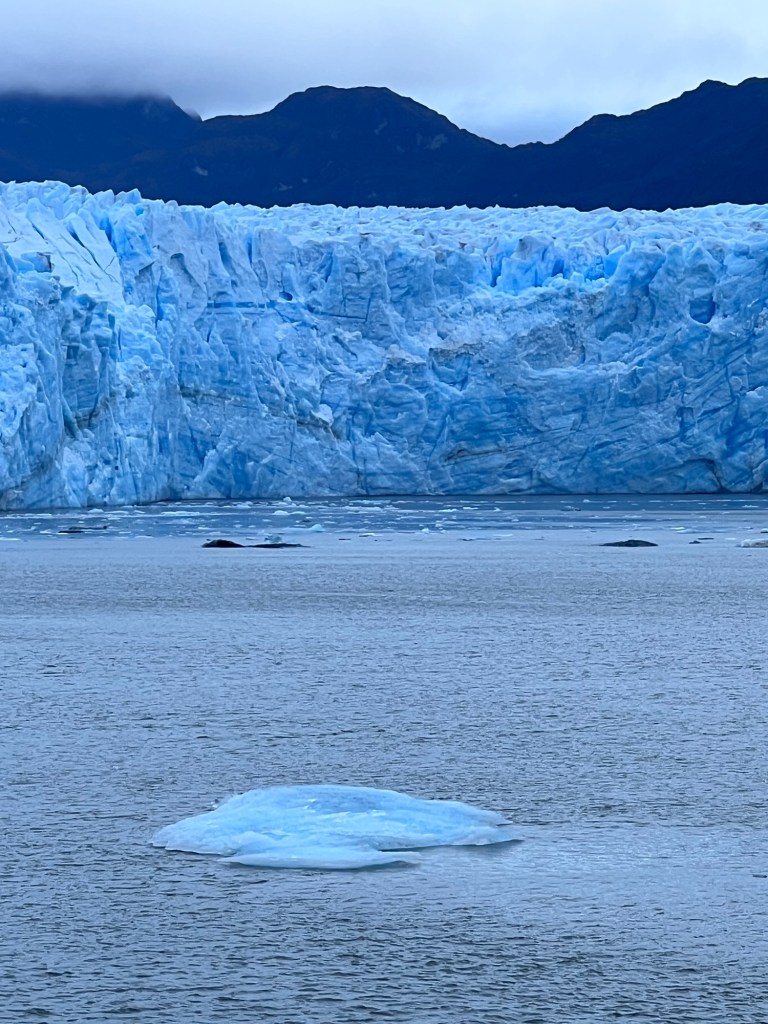
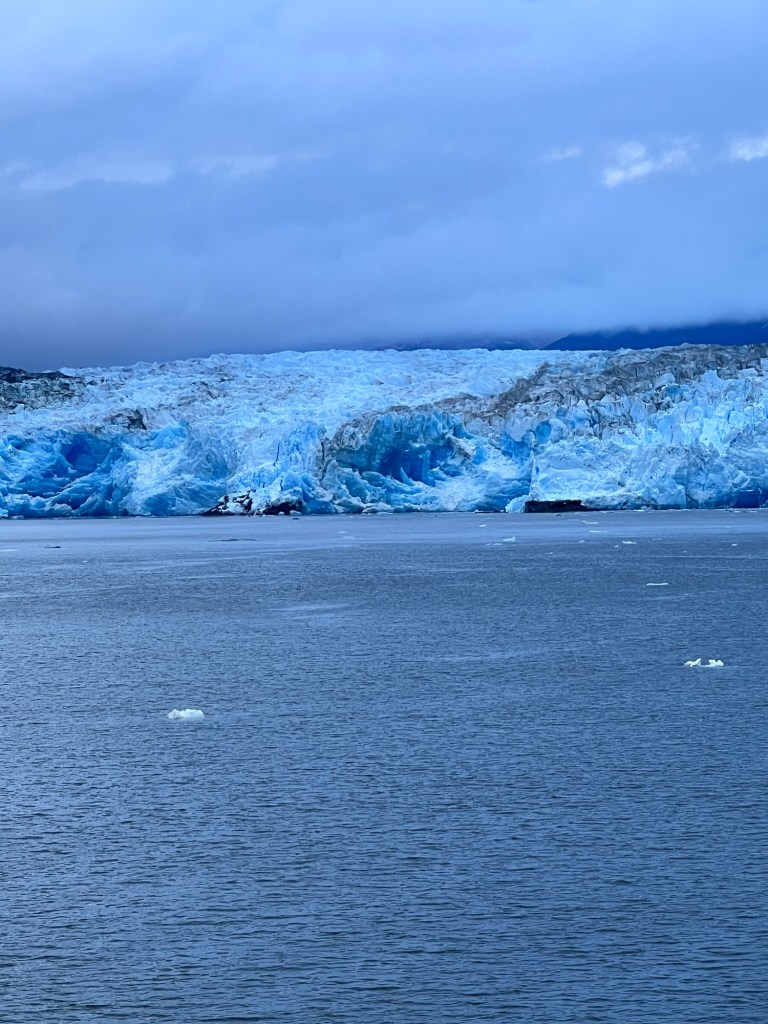
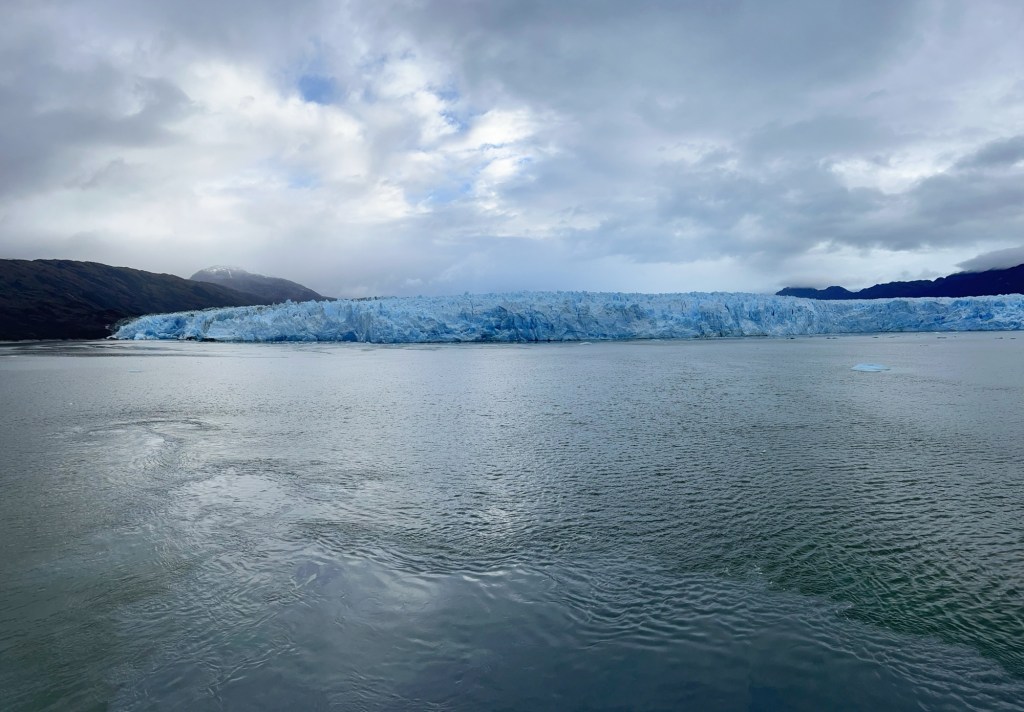
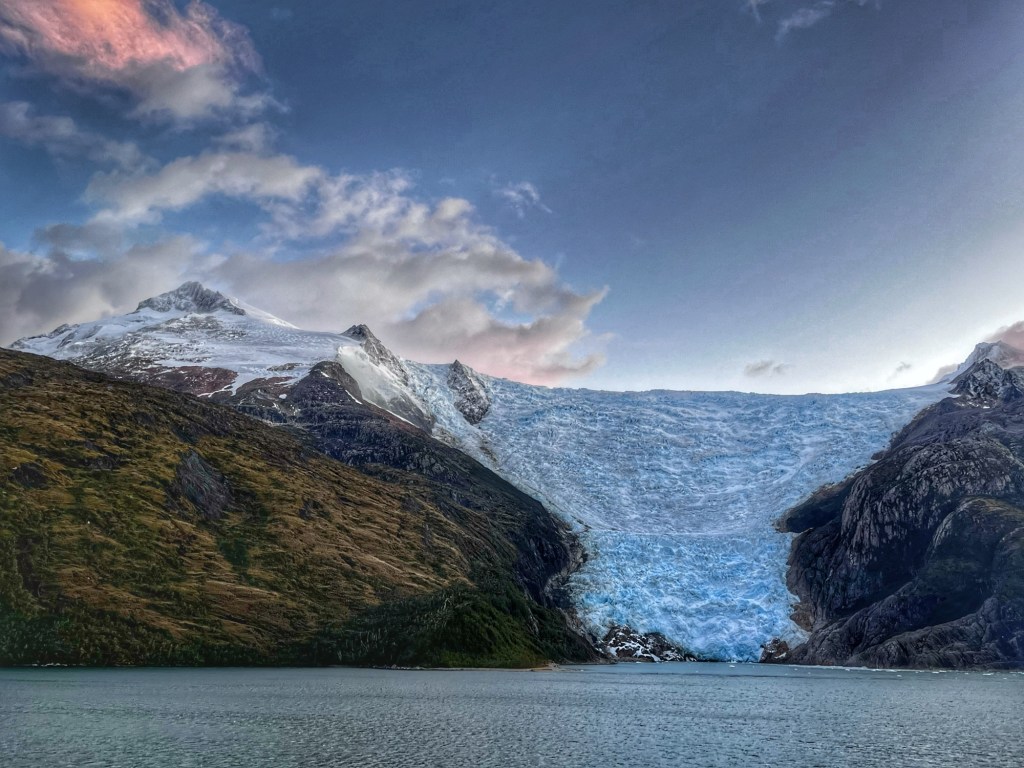
Today we woke early to watch as our ship sailed to the largest glacier in South America. It’s named Glacier Pio XI after a Pope. It is also known as Bruggen Glacier.
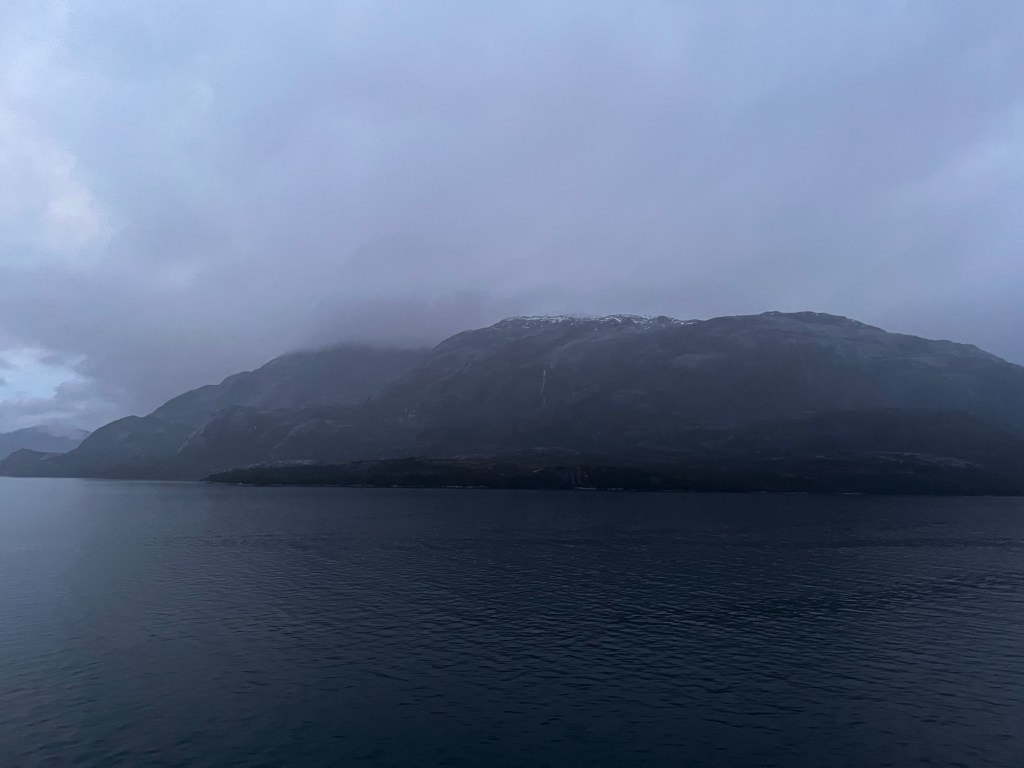
The morning started out dark, cold and rainy. Bruce and I nestled in our cabin drinking tea and coffee as the skies began to lighten.
The views were breathtaking as we sailed through Icey Channel.
I could only stand out on our balcony for short periods of time. It was very windy, gusting at 40 mph.
We braved the bow of the ship earlier because we didn’t know if we’d get a good view of the glacier. But again we only spent a short time due to rain, cold and wind.
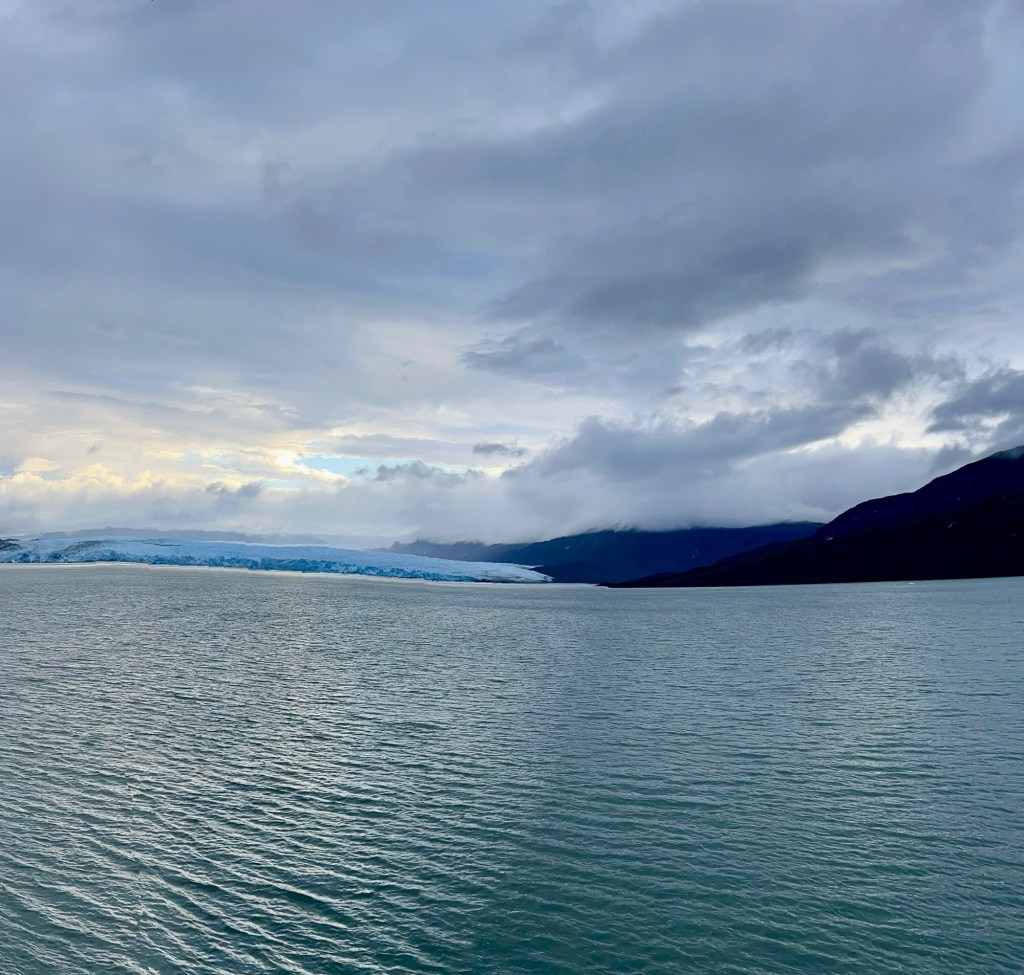
The light and dark water were the fresh water and seawater respectively. We approached the Glacier Pio XI.
We were very close and the captain turned the ship so both port and starboard sides had views from their balconies.
The interesting thing about this glacier is that it is growing rather than receding. From 2000 to 2016 it grew 1.8 kilometers. This may be attributed to the fact that the Patagonia region is unspoiled by pollution from cars, industry, etc which may contribute to the recession of all other glaciers around the world.
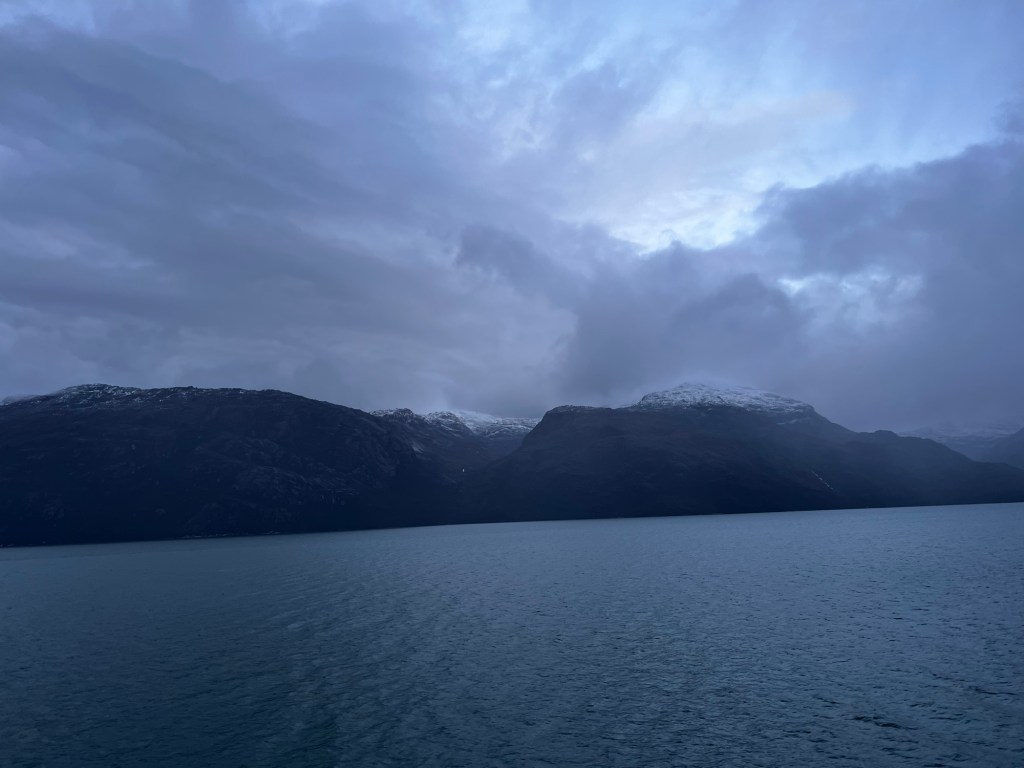
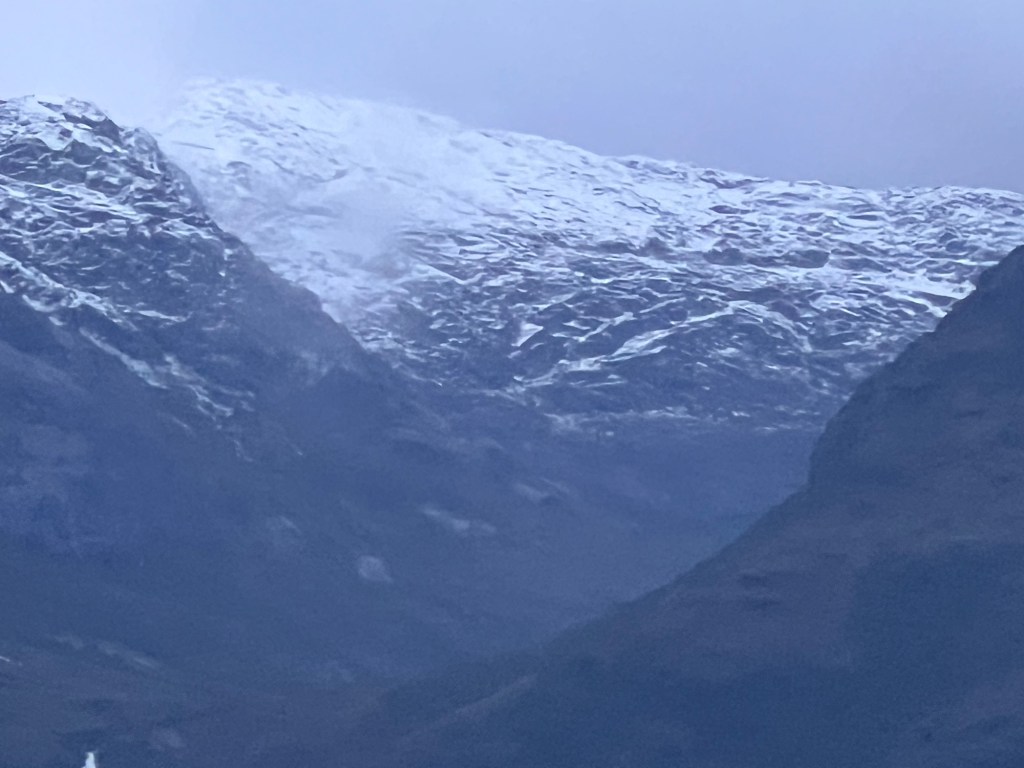
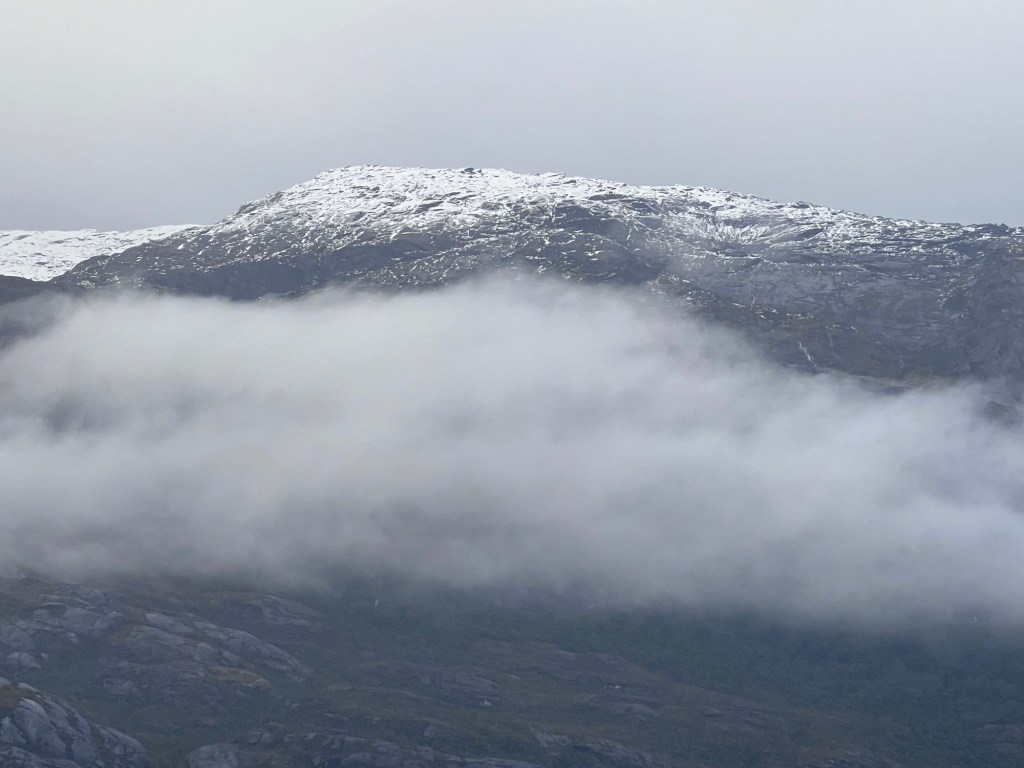
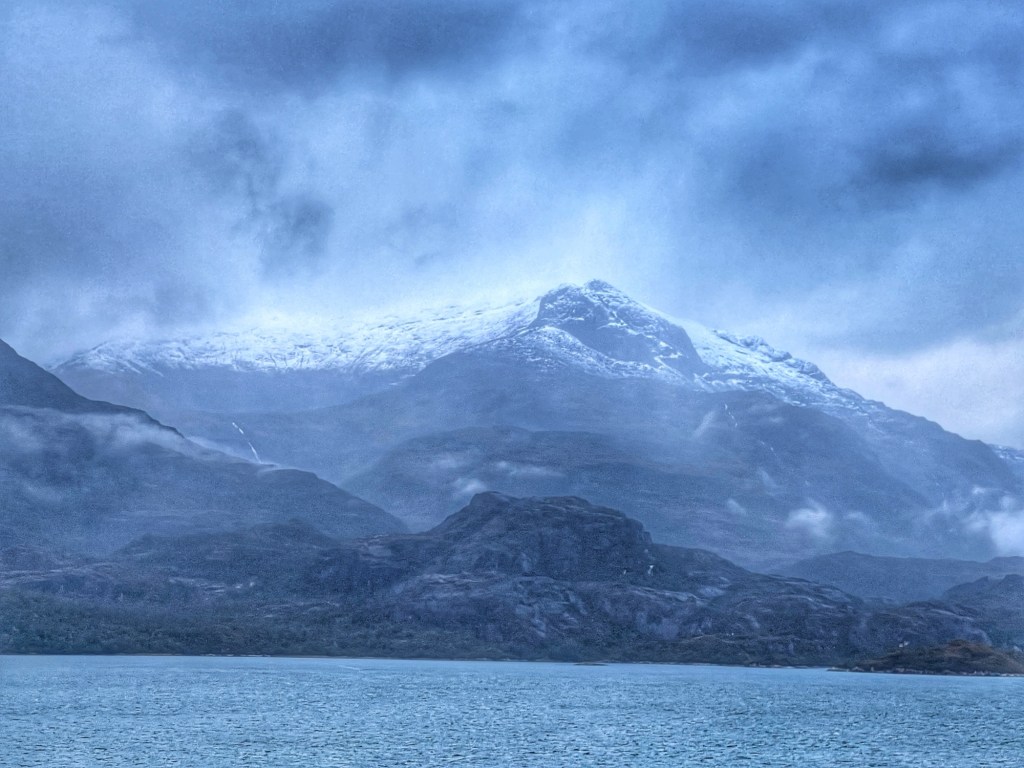
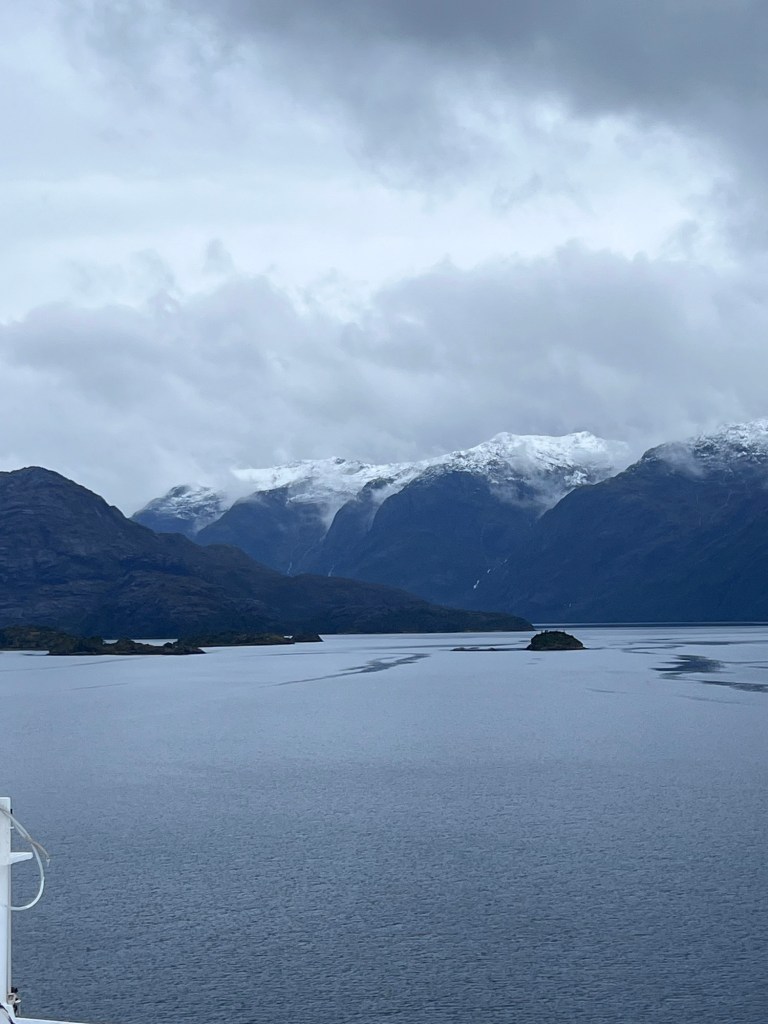
Traveling away from the glacier we were surrounded by mountains. During the Ice Age, this entire region was covered in ice.
We spent a good part of the day in the Crow’s Nest on Deck 10 of the Holland America Oosterdam, where we could hear commentary by Ed, our Cruise Director. It’s also where they have the coffee bar!
We continued our sail through the Grappler Channel.
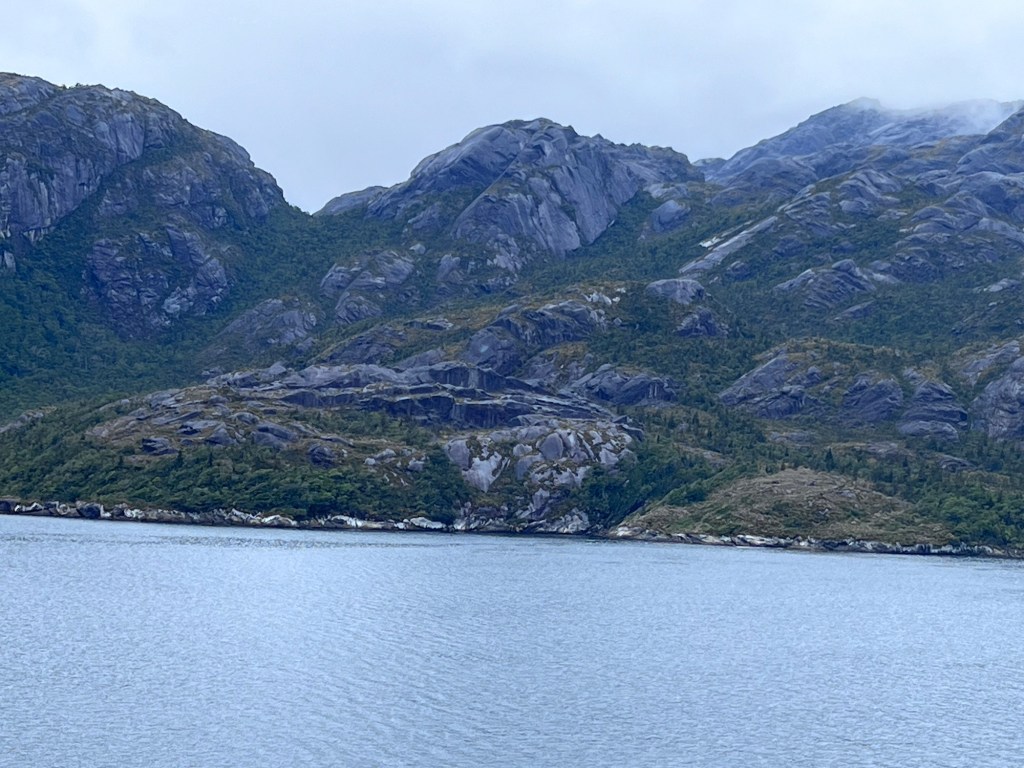
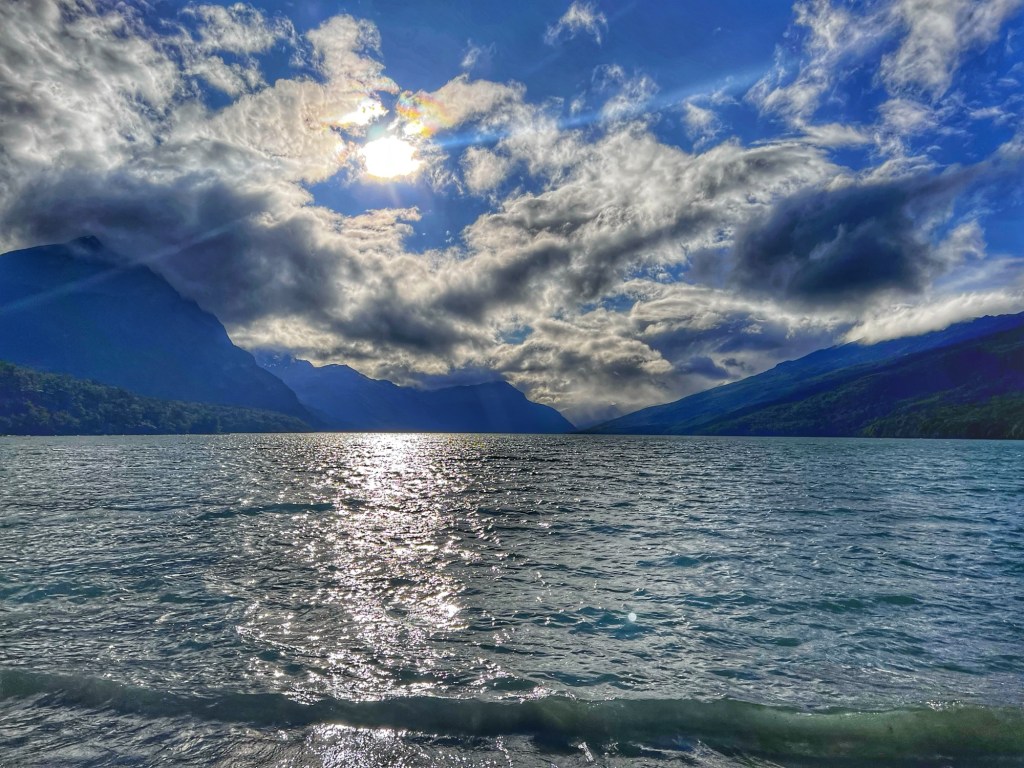
We continue to travel down different picturesque channels.
We traveled a narrow channel into the Paso del Abismo channel. I think the Captain said that at the tightest spot it is 200 meters across making it a tight squeeze for the ship.
Here you can see the pass we are going through – the Captain and crew received a huge round of applause after we passed through.
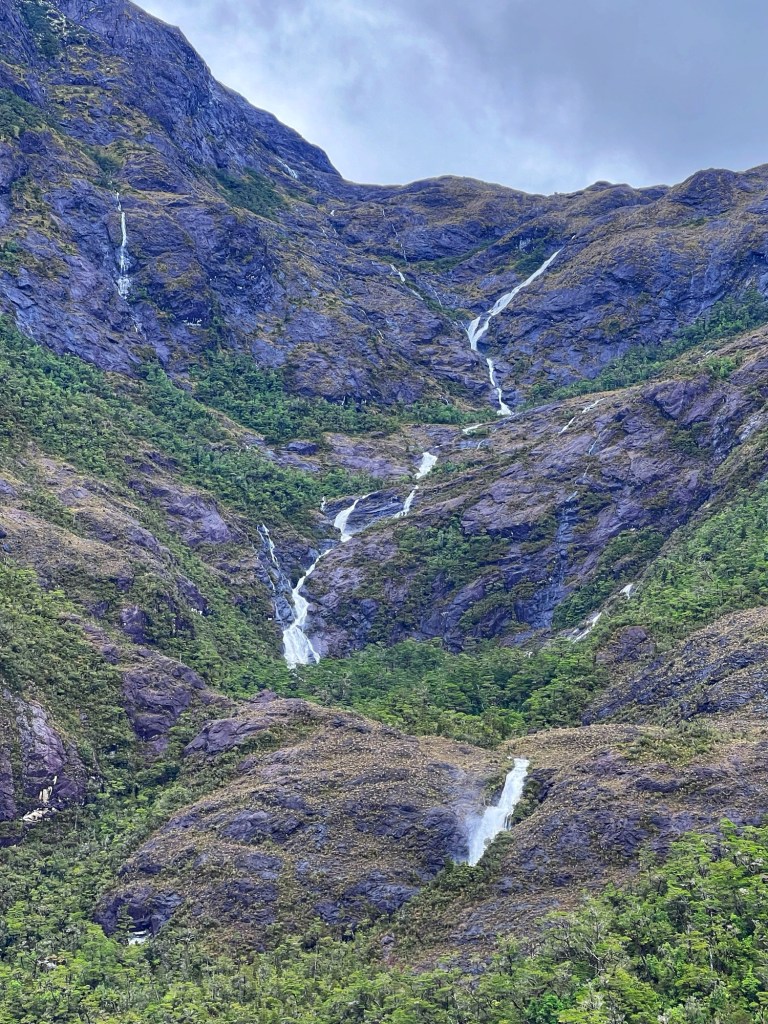
There were some magnificent waterfalls along the way!
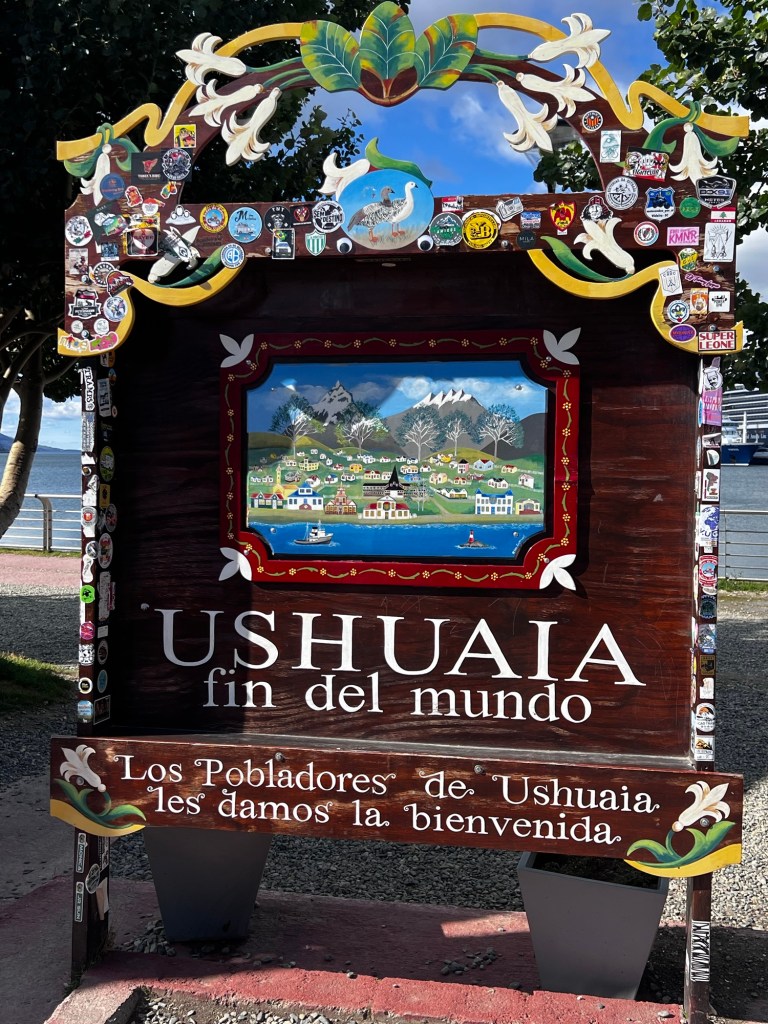
It’s a strange name, Ushuaia, which means deep bay.. It is located on the Tierra del Fuego archipelago and as the world’s southernmost city, it’s often referred to as “The End of the World.”
The city is over 135 years old and has a population of 82,615.
We arrived in port at noon after spending a spectacular morning cruising through the Beagle Channel.
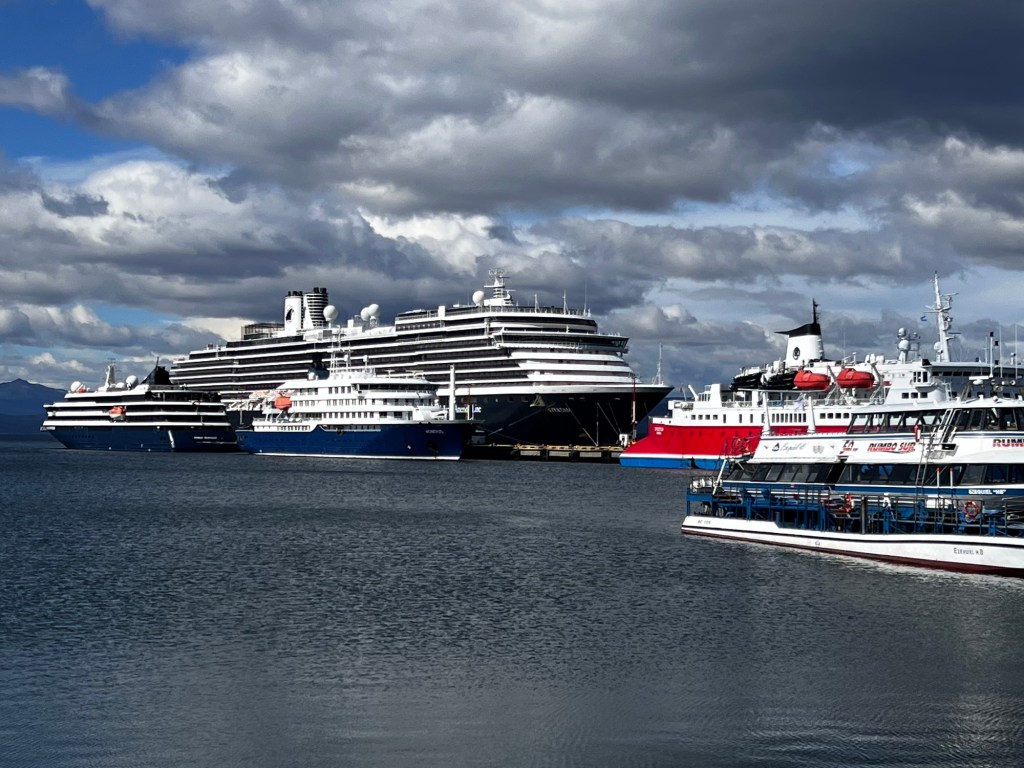
The port had several smaller expedition ships that go to Antarctica, but we took a different course than other large cruise ships.
The city is surrounded by impressive mountains.
We walked a little way into town and saw the monumento antiguos pobladores.
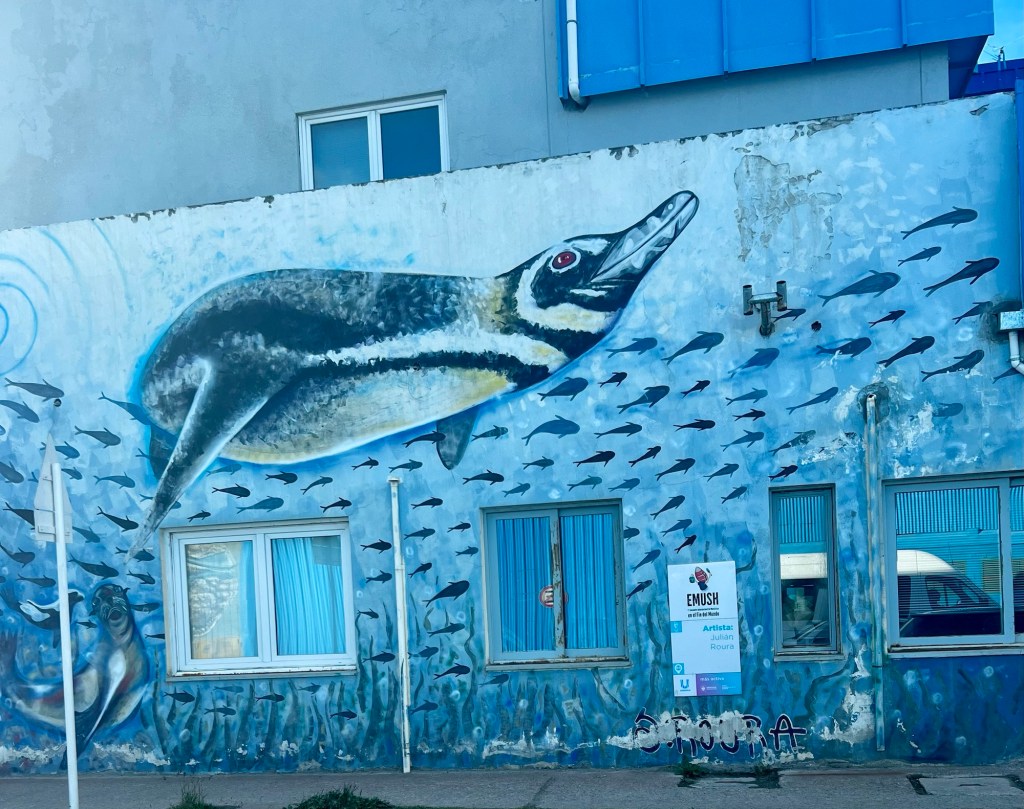
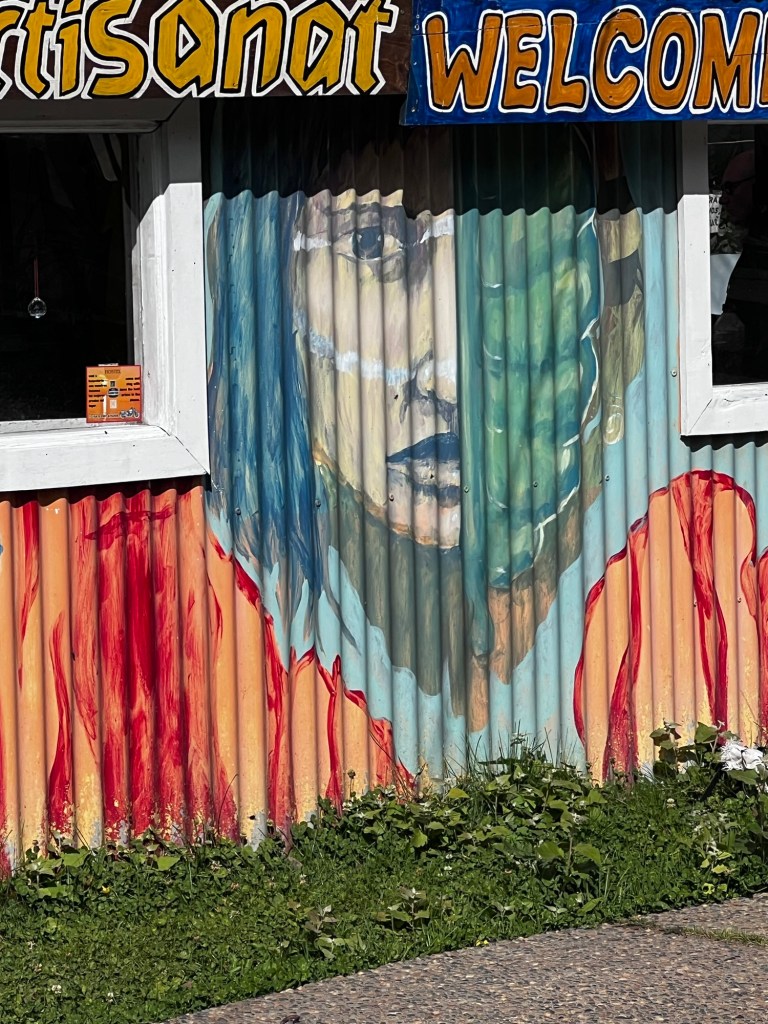
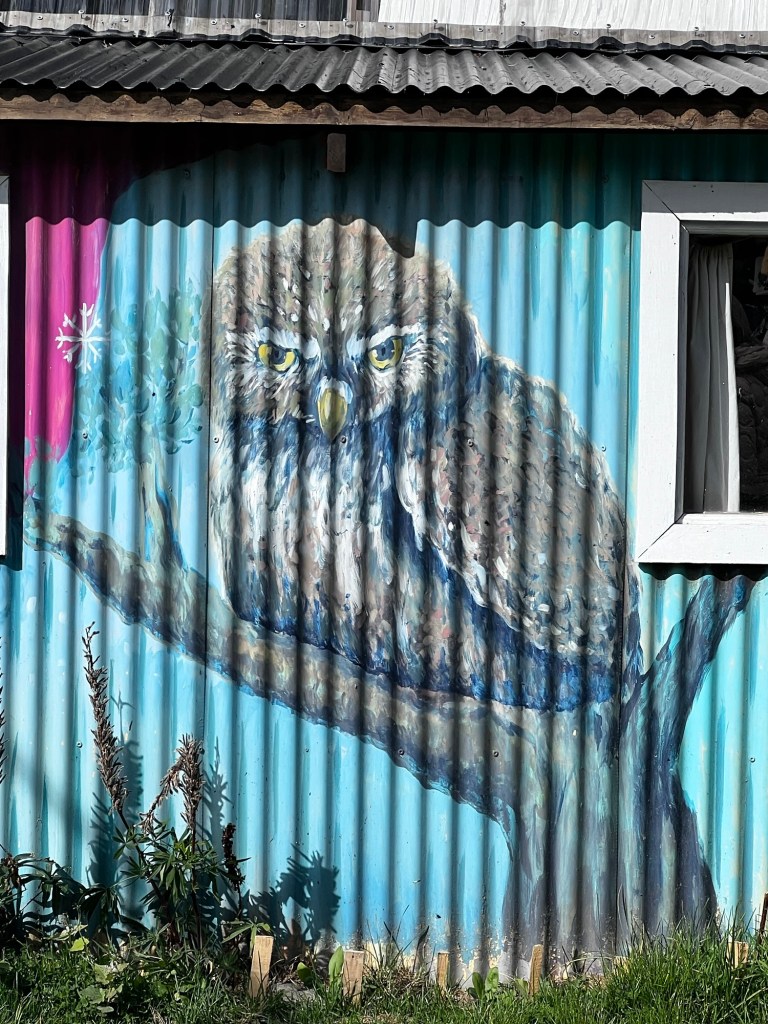
I also found a bit of street art!
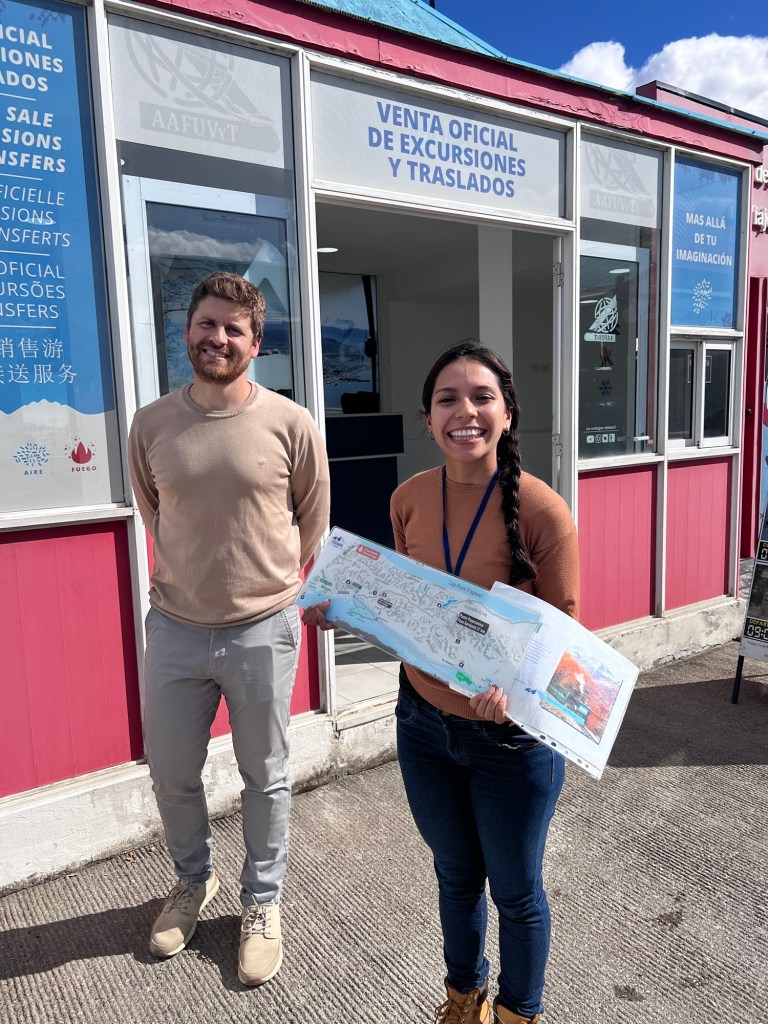
We booked a tour with Terramar Turismo. It included the End Of The World Train and Tierra del Fuego National Park. The ship offered this for $219 per person and our tour was $130 per person with 18 people max. We had 11. A very good size.
They were so cute how could you not book a tour!
Our tour guide Anita was excellent. She was very informative and easy to understand! Our bus took us to the train depot!
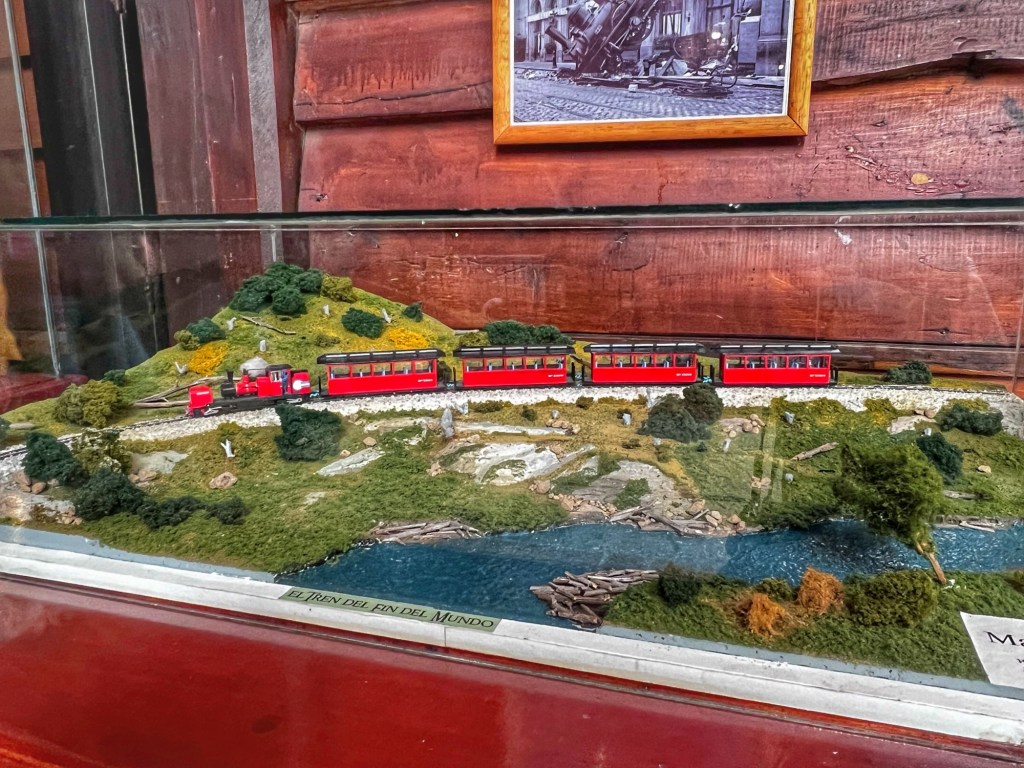
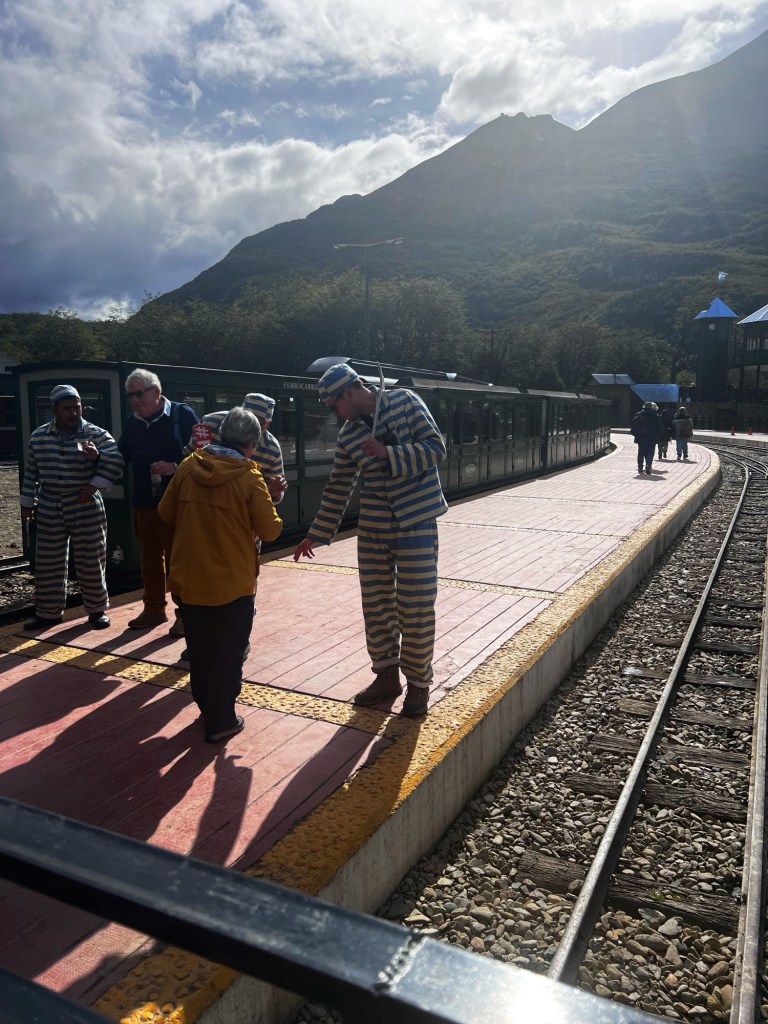
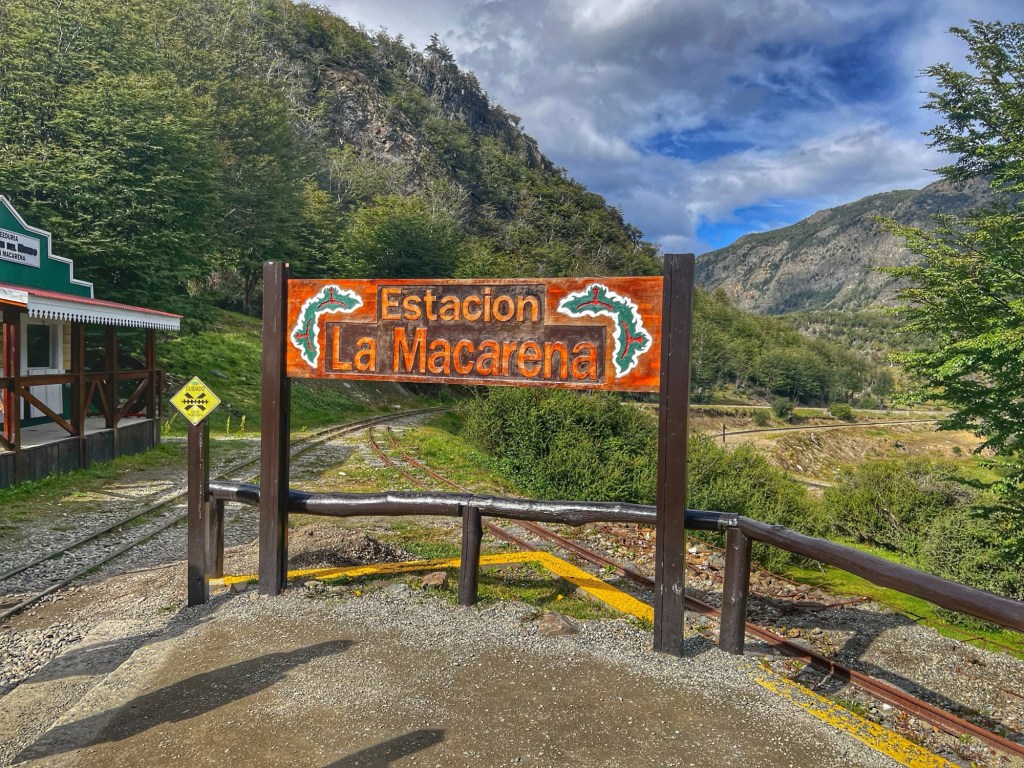
This train has an interesting history. It was originally 25 kilometers and began operating in the 1800s transporting prisoners and supplies. Ushuaia was a penal colony.
The Ushuaia prison operated as such until 1947. With the closure of the prison, the train stopped operating a few years later. In 1994 it reopened for tourists. Of course, the three locomotives are replicas of the original ones and are all steam locomotives.
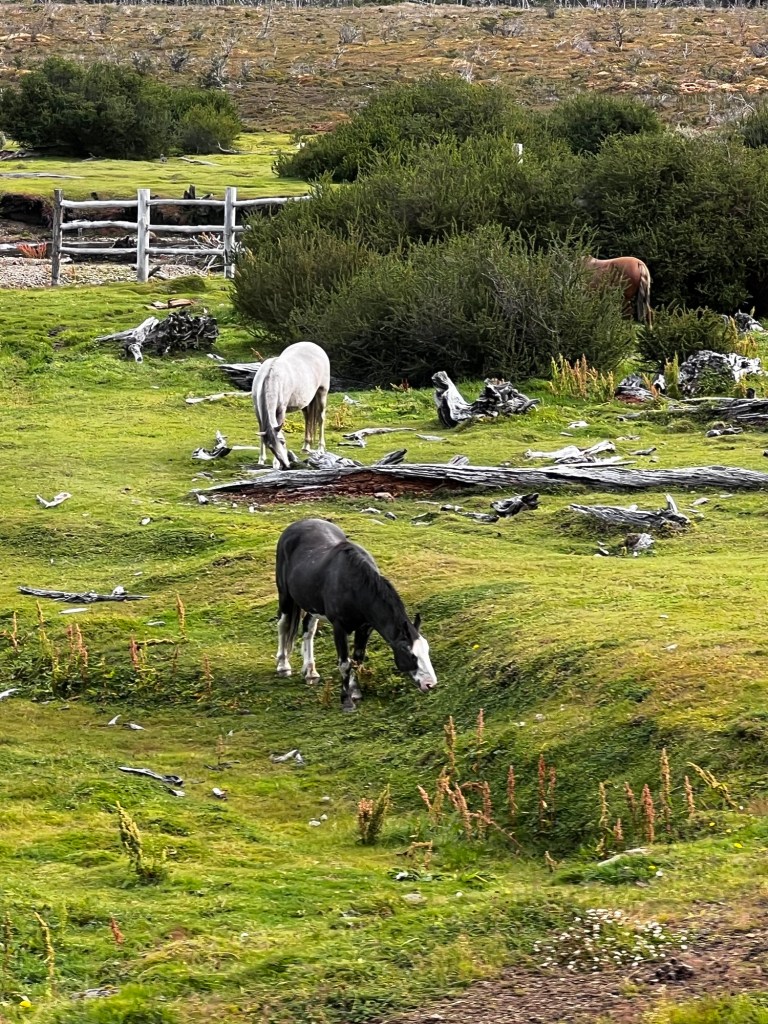
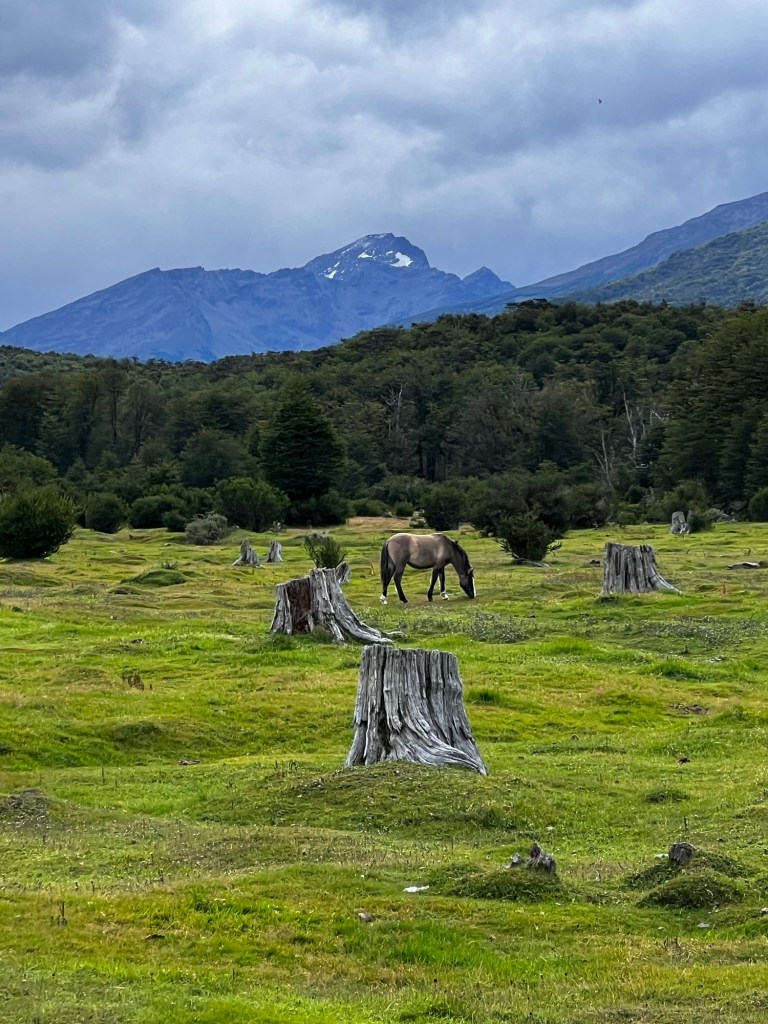
On the route we saw beautiful mountains, what appeared to be wild horses and a waterfall.
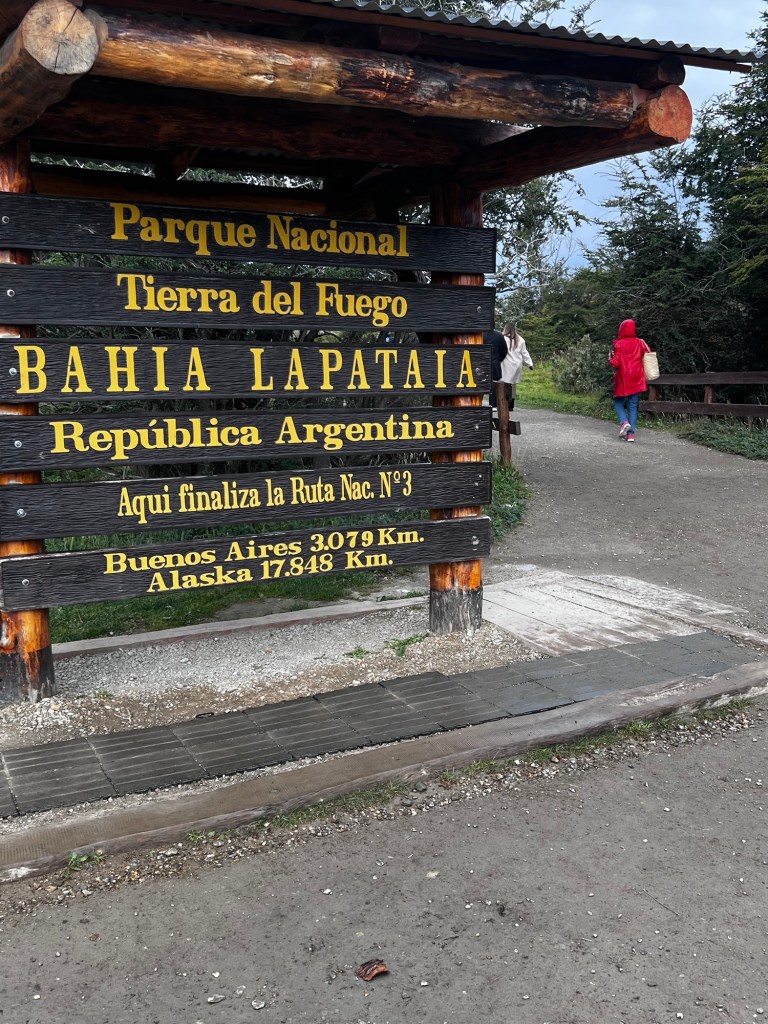
The train departs from The End of the World station, a former prison embankment, and ends at the Tierra del Fuego National Park.
Our conductor spoke in Spanish and English.
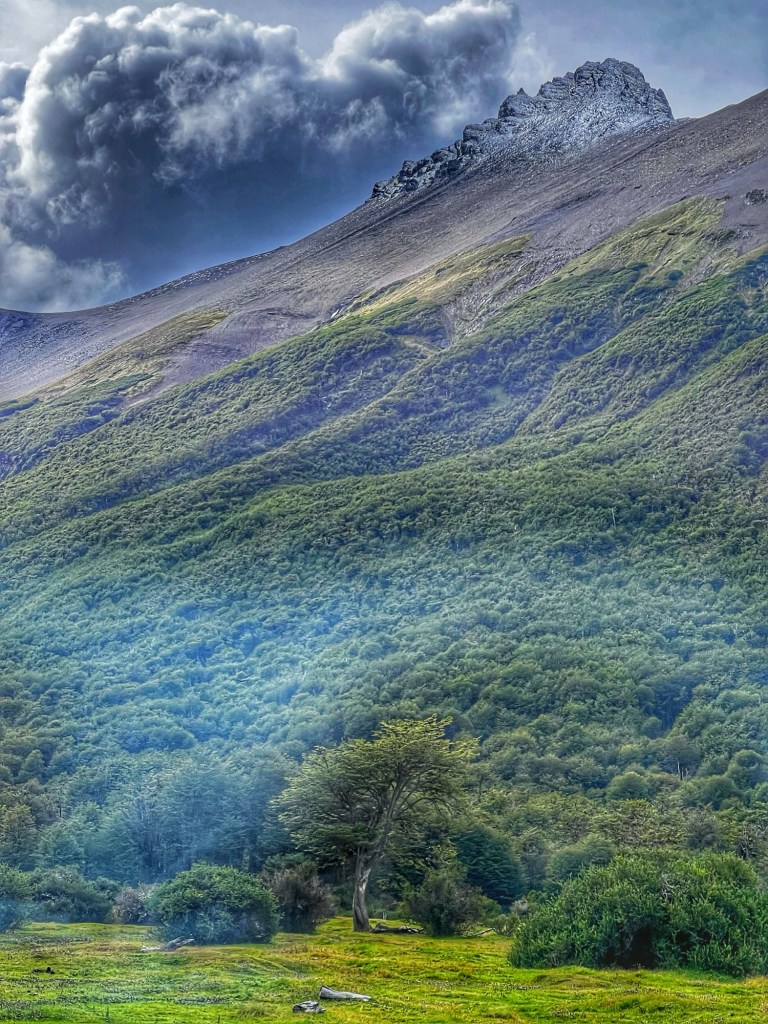
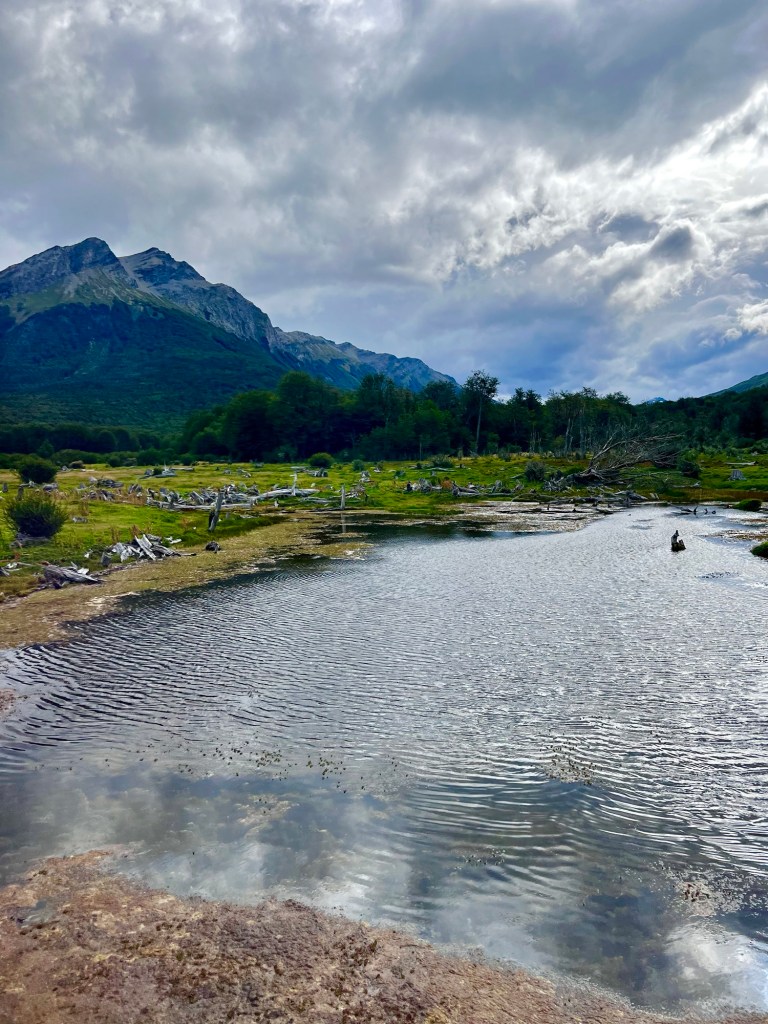
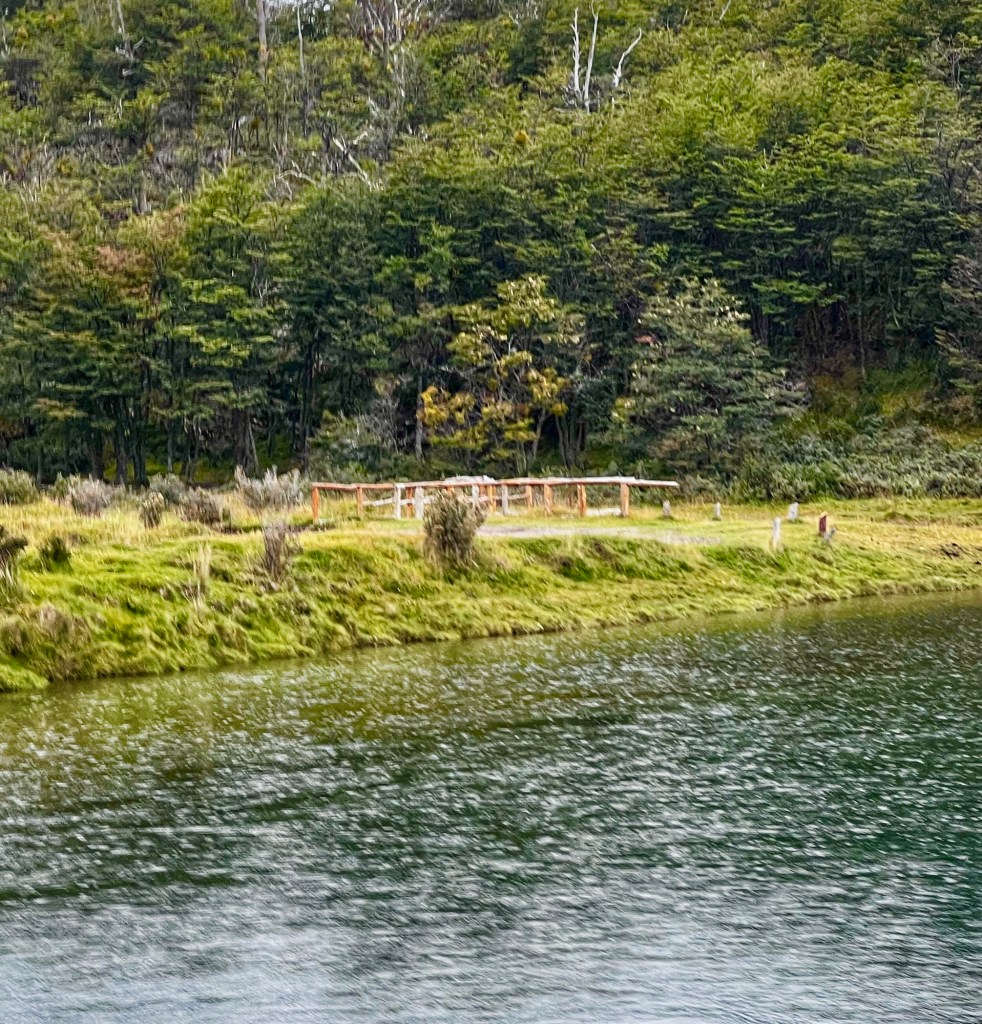
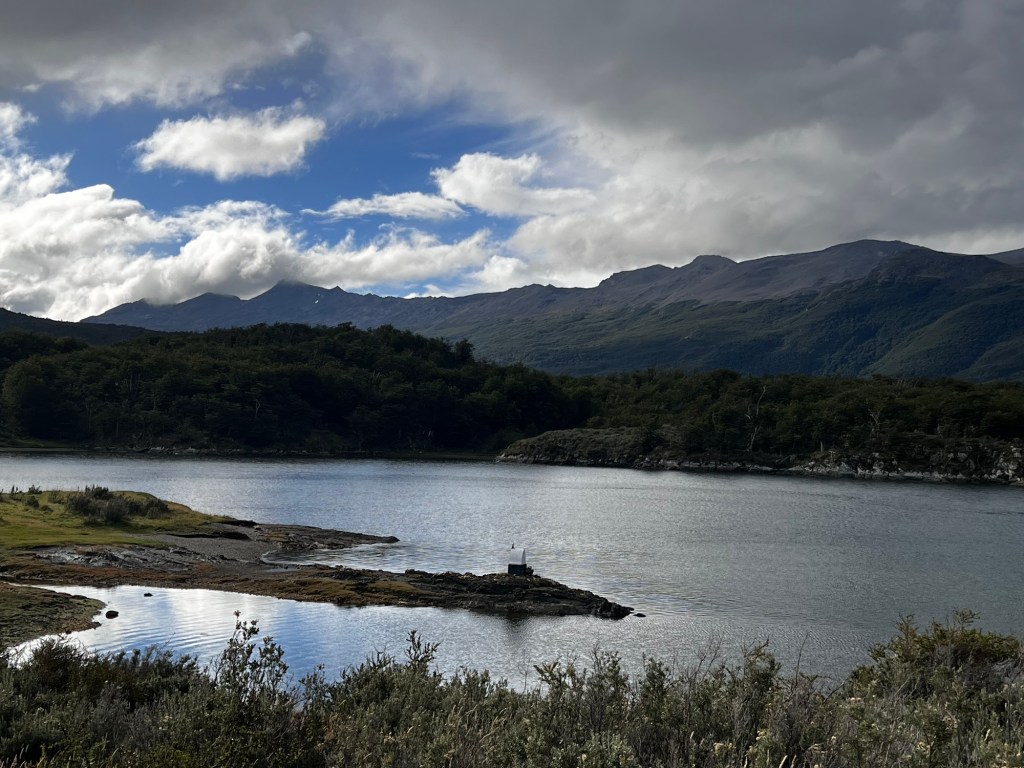
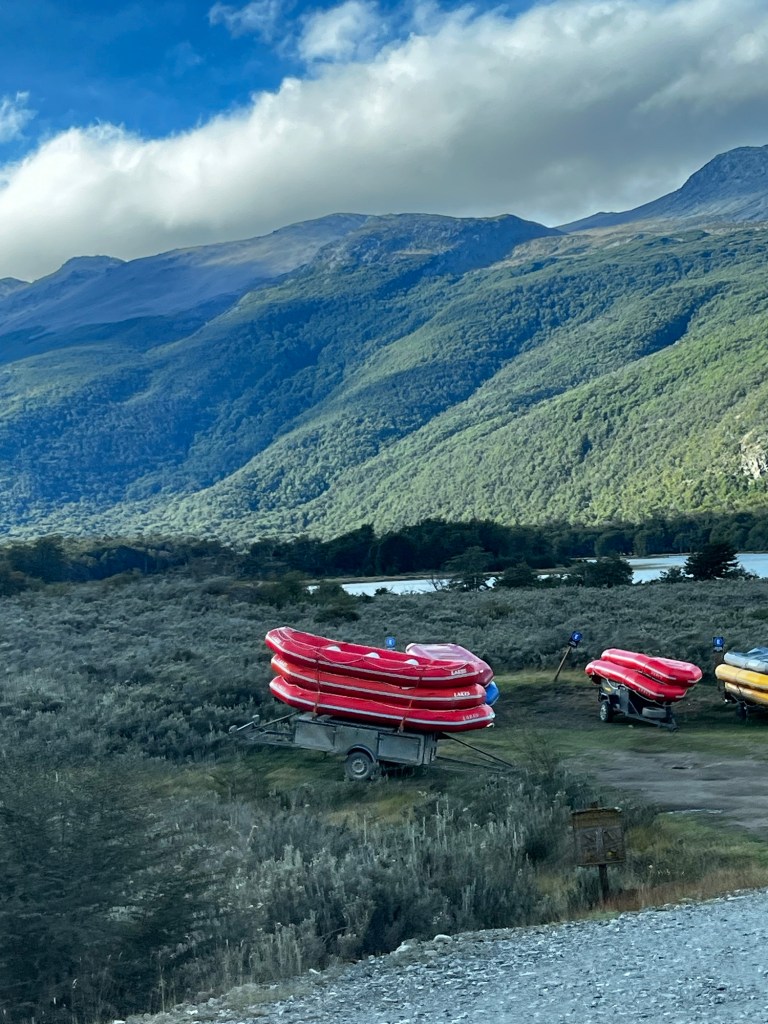
We arrived at the National Park and spent a few hours taking short hikes and seeing beautiful lakes.
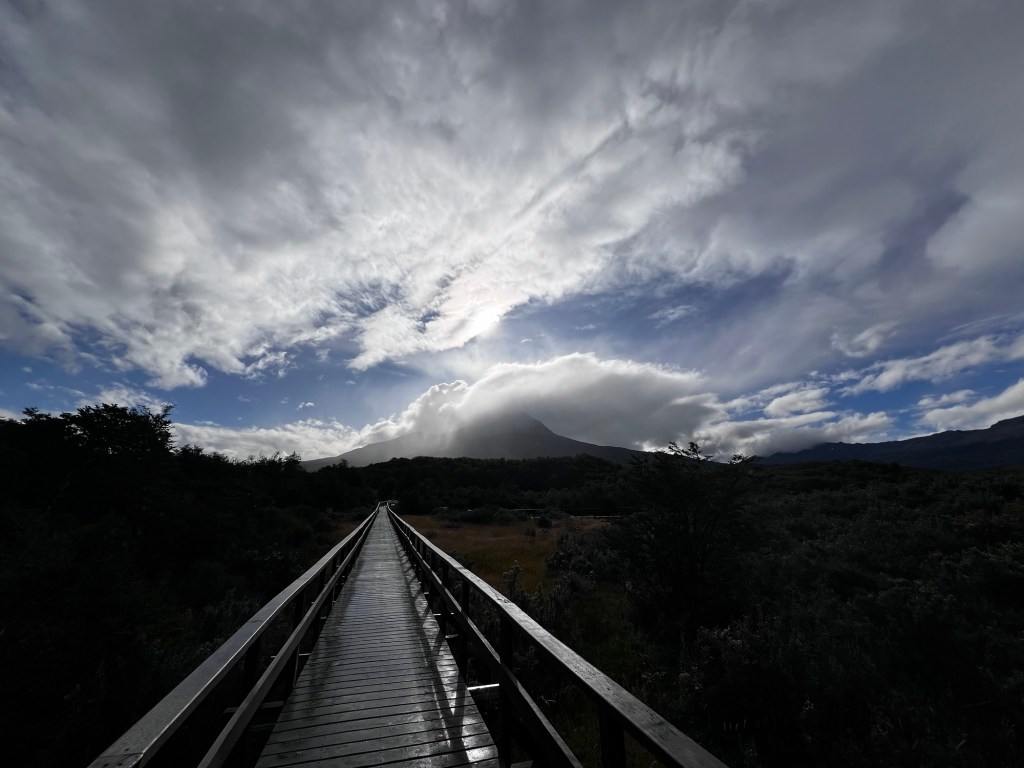
We took a short loop hike on a boardwalk
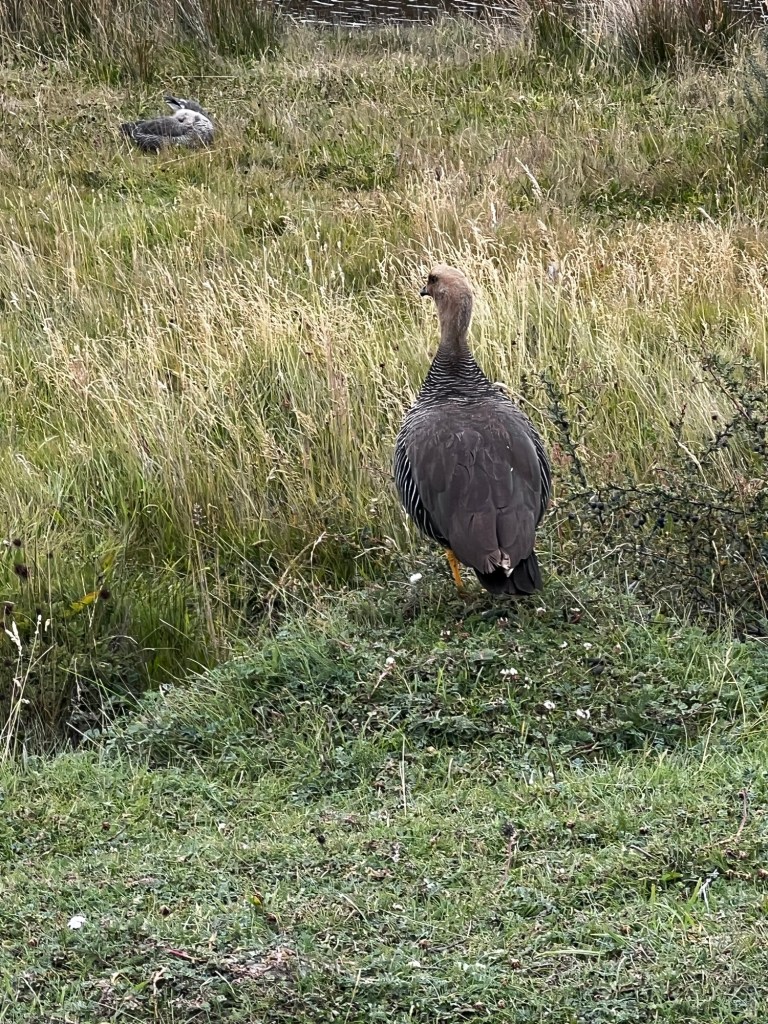
It started raining a little and the weather was growing colder. Along the way, we saw camp sites and geese.
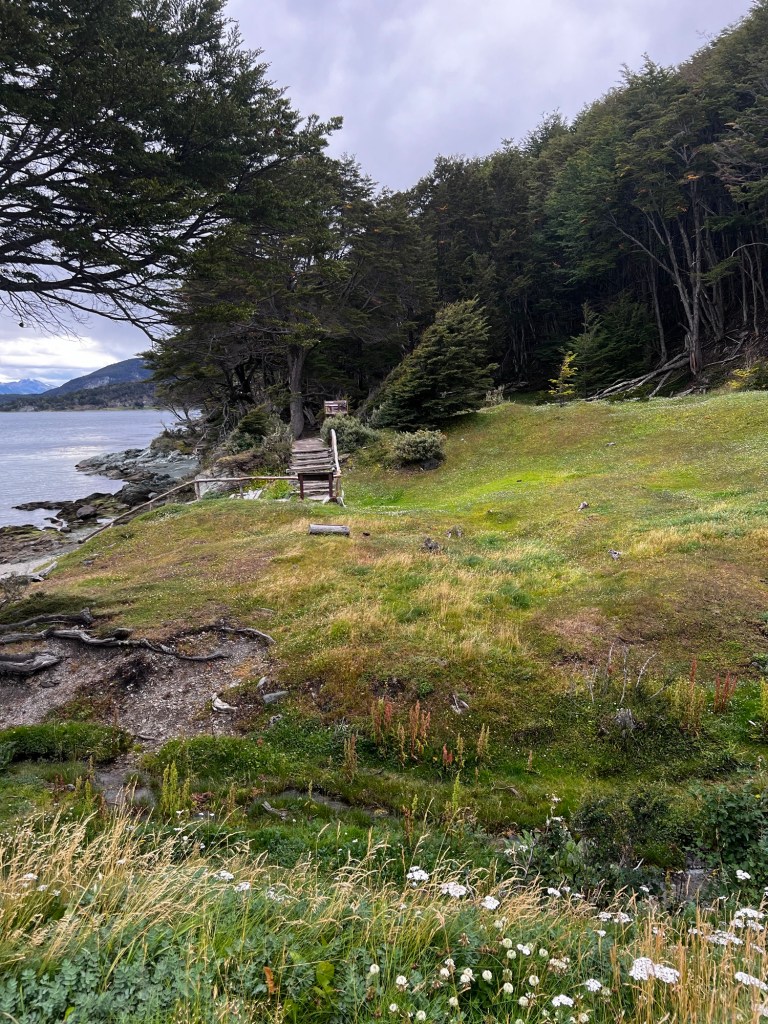
Some of the area looked so much like the coast of Maine although the mountains here would tower over Cadillac Mountain.
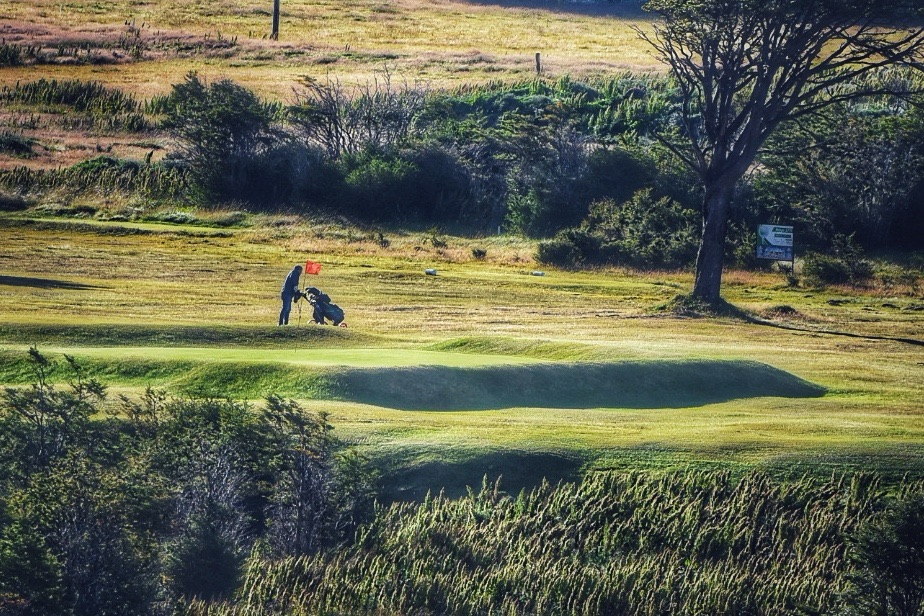
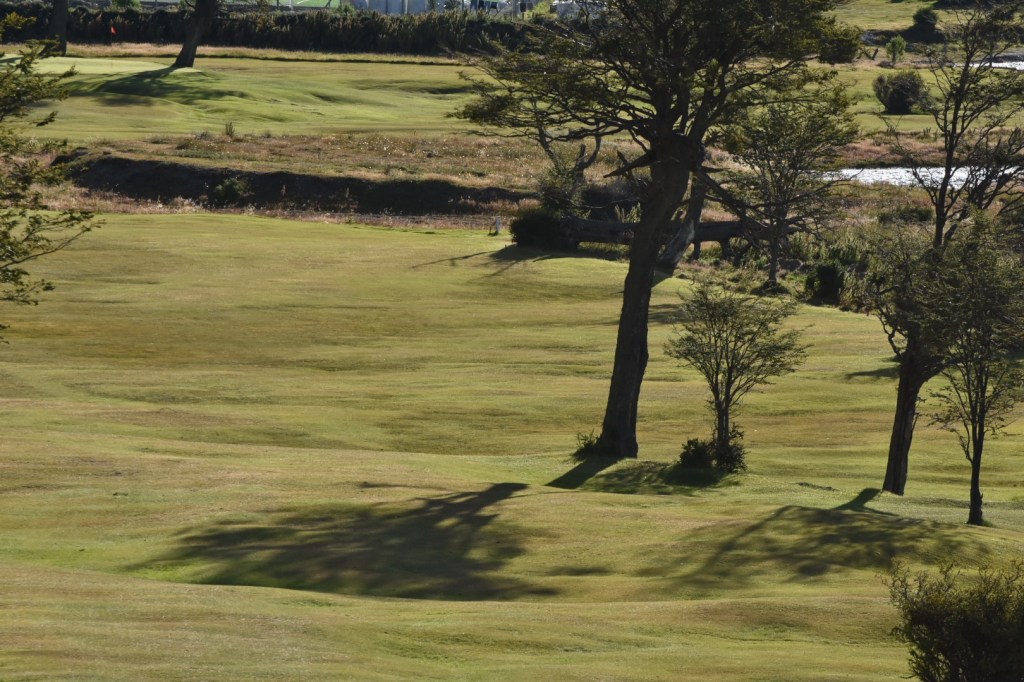
I had asked Anita if she could stop so I could take a photo of the End of the World golf course. This is the last golf course at the bottom of the earth.
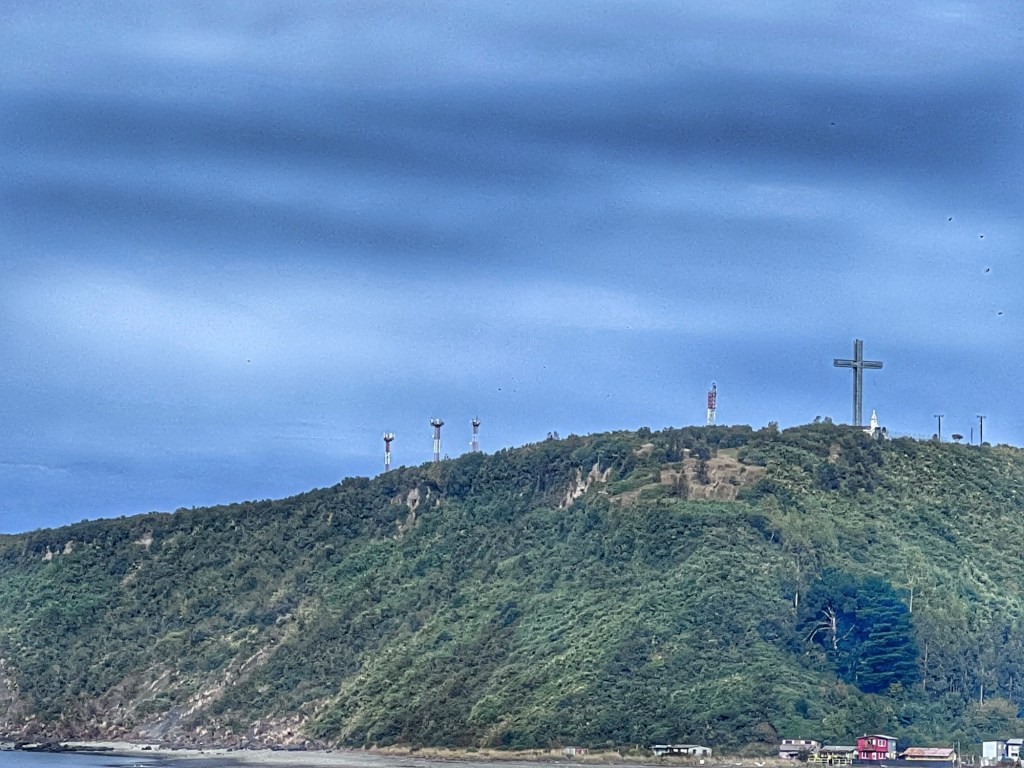
It was time to head back to the ship. It wasn’t a day of churches and pastries but it was very enjoyable. On our last leg back I saw a church in the distance!
Now we will have a couple of sea days cruising some beautiful channels!



















































 thefouramigosblog